2026 Best SMT Reflow Oven for Global Buyers?
Choosing the 2026 best Smt Reflow Oven is not a simple brand comparison. Global buyers must match thermal performance, throughput, service support, and compliance requirements. A compact machine may suit prototype lines, while a ten-zone system may better support continuous production.
Industry data shows why this decision matters. The World Semiconductor Trade Statistics (WSTS) forecast continued semiconductor market growth toward 2026, increasing pressure on electronics manufacturers to control yield and delivery times. IPC’s electronics industry outlook also highlights supply-chain uncertainty, factory investment, and productivity as major business concerns. Meanwhile, the SEMI World Fab Forecast reports sustained investment in semiconductor and electronics manufacturing capacity. These trends create demand for stable and traceable soldering processes.
A reliable Smt Reflow Oven should provide accurate zone control, repeatable conveyor speed, nitrogen management, and accessible process records. Engineers should examine peak temperature variation, oxygen concentration, energy use, maintenance access, and software compatibility. Small details matter. A loose thermocouple, uneven airflow, or poorly tuned profile can produce voids, tombstoning, and weak joints.
Yet published market reports have limits. They often combine different oven types and regional price levels. Therefore, buyers should not rely on market rankings alone. Real factory evidence matters more, including sample-board testing, profile verification, warranty response, and local technician availability. The “best” oven may not be the most expensive model. It may be the one that keeps a dense PCB stable at 2 a.m., when production pressure is highest. Mistakes still happen. A careful evaluation reduces them.
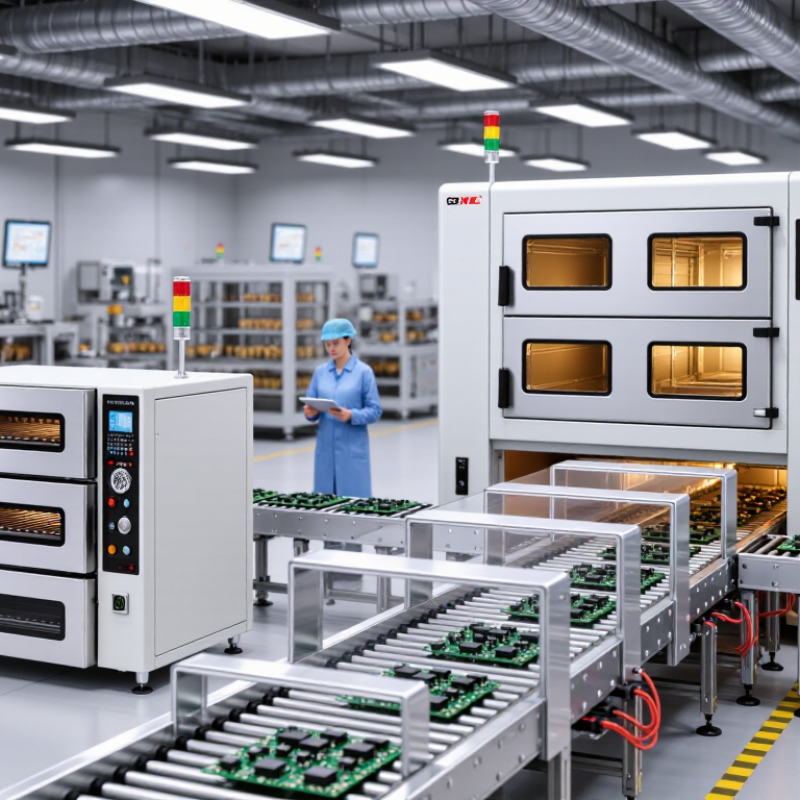
SMT Reflow Oven Fundamentals: 8–12 Zones for Stable PCB Heating
Choosing the 2026 best SMT reflow oven starts with heating stability, not display size or marketing claims. For most production lines, 8–12 heating zones provide useful control across the PCB profile. Each zone should support steady ramp, soak, and peak-temperature management.
In practical setup work, I prefer a controlled ramp of about 1–2°C per second. A stable soak helps activate solder paste without stressing components. The peak zone must deliver enough heat for reliable solder joint formation. Conveyor speed, board thickness, copper weight, and component density can change the result. Small boards may need less thermal capacity. Heavy copper boards usually need more.
Measure the profile.
Use thermocouples on large pads, fine-pitch components, and sensitive parts. A well-tuned oven should avoid cold joints, solder bridges, and excessive oxidation. Airflow balance also matters, especially when boards contain tall components. Some systems offer nitrogen support, but its value depends on paste chemistry and quality targets.
Eight zones may suit stable, medium-volume work. Ten or twelve zones offer finer adjustment for mixed products and demanding assemblies. More zones do not automatically mean better results. I have seen a longer oven perform poorly after careless calibration. Maintenance matters: clean filters, verify sensors, and check conveyor alignment regularly. The first profile is rarely perfect. Adjust it with measured data, not assumptions.
Thermal Profiling by IPC-7530: SAC305 Peaks Above 217°C Liquidus
For global SMT buyers, the best reflow oven is not defined by zone count alone. It must create a repeatable thermal profile under real production conditions. IPC-7530 recommends measuring temperatures at representative points on the PCB, not trusting the oven display.
SAC305 solder becomes liquid above its 217°C liquidus. A practical profile often targets a peak between 235°C and 250°C, depending on component limits and paste data. Time above liquidus commonly falls near 45–90 seconds, but the supplier’s specification must control. Too little time may leave weak joints. Too much heat can damage components or increase voiding.
Measure the board itself.
Attach thermocouples to heavy copper areas, small pads, large connectors, and shadowed components. These locations reveal temperature differences across the assembly. A strong oven should offer stable airflow, controlled heating zones, reliable cooling, and profile records that operators can review later. Calibration also matters. An accurate sensor can expose an inaccurate assumption.
In practice, one profile may pass today and drift tomorrow. Conveyor loading, board color, panel size, and maintenance can change results. I have seen acceptable oven settings produce cold joints after a product change. That experience is easy to underestimate. Global buyers should compare ovens through repeatability tests, not showroom demonstrations. A carefully measured profile is more valuable than a higher advertised peak.
Capacity Planning: Compare 300–600 mm Conveyor Widths and PCB Throughput
2026 Best SMT Reflow Oven for Global Buyers?
Capacity planning should begin with board dimensions, not oven size. A 300 mm conveyor may suit compact assemblies and low-volume production. A 450 mm system often provides better flexibility for mixed PCB sizes. A 600 mm conveyor supports wider panels or several boards running together. Bigger is not always faster.
Measure usable width, not the advertised width. Rails, edge clearance, and carrier space reduce actual capacity. For example, a 300 mm conveyor may offer only 240 mm of practical loading space. With 100 mm-wide panels, two boards may fit, but spacing and thermal airflow still matter. A 600 mm conveyor could carry four similar panels, if the heating profile remains stable.
Throughput also depends on conveyor speed, oven length, loading gaps, and reflow time. A 60-second board pitch produces about 60 boards per hour on one lane. Two lanes can increase output, but only when operators and upstream equipment can maintain the flow. I have seen wider ovens underperform because loaders created empty spaces. It happens.
Use real production data. Record board size, panel count, carrier weight, and hourly demand. Then test the slowest thermal recipe, not only the fastest one. A theoretical capacity figure may look impressive and still fail during product changeovers. Leave some capacity unused. That margin protects quality when PCB mix, staffing, or component density changes.
Energy Efficiency: Evaluate Nitrogen Use, Power Demand, and Heat Recovery
2026 Best SMT Reflow Oven for Global Buyers?
Energy efficiency should be measured, not promised. A suitable SMT reflow oven must match nitrogen flow with the PCB process window. Many factories target oxygen levels below 1,000 ppm for demanding assemblies. However, lower oxygen is not always better. Excess nitrogen can increase operating costs without improving solder quality. Record gas flow, oxygen readings, and electricity use during real production shifts.
Power demand depends on conveyor speed, board mass, ambient temperature, and warm-up time. Ask suppliers for kWh data at comparable loading conditions. A nearly empty conveyor can distort the result. In practice, insulated zones and stable airflow often reduce heat loss around the chamber doors. Small leaks matter. Check them during preventive maintenance.
Heat recovery can reuse exhaust energy for incoming air or facility heating. This feature sounds impressive, but its value depends on factory schedules and installation design. Recovery estimates may be optimistic. Request measured performance data, service requirements, and cleaning intervals. A technical team should verify the thermal profile with thermocouples after installation. Energy savings must not compromise peak temperature control, solder wetting, or repeatability across different board sizes. The best choice is the oven that performs efficiently under your actual production conditions.
2026 SMT Reflow Oven Energy-Efficiency Benchmark
Representative operating comparison for a high-volume SMT line. Lower total electrical demand and controlled nitrogen flow generally indicate better efficiency, while heat recovery can reduce the oven's net heat load.
Indicative engineering values for comparison: electrical demand includes oven operation and nitrogen supply; nitrogen consumption is shown in Nm³/h; recovered heat represents usable heat offset from exhaust or cooling recovery. Actual performance varies with board mix, conveyor speed, profile temperature, ambient conditions, and oven loading.
Global Buyer Checklist: CE, UL, RoHS, Warranty, Service, and Spare Parts
2026 Best SMT Reflow Oven for Global Buyers?
Global Buyer Checklist: CE, UL, RoHS, Warranty, Service, and Spare Parts
Global electronics production demands more than stable heat. SEMI’s World Fab Forecast projects semiconductor equipment spending will exceed 100 billion US dollars in 2025. That growth increases pressure on assembly lines, including reflow capacity and maintenance response. A buyer should request the CE Declaration of Conformity, risk assessment, and applicable safety test records. CE is a manufacturer’s compliance marking, not a universal quality certificate. For North American projects, ask whether the oven supports an accepted NRTL evaluation, such as UL-related requirements. Confirm the exact standard and scope. Do not accept a logo alone.
RoHS compliance needs substance records, not marketing language. Request material declarations, supplier evidence, and control procedures for restricted substances. IPC research consistently identifies quality, delivery reliability, and skilled labor as major manufacturing concerns. Therefore, compare temperature uniformity reports, profile software, training, and remote diagnostics. Warranty terms deserve close reading. Check coverage length, excluded parts, response time, labor costs, and international shipping responsibilities. Spare parts should include heaters, thermocouples, fans, filters, and conveyor components. Some suppliers promise service everywhere. That promise may fail after installation. I would ask for two customer references in your region.
Tips: Build a compliance file before purchasing. Keep certificates, manuals, calibration records, and serial numbers together. Ask for a written spare-parts list. Check local voltage and exhaust requirements. A cheaper oven can become expensive when one sensor waits six weeks. No checklist is perfect. Recheck it before signing.