2026 Best Street Lighting Innovations for Sustainable Urban Development?
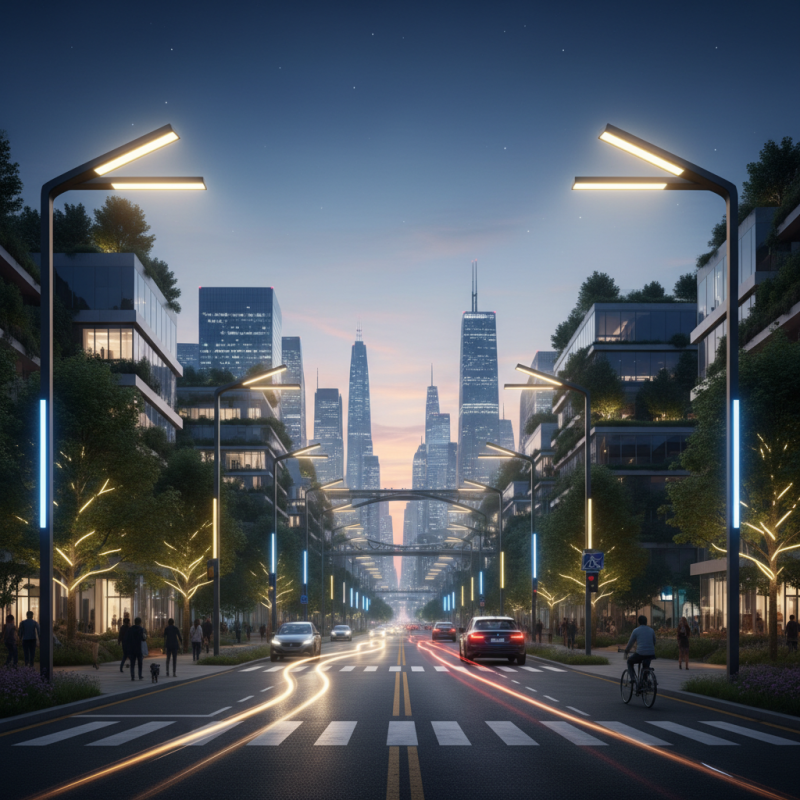
Street lighting plays a vital role in urban development. As cities grow, effective lighting solutions become crucial. Innovative street lighting can enhance safety and improve aesthetics.
The 2026 advancements in street lighting showcase exciting possibilities. New technologies focus on energy efficiency and environmental sustainability. Smart lighting systems adapt to real-time conditions. They reduce energy waste while providing necessary illumination.
However, challenges exist. Implementation of these innovations may face budget constraints. Not all cities have the same resources or technical expertise. Additionally, community acceptance is essential for success. As urban planners explore these options, careful consideration is necessary. Are we ready to invest in better street lighting?
Innovative Technologies in Street Lighting for Urban Sustainability
Innovative technologies are reshaping street lighting for urban sustainability. One promising advancement is smart lighting systems. These systems utilize sensors to adjust brightness based on real-time data. For example, lights can dim when no pedestrians are present, conserving energy. Such features help cities reduce their carbon footprint.
Another interesting development is solar-powered street lights. These systems harness sunlight during the day and illuminate streets at night. They often require less maintenance than traditional lights. However, they depend on consistent sunlight, which can pose challenges in cloudy regions. This underscores the need for adaptable solutions in various climates.
Lastly, LED technology continues to transform street lighting. LEDs are energy-efficient and have a longer lifespan than traditional bulbs. Although upfront costs might be higher, savings in energy bills are notable over time. Yet, not all cities have access to such technology, leading to disparities in urban aesthetics and safety. Adopting advancements in street lighting can be a mixed bag, prompting cities to weigh their options carefully.
Energy-Efficient Lighting Solutions: LED and Beyond
As cities grow, energy-efficient lighting solutions become vital. LED technology is a popular choice, with energy consumption reduced by over 75% compared to traditional bulbs. This shift is essential for urban areas facing rising energy costs. A recent report indicated that transitioning to LEDs could save cities nearly $10 billion annually on electricity bills and maintenance.
However, the implementation of LED solutions is not flawless. There are challenges in ensuring adequate lighting levels and managing light pollution. Studies reveal that poor quality LEDs can lead to discomfort and safety issues. Urban planners must consider human and environmental impacts when developing lighting systems.
Beyond LEDs, innovative approaches are emerging. Solar-powered street lights are gaining traction. They harness sunlight during the day and illuminate streets at night. Local governments have noted significant energy savings and increased safety due to better-lit areas. Still, it's crucial to assess the lifecycle costs and reliability of these systems over the long term. Balancing innovation with practical application is key for sustainable urban development.
Smart Street Lighting Systems: Integration with IoT and Data Analytics
Smart street lighting systems are reshaping urban environments. These systems integrate Internet of Things (IoT) technology and data analytics to enhance city life. They offer significant energy savings and improve safety. By using sensors, lights can adapt to real-time conditions. For example, when a street is busy, lights shine brighter. When it's quiet, they dim. This not only reduces energy consumption but also lowers maintenance costs.
Tips: Regularly assess your lighting needs. Consider how traffic patterns change at different times. Rely on data analytics for these insights. Smart systems can identify when lights are malfunctioning, enabling faster repairs.
Implementing these innovations is not without challenges. Some city planners may resist adopting new technologies. Concerns about privacy and surveillance often arise. Additionally, integrating these systems requires upfront investment. Cities must weigh costs against long-term benefits. Continuous evaluation is essential to ensure systems meet community needs. Balancing efficiency and privacy remains a crucial aspect of this technological evolution.
2026 Smart Street Lighting Innovations: Energy Efficiency and CO2 Reduction
Environmental Impact of Sustainable Street Lighting Practices
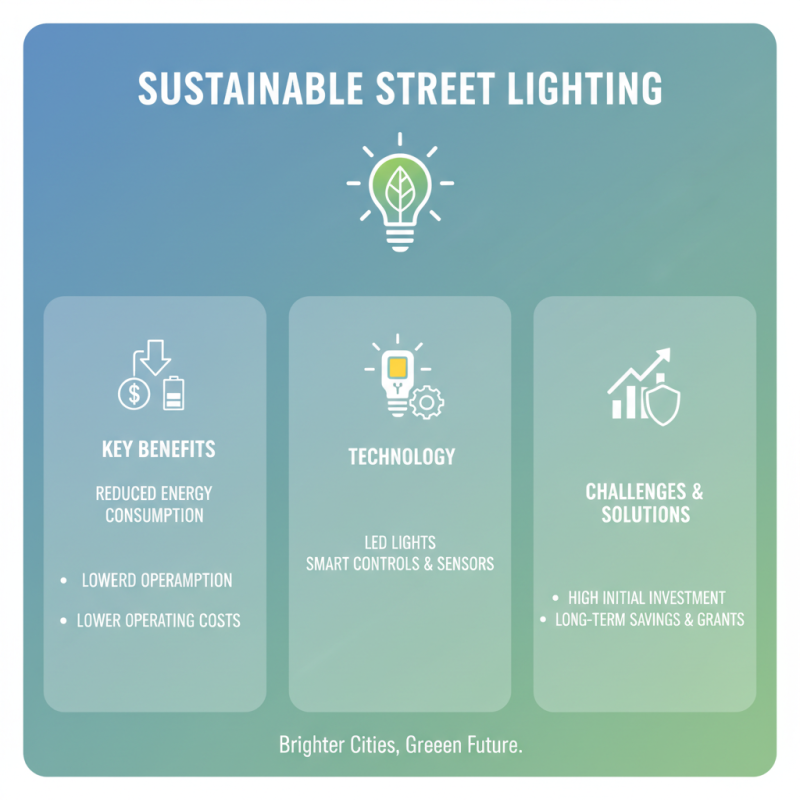
Sustainable street lighting plays a vital role in urban development. It reduces energy consumption significantly. By using LED lights and smart technology, cities can achieve better efficiency. These lights consume less power and last longer than traditional options. However, there are challenges. Transitioning to these systems can be costly for cities.
The environmental impact is crucial. Sustainable lighting lowers greenhouse gas emissions. It creates safer, more pleasant urban environments. Cities can integrate solar panels to power these lights. This approach not only conserves energy but also utilizes renewable resources.
Tip: When planning, consider the placement of streetlights. Strategic positioning can enhance safety and community engagement. Also, gather community feedback to ensure that the lighting meets everyone's needs. Remember, a well-lit area decreases crime but can disrupt local wildlife. Balancing human needs with ecological considerations is essential. Sustainable practices must evolve with urban growth.
Case Studies: Successful Implementations of Urban Lighting Innovations
Innovative street lighting solutions are transforming urban landscapes. Cities worldwide are adopting smart lighting systems. These options not only enhance public safety but also promote sustainability. According to recent studies, cities can reduce energy consumption by up to 50% through smart LED lighting. This shift can significantly lower carbon footprints and operational costs.
One successful case is the smart lighting project in a European city. The installation included sensors to adjust brightness based on pedestrian activity. This approach not only saved energy but also improved safety at night. The city reported a 30% decrease in nighttime accidents. Such evidence shows that intelligent designs can lead to safer and greener urban environments.
Tips: Consider using solar-powered lights for remote areas. They can reduce dependency on grid power. Also, community engagement is crucial. Collect feedback to ensure lighting meets local needs. Address concerns and involve residents in the planning phase. This fosters a sense of ownership and can lead to better outcomes.
2026 Best Street Lighting Innovations for Sustainable Urban Development
| Innovation Type |
Description |
Implementation Year |
Location |
Key Benefits |
| Solar Street Lights |
Street lights powered by solar panels. |
2022 |
Various cities |
Reduced energy costs and carbon footprint. |
| Smart LED Lighting |
Energy-efficient LED lights with smart control. |
2023 |
Urban areas |
Improved light quality and reduced energy usage. |
| Motion Sensor Lights |
Lights that activate based on nearby movement. |
2024 |
Parks and pedestrian zones |
Enhanced safety and energy conservation. |
| Smart City Integration |
Integrated lighting control systems linked to urban infrastructure. |
2026 |
Smart cities |
Seamless urban management and energy efficiency. |
| Solar-Powered Pathway Lights |
Pathway lights that store energy during the day. |
2025 |
Residential areas |
Low maintenance and sustainable energy use. |