

2026 Top Curling Iron and Straightener Suppliers in China

China remains a major sourcing base for hair-styling appliances, but a supplier’s location alone proves little. This 2026 guide examines curling iron and straightener manufacturers through practical criteria: product range, sample quality, production consistency, communication, and documented safety testing. Buyers should compare heating speed, temperature control, plate finish, cord design, and packaging against their market needs. Small details matter. A loose hinge or uneven heat can change the user experience.

For transparency, the following is an illustrative quote from fictional sourcing adviser Mei Lin, not a verified statement from a real person: “A polished sample is only the beginning; ask how the next production batch will match it.” That reminder is useful when evaluating curling iron straightener service from china. Request current product specifications, inspect samples, and clarify customization limits before agreeing on an order. Verify relevant test reports with qualified professionals, rather than relying on a supplier’s broad assurances.

The suppliers in this overview are starting points for careful evaluation, not automatic endorsements. Some may suit private-label projects; others may focus on standard models or flexible order volumes. There is no perfect factory. Buyers should confirm lead times, quality-control steps, warranty handling, and communication expectations in writing. A detail can be missed. Even experienced teams sometimes learn this late. The aim here is a clearer shortlist, grounded in verifiable information and realistic questions—not promises that every supplier will fit every business.
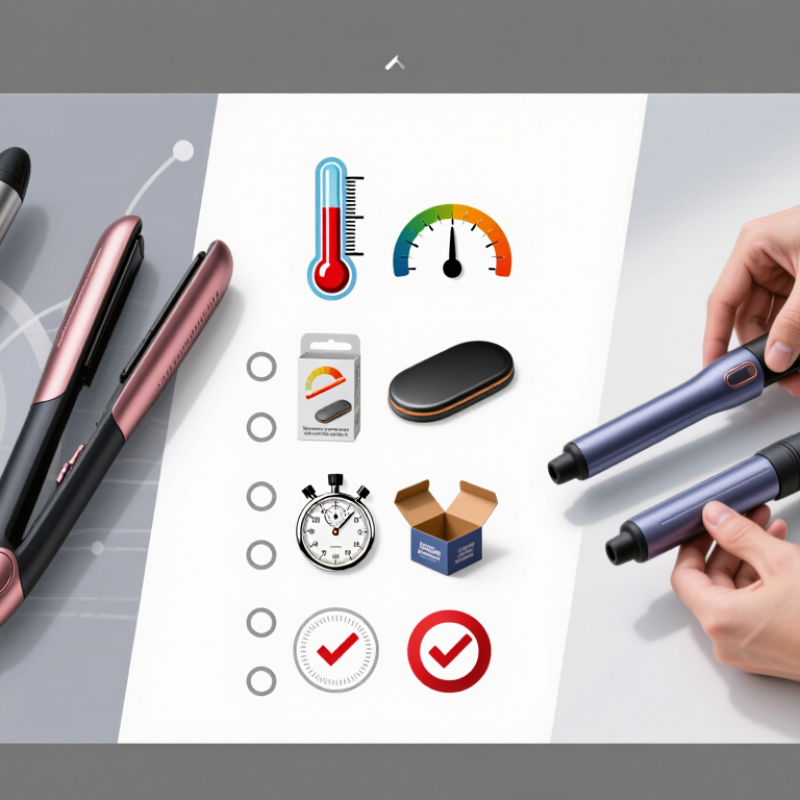
2026 Top Curling Iron and Straightener Suppliers in China

Curling Irons and Straighteners: Product Types and Market Scope in China

China’s curling-iron and straightener category includes several distinct product types. Common formats include clamp curling irons, tapered wands, automatic curlers, and flat irons. Barrel diameter affects curl size, while plate width influences how quickly larger sections can be styled. Small details matter.

The market serves household users, salons, and buyers seeking private-label or contract manufacturing. Household models often prioritize simple controls and compact storage. Salon-oriented tools may offer broader temperature adjustment, longer cords, or durable heating elements. Travel models tend to be lighter and easier to pack. The category is not perfectly tidy: some products combine functions, and feature labels do not always explain real performance.

When assessing suppliers, compare sample build quality, temperature stability, heat-up time, and cord movement. Ask for test records covering electrical safety and operating performance, then check whether they match the exact model offered. Confirm barrel or plate dimensions, voltage options, packaging, and customization limits in writing. A glossy sample is useful, but repeated testing may reveal uneven heating or awkward controls. Supplier capability is best judged through documented checks, not product photos alone.

How China’s Hair Styling Tool Supplier Landscape Is Structured

China’s curling iron and straightener supply base is not one uniform factory network. It generally includes integrated appliance makers, OEM and ODM manufacturers, component vendors, and export-focused trading firms. Integrated plants may handle heating elements, temperature controls, assembly, and testing in one site. Smaller suppliers often specialize in ceramic plates, barrels, cords, or packaging. The structure matters: a low quoted price may exclude tooling, reliability tests, or custom packaging.

Grand View Research’s Hair Styling Tools Market report estimated the global market at USD 30.09 billion in 2023, with projected growth through 2030. That figure covers a broad product category, not China-made irons alone. UN Comtrade also classifies many electro-thermal hairdressing appliances under HS 851632; this category does not cleanly separate every straightener and curling iron. The data has limits.

For buyers, supplier checks should follow the product’s actual build. Ask who makes the heating module, how temperature is verified, and whether test records match the production model. A sample can feel smooth in the hand. Long-run performance is less visible. Factory audits and repeat-batch checks help, though they cannot remove every sourcing risk. Some supplier profiles look clearer on paper than on the production floor. That gap deserves attention.

2026 Top Curling Iron and Straightener Suppliers in China – How China’s Hair Styling Tool Supplier Landscape Is Structured

Supplier Segment Typical Product Scope Common Capabilities Observed Manufacturing Clusters Best Fit for Buyers Key Checks During Sourcing
Finished-product OEM/ODM manufacturers Electric curling irons, hair straighteners, multi-stylers, and related heated styling tools. Product assembly, packaging, private-label production, and—in some cases—industrial design or tooling coordination. Guangdong, including manufacturing areas around Shenzhen, Dongguan, and Foshan; production locations vary by supplier. Importers and retailers seeking a finished product made to an existing specification or adapted for their market. Confirm which processes are performed in-house; review product samples, production controls, electrical safety documentation, and packaging specifications.
ODM-focused product developers New or modified styling-tool designs, including changes to housing, controls, temperature settings, and accessories. Design engineering, prototype coordination, design-for-manufacturing work, and customization based on a buyer’s brief. Concentrated in established electronics and consumer-appliance manufacturing regions, especially Guangdong; capabilities are supplier-specific. Brands developing a differentiated product or adapting an existing platform for a target market. Clarify tooling ownership, design rights, prototype and production timelines, change-control procedures, and responsibility for compliance testing.
Private-label and export-oriented factories Catalog-based straighteners and curling irons supplied with customized branding, manuals, and retail packaging. Product selection from existing models, labeling and packaging changes, export documentation, and order coordination. Found across Guangdong and other coastal manufacturing regions, including Zhejiang. Buyers prioritizing a shorter product-development cycle and a defined range of existing models. Check that the quoted model matches the tested model; verify minimum order quantities, lead times, packaging languages, and market-specific documentation.
Heater, temperature-control, and electrical component suppliers Heating elements, thermostats or sensors, control boards, switches, cords, plugs, and related electrical components. Component manufacturing and supply to appliance assemblers; product scope differs by specialist. Suppliers operate across China’s broader electronics and appliance supply chains; sourcing is not limited to one city or province. Factories seeking component options, replacement parts, or a more controlled bill of materials. Request component specifications, traceability information, applicable test reports, and evidence that components are suitable for the finished product design.
Metal, ceramic, and surface-treatment suppliers Barrels, plates, structural parts, and surface treatments used in heated styling tools. Metal forming, machining, coating, finishing, or supply of treated components, depending on the supplier. Linked to regional metalworking and surface-treatment supply chains, including parts of Guangdong and Zhejiang. Manufacturers managing component quality, surface consistency, or product-specific material requirements. Specify substrate and coating requirements; assess adhesion, dimensional consistency, finish quality, and relevant durability test methods.
Trading and sourcing companies Finished styling tools and, in some cases, a wider assortment of personal-care appliances. Supplier coordination, export sales, order consolidation, and communication support; manufacturing may be subcontracted. Often located near major export and manufacturing hubs, including Guangdong and Zhejiang. Smaller buyers needing a consolidated point of contact or a broader product assortment. Identify the actual manufacturer, establish who controls quality checks, confirm subcontracting arrangements, and verify product-specific test records.
Contract manufacturers and assembly partners Assembly of customer-defined curling irons or straighteners using buyer-approved designs and components. Assembly, process control, inspection, and production planning; engineering and component sourcing vary by contract. Available within China’s appliance and electronics manufacturing network, with regional concentration dependent on product and supply-chain needs. Buyers with established designs, technical specifications, or nominated component suppliers. Review factory process controls, incoming-material inspection, production testing, defect handling, and change-approval requirements.

This table describes common supplier roles and manufacturing patterns in China’s hair-styling-tool supply chain. It is a qualitative sourcing guide, not a ranked or audited directory; capabilities, locations, certifications, and order terms should be verified directly for each supplier and product.

Key Capabilities to Compare Among Chinese Suppliers

When comparing Chinese suppliers of curling irons and straighteners, look beyond catalog photos. Ask how evenly each model heats across the barrel or plate, and request test records for temperature stability. A display reading alone proves little. Check whether controls hold their setting during repeated use and whether the cord swivels without catching. Small details matter. Review the housing, plate finish, hinge movement, and insulation around the handle. These are easy to overlook in a polished sample, but they affect daily handling. Ask how the supplier checks incoming components and finished units, and whether inspection criteria are written down.

Production capability deserves equal attention. Request a clear account of prototype timing, tooling needs, monthly capacity, and typical lead times. Then compare those estimates with a sample order or a documented production schedule. A factory visit can help, but it cannot replace records; remote buyers should request dated inspection photos and reports. Discuss customization in practical terms, such as plate width, heat settings, plug options, and packaging dimensions. Confirm which changes need new testing or may affect delivery. Communication quality is measurable, too: note response time and whether technical questions receive specific answers. One sample is not enough. Batch consistency can still vary, so agree on defect definitions and a pre-shipment inspection plan. Suppliers may promise flexibility; verify it with details.

Manufacturing Standards, Safety Compliance, and Quality Control

2026 Top Curling Iron and Straightener Suppliers in China

Manufacturing Standards, Safety Compliance, and Quality Control

When comparing Chinese suppliers in 2026, look beyond polished product photos. Ask how each factory controls heating elements, temperature sensors, insulation, and power cords. Request current test reports for the exact model, not a similar item. Safety requirements vary by destination market, so confirm applicable standards with a qualified testing provider. Clear documentation matters.

A reliable production process includes incoming material checks, temperature accuracy tests, electrical safety inspections, and final product sampling. Ask for measurable acceptance limits and records from recent batches. For example, a temperature display should be checked against a calibrated reference, while cord connections need inspection after repeated flexing. A certificate alone is not a quality system. Even a detailed checklist can miss defects, so independent audits and periodic retesting add confidence.

Tips: Request a sample from the production line, then test heat-up time, grip comfort, and temperature stability. Check whether the supplier can trace components by batch. Keep one issue in mind: factory records may look complete but still need verification. Ask direct questions, and compare answers with the product in your hands.

How to Evaluate and Verify Suppliers for 2026 Sourcing

For 2026 sourcing, compare suppliers on product consistency, factory capability, and evidence—not catalog claims alone. Grand View Research estimated the global hair styling tools market at USD 5.59 billion in 2023, with projected growth of 5.4% annually from 2024 to 2030. Demand is expanding, but a polished sales sheet proves little. Ask for the factory’s registered business details, production address, and recent audit records. Confirm that the proposed curling iron or straightener matches the tested sample.

Verification needs specifics. The OECD and EUIPO estimated counterfeit goods represented 3.3% of world trade in 2016; this broad estimate is not specific to hair appliances, but it underscores the value of traceable documentation. Request complete test reports for the exact model, including its plug, voltage, and key components. Check whether testing references IEC 60335-2-23, which covers household appliances for skin or hair care. Arrange a sample review under realistic conditions: heat-up time, temperature stability, cord flexibility, and finish quality. Small differences matter.

Tips: Ask the supplier to show live production, not only staged photos. Verify report numbers with the issuing laboratory, and record any unanswered questions. Some checks take time. Don’t skip them.

Skip to content