

The 2026 market offers more Mica Heater designs than many buyers expect. Strip heaters fit narrow spaces around pipes, tanks, and heated plates. Band heaters wrap around cylindrical surfaces. Flexible mica panels suit equipment that needs a thin, evenly heated surface. Each type solves a different problem. None is ideal for every application.
For this overview, fictional Mica Heater engineer Alex Morgan offers a practical reminder: “Choose for the surface, not just the wattage.” That rule points buyers toward the details that matter: operating temperature, voltage, dimensions, mounting method, and heat distribution. A band heater may look right on a drawing, yet leave cold spots if it fits poorly. Small details matter.
Global buyers also need clear specifications and consistent quality records. Ask suppliers for material details, test data, and guidance on installation and operating limits. Compare lead times and after-sales support, too. Product names can hide meaningful differences. One uncomfortable truth: a low purchase price may not tell you much about service life. This guide compares the main Mica Heater types for common industrial uses, while noting where available information may be incomplete. A careful choice starts with the actual equipment, not a catalogue headline.
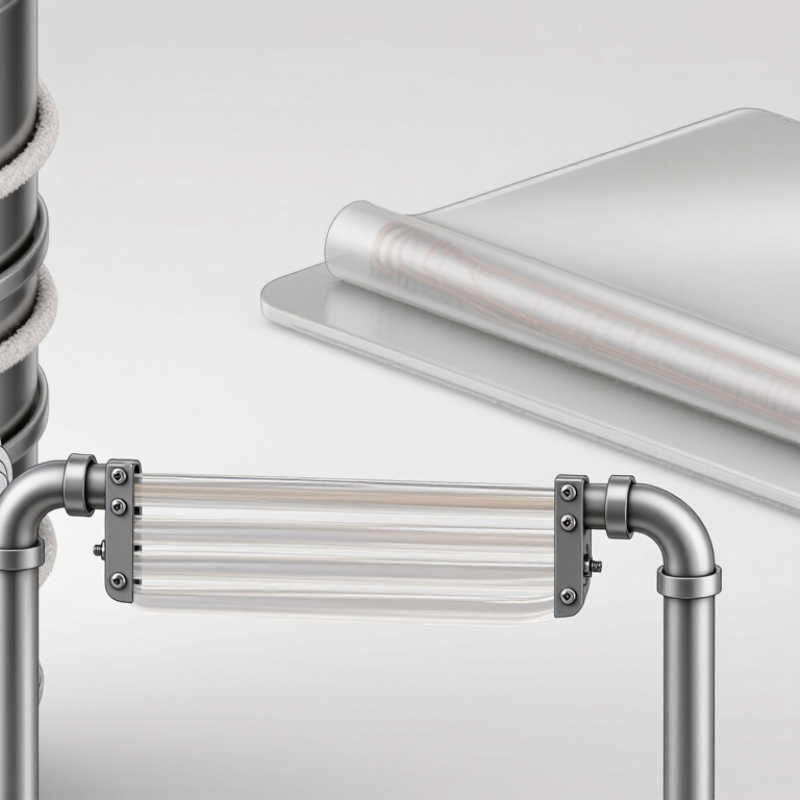
A mica heater is an electric resistance heater that uses mica sheets to support and electrically isolate a heating element. In many designs, a resistance-alloy wire or strip sits between mica layers, beside a metal plate, band, or casing. Current heats the element; the metal surface then transfers warmth to nearby air or equipment. Small gaps matter. Poor contact can create uneven hot spots.
Construction varies by application, but the assembly commonly includes mica insulation, a formed heating element, a metal housing, and terminals. Some units also use a thermostat or thermal cutoff; these controls are design-dependent, not universal.
The U.S. Department of Energy’s Energy Saver guidance states that electric resistance heating converts nearly all supplied electricity into heat at the point of use. That figure does not describe the efficiency of the whole heating system or the electricity supply.
For buyers, check the rated voltage, wattage, operating temperature, dimensions, and insulation condition against the equipment’s requirements. Mica handles heat and electrical separation well, but it can crack under impact or careless installation.
A thin sheet may look uncomplicated. It still deserves inspection.
A mica heater produces heat when electric current passes through a resistive wire or strip. The element resists that current, so electrical energy becomes heat. Mica does not burn. Its sheets support and electrically insulate the element while allowing heat to pass toward the heater’s surface. The exact arrangement varies by design, and construction details affect temperature distribution.
From the element, heat moves through the mica and into a metal plate or other heating surface. That warmed surface transfers energy to nearby objects by radiation and to surrounding air by convection. In a fan-assisted model, moving air can spread warmth more quickly, but airflow and room layout matter. A hand held near the outlet may feel intense heat while a distant corner stays cool. Details matter.
Performance depends on element spacing, surface area, mounting, and temperature controls. A loose fit or obstructed airflow can create uneven heating, even when the heater is operating normally. Buyers should check the rated voltage, power, operating temperature, and intended installation conditions against the manufacturer’s specifications. One limitation is easy to miss: mica helps insulate and conduct heat, but it cannot compensate for poor system design.
| Heater Type | Typical Construction | How Heat Is Generated | How Heat Is Transferred | Common Applications | Buyer Considerations |
|---|---|---|---|---|---|
| Mica Band Heater | Resistance wire or ribbon is insulated by mica sheets and enclosed in a formed metal band, commonly with a clamping mechanism. | Electric current passes through the resistance element, producing heat through electrical resistance. | The element heats the metal sheath; tight contact transfers heat mainly by conduction to a cylindrical surface. | Plastic-processing barrels, pipes, tanks, and other cylindrical equipment. | Match the heater diameter and width to the equipment. Proper fit and clamping help maintain heat transfer. |
| Mica Strip Heater | A flat resistance element is supported and electrically insulated with mica, typically within a metal enclosure. | Current flowing through the resistance element converts electrical energy into heat. | Heat moves through the heater’s metal face and into a contacting surface by conduction; exposed surfaces can also lose heat to the air. | Dies, platens, packaging machinery, and equipment with narrow or flat heating zones. | Check the mounting method, available space, wattage, and required temperature uniformity. |
| Mica Plate Heater | A resistance element is arranged between mica insulating layers and assembled as a flat plate, often with protective metal sheets. | Electrical resistance in the element generates heat across the plate area. | Heat is conducted through the plate to a work surface or component. Heat may also transfer by convection and radiation from exposed faces. | Flat tooling, cabinets, laboratory equipment, and industrial heating surfaces. | Confirm plate dimensions, surface contact, insulation, and the temperature-control arrangement. |
| Mica Nozzle Heater | A compact, shaped mica-insulated resistance element is fitted around or near a machine nozzle, usually inside a metal cover. | The resistance element produces heat when energized by an electrical supply. | Heat passes through the heater casing into the nozzle by conduction, then from the nozzle to the material in contact with it. | Injection-molding and extrusion-machine nozzles, where compatible with the equipment design. | Verify nozzle dimensions, lead orientation, sensor position, and operating conditions before selection. |
| Custom-Formed Mica Heater | A mica-insulated resistance assembly is shaped to suit a specified component or mounting arrangement. | An energized resistance element converts electrical energy into heat; the element layout determines the heating pattern. | Transfer depends on the shape and contact area. Direct-contact surfaces transfer heat mainly by conduction; exposed areas also transfer heat to surrounding air and by radiation. | Special-purpose machinery and components that do not suit standard band, strip, or plate formats. | Provide drawings, supply voltage, power requirements, mounting details, and the intended control method. |
Heat-transfer overview: In a mica heater, electrical resistance generates heat in the element. Mica electrically insulates and supports the element; it is not the heat source. Heat then travels through the heater assembly and into the target primarily by conduction when surfaces are in contact. Convection and radiation can also transfer heat from exposed surfaces. Temperature limits, power density, and performance depend on the heater design, installation, controls, and operating conditions.
Mica heaters are best grouped by shape and mounting: band, strip, plate, and flat-panel designs. Each places a resistance element between mica sheets, but contact area affects heat transfer. Bands wrap around cylindrical barrels and nozzles. Strips suit narrow surfaces, such as packaging jaws. Plate and panel types heat broader, flat tooling. A small difference. It can matter.
Buyers should compare voltage, watt density, dimensions, lead exit, insulation, and temperature controls. Hinged bands can simplify installation around a barrel. Poor contact, however, may create uneven heating or hot spots. Higher watt density can speed warm-up, but it is not automatically the better choice. Check the drawings.
The U.S. Department of Energy’s Industrial Decarbonization Roadmap estimates that process heating accounts for about half of manufacturing energy use. This is not a mica-heater performance benchmark, but it highlights the importance of fit and control. Ask for operating limits and relevant test data, then check them against the actual mounting surface. Even a well-sized heater may disappoint if the surface is uneven.
What are the main types of mica heaters? Compare the geometries each type is commonly designed to heat.
A value of 1 indicates a common form-factor application; 0 means it is not the type’s usual geometry. Mica band heaters commonly fit cylindrical barrels, strip heaters suit narrow or formed surfaces, plate heaters are used on flat surfaces, and nozzle heaters fit compact cylindrical zones. Specific designs vary by application.
Mica heater types differ mainly in shape, heat transfer, and installation. Mica band heaters wrap around cylindrical surfaces such as processing barrels and small tanks. Their close contact supports efficient heating, but a loose fit can create cooler areas. They suit equipment that needs steady, controllable heat around a curved surface. Fit matters.
Mica strip heaters are narrow and flat, making them useful for sealing jaws, heated rails, and compact machinery. Their slim profile helps where space is limited. Mica plate heaters spread heat across a broader flat surface, such as a platen or warming plate. Actual temperature uniformity depends on the plate material, mounting pressure, and sensor position—not just the heater type.
For buyers comparing performance, check operating temperature, voltage, watt density, dimensions, and the expected duty cycle. A high watt density may speed warm-up, yet it can increase hot spots if the workpiece cannot spread heat evenly. Mica insulation also needs protection from moisture and mechanical damage. In practice, the best choice is the one matched to the surface and process. That sounds simple, but installation details are often underestimated. A prototype test under real operating conditions can reveal gaps that a specification sheet misses.
Start with the machine, not a catalogue category. Record the available voltage, target temperature, heated area, and warm-up time. Then compare the heater’s wattage and dimensions with the actual installation space. A heater that fits on paper may still leave cold edges around a nozzle or plate. Fit matters.
Check the mica insulation, sheath material, terminal layout, and permitted operating temperature. Ask for technical data covering watt density and temperature limits, not just maximum output. If the heater will face frequent cycling, vibration, or uneven clamping, discuss those conditions with the supplier. They can change service life. A datasheet alone cannot predict every installation.
Also consider how the heater will be mounted and controlled. Loose contact can create hot spots; excessive tightening may damage the assembly. Confirm that the control sensor measures the heated part, rather than a convenient but misleading nearby surface. For a new design, request a sample and test it under representative conditions. Test it first.
Buyers often focus on purchase price, but replacement access, lead time, and consistent dimensions matter too. Even a careful selection may need adjustment after the first production run.
TERMS OF USE - LEDOLUX
This site uses cookies in order to deliver services in accordance with Privacy Policy. You can use settings within your browser to control the cookies that are set on your computer – conditions of access or storage of cookies.
Your data controller will be LEDOLUX POLAND SP. ul. Innowacyjna 1; 36-060 Głogów Małopolski, which adapts the content of its website to your needs and analyses and examines them to improve it. More information.