

10 Best Module Transceiver Suppliers for Global Buyers

Choosing a reliable Module Transceiver supplier can shape network performance, installation costs, and long-term maintenance.

Global buyers face a crowded market. Product pages often highlight speed, distance, and low prices. They may not explain testing conditions, firmware limits, or compatibility risks. A transceiver rated for 10Gbps may perform differently across switches, fiber types, and operating temperatures. Small details matter.

This guide introduces 10 leading Module Transceiver suppliers for international purchasing teams. The selection considers product range, technical documentation, manufacturing experience, quality controls, delivery capability, and after-sales support. It also examines practical requirements, including single-mode and multimode fiber support, connector options, operating temperature, digital diagnostics, and OEM compatibility. These details affect real installations, from a compact server room to a dusty outdoor cabinet.

Evidence matters.

Reliable suppliers should provide clear datasheets, traceable specifications, compliance information, and realistic performance claims. Buyer feedback and industry reputation also offer valuable signals, although neither is perfect. Some vendors may excel in custom orders but struggle with small quantities. Others may offer fast delivery while providing limited engineering assistance. This guide recognizes those trade-offs instead of presenting one supplier as ideal for every project.

The goal is practical comparison, not promotional ranking. Procurement teams should verify current certifications, warranty terms, sample performance, and regional support before placing large orders. A careful sample test can reveal coding, heat, or interoperability issues early. That step may feel slow. It often prevents expensive replacement work later.

With transparent evaluation and technical judgment, global buyers can narrow their options and choose suppliers that support dependable, scalable network deployments.
10 Best Module Transceiver Suppliers for Global Buyers

Module Transceivers: Definition, Functions, and Common Applications

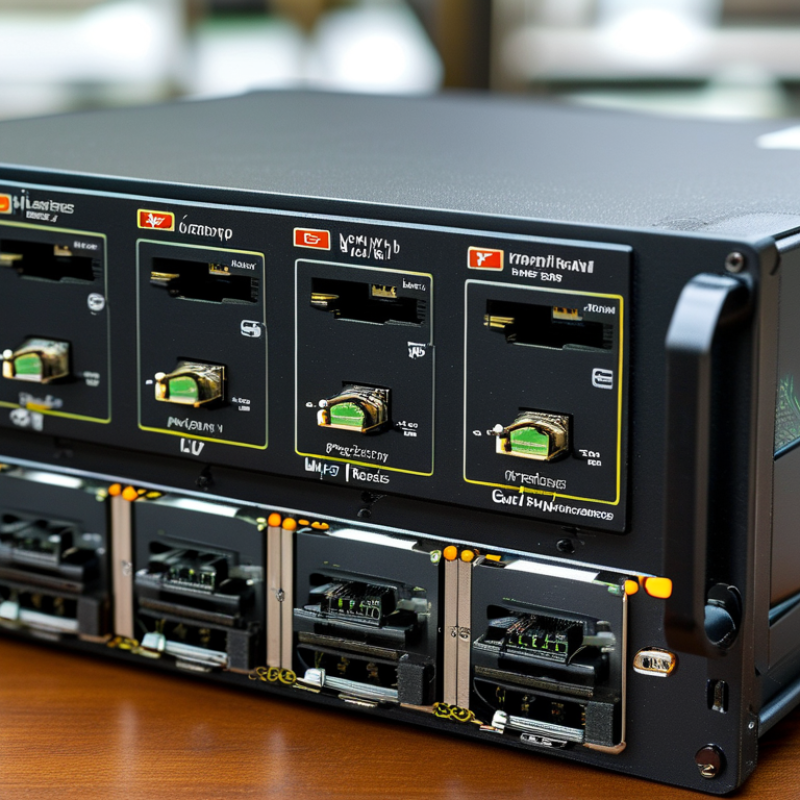
A module transceiver is a compact device that converts electrical signals into optical signals, then converts them back. It connects switches, servers, routers, and storage systems across copper or fiber links. Common formats include SFP, SFP+, QSFP, QSFP-DD, and OSFP. Each format supports different speeds, distances, and port densities. A 10G module may serve a short rack connection, while 400G and 800G modules support demanding data-center links. Small device. Major responsibility.

Its core functions include signal transmission, wavelength control, clock recovery, diagnostics, and thermal management. Digital monitoring can report temperature, voltage, optical power, and operating hours. These readings help engineers detect weak links before service disruption occurs. The Ethernet Alliance has reported rapid industry movement toward 800G and future 1.6T Ethernet applications. LightCounting’s market outlook also identified artificial intelligence clusters as a major driver of high-speed optical demand. The numbers are impressive, but field conditions are less tidy. Heat, dust, connector quality, and firmware differences still affect reliability.

Applications range from enterprise networks to telecom backbones, cloud facilities, security systems, and industrial campuses. Single-mode modules often cover kilometers, whereas multimode modules usually serve shorter indoor routes. Buyers should verify wavelength, fiber type, reach, power consumption, operating temperature, and interoperability. Research from Dell’Oro Group has repeatedly linked data-center expansion with stronger demand for high-speed connectivity equipment. Yet, projected growth does not guarantee smooth deployment. A module that passes laboratory tests may still perform poorly in a crowded, hot rack. Practical validation remains essential.

Key Criteria for Evaluating Global Module Transceiver Suppliers

Global buyers should evaluate module transceiver suppliers beyond price and catalog size. Uptime Institute’s 2024 Global Data Center Survey reported that 54% of respondents had experienced an outage within three years. This highlights why reliability evidence matters. Ask for temperature testing, bit-error-rate results, insertion-loss records, and digital diagnostic monitoring data. Suppliers should also provide serial-level traceability and clear test conditions. A polished datasheet is not proof.

Compatibility requires practical verification. Check optical budgets, connector geometry, firmware behavior, and interoperability with existing switches. Request samples from the same production lot, not only laboratory units. LightCounting’s 2024 optical communications outlook placed the global transceiver market in the low-teens billions of dollars, reflecting strong demand from data centers and accelerated networks. That growth can pressure quality control and delivery schedules. Review factory capacity, component sourcing, lead-time history, warranty terms, and product lifecycle notices. Independent certification helps, but it cannot replace system-level testing. I have seen technically attractive samples fail during long-temperature operation. Supplier scorecards should therefore weight field reliability, documentation accuracy, and corrective-action speed alongside unit cost. Cheap is sometimes expensive.

The 10 Leading Module Transceiver Suppliers for International Buyers

For international buyers, the ten leading module transceiver suppliers should be judged by evidence, not polished catalogs. A dependable supplier publishes optical budgets, operating temperatures, connector options, and compatibility details. Buyers should verify data rates, transmission distance, wavelength accuracy, and power consumption for every proposed module. Small differences matter in dense cabinets.

A professional sourcing review should include samples, test reports, and production traceability. Check whether each supplier supports digital diagnostics, including temperature, voltage, and received optical power. Ask for evidence. Independent certification, documented quality controls, and a clear warranty process also reduce procurement risk. Delivery records deserve attention, especially when customs delays can interrupt a regional deployment. Request realistic lead times, not ideal estimates.

Field testing can expose weaknesses hidden by specifications. Run modules through temperature changes, repeated insertion cycles, and extended traffic loads. Compare error rates before approving volume orders. No supplier is flawless. Some provide strong engineering support but limited inventory, while others ship quickly with slower technical responses. That trade-off requires honest scoring. Buyers should record test conditions, firmware versions, and failure patterns. A spreadsheet may seem ordinary, yet it prevents memory from replacing evidence. Reassess suppliers annually because component availability, compliance requirements, and network designs continue to change.

10 Best Module Transceiver Suppliers for Global Buyers - The 10 Leading Module Transceiver Suppliers for International Buyers

Anonymized comparison of supplier capabilities, product coverage, compliance, and international purchasing terms

Supplier Profile Primary Production Region Main Module Families Data-Rate Coverage Common Form Factors Typical Reach Options Operating Temperature Compliance Coverage Typical MOQ Typical Lead Time Customization Support
Profile 01 East Asia Ethernet, Fibre Channel, CWDM/DWDM 1G–400G SFP, SFP+, SFP28, QSFP+, QSFP28, QSFP-DD 550 m to 80 km Commercial and industrial options RoHS, REACH, IEC safety documentation 10–50 units 2–5 weeks EEPROM coding, labeling, firmware configuration
Profile 02 Southeast Asia Single-mode and multimode Ethernet optics 1G–100G SFP, SFP+, SFP28, QSFP28 300 m to 40 km 0°C to 70°C; selected industrial models RoHS, CE, FCC, EMC test support 20–100 units 3–6 weeks Optical budget selection and host compatibility testing
Profile 03 East Asia Data-center Ethernet and parallel optics 10G–800G SFP+, SFP28, QSFP28, QSFP56, QSFP-DD, OSFP 100 m to 10 km 0°C to 70°C RoHS, REACH, MSA interoperability testing 10–30 units 4–8 weeks Breakout configurations, coding, thermal validation
Profile 04 Europe Industrial Ethernet and railway communication optics 100M–100G SFP, SFP+, SFP28, XFP 550 m to 120 km -40°C to 85°C RoHS, REACH, CE, industrial EMC documentation 5–25 units 6–10 weeks Extended-temperature screening and ruggedized housing
Profile 05 North America Telecom, SONET/SDH, Ethernet, OTN 1G–400G SFP, SFP+, XFP, SFP28, QSFP28, QSFP-DD 2 km to 120 km Commercial and industrial options RoHS, REACH, FCC, telecom test reports 10–50 units 4–9 weeks Network interoperability and protocol-level testing
Profile 06 East Asia Passive and active WDM modules 1G–100G SFP, SFP+, SFP28, XFP, QSFP28 10 km to 160 km 0°C to 70°C; selected -40°C to 85°C models RoHS, REACH, IEC optical safety documentation 10–100 units 5–9 weeks Wavelength planning, link-budget calculation, EEPROM coding
Profile 07 South Asia Enterprise Ethernet and campus-network optics 1G–100G SFP, SFP+, SFP28, QSFP+, QSFP28 100 m to 40 km 0°C to 70°C RoHS, CE, FCC, MSA compatibility 25–100 units 3–7 weeks Connector options, coding, private-label packaging
Profile 08 East Asia High-speed data-center and direct-attach solutions 25G–800G SFP28, QSFP28, QSFP56, QSFP-DD, OSFP 2 m to 10 km 0°C to 70°C RoHS, REACH, MSA and thermal compliance testing 10–30 units 5–10 weeks DAC/AOC lengths, breakout cables, host validation
Profile 09 Middle East and North Africa Long-haul telecom and access-network optics 1G–100G SFP, SFP+, XFP, SFP28, QSFP28 10 km to 160 km -40°C to 85°C available RoHS, CE, REACH, telecom qualification support 10–50 units 6–12 weeks Temperature screening, wavelength planning, documentation packs
Profile 10 Latin America Industrial, security, wireless-fronthaul and Ethernet optics 1G–400G SFP, SFP+, SFP28, QSFP+, QSFP28, QSFP-DD 100 m to 80 km Commercial and industrial options RoHS, CE, FCC, EMC and product traceability records 10–50 units 4–8 weeks Host coding, custom labels, test reports, small-batch engineering
Data note: Data rates, reach categories, form factors, temperature ranges, compliance references, minimum order quantities, and lead times reflect commonly specified industry ranges for optical module procurement. Commercial terms and qualification requirements should be confirmed directly during the quotation and validation process.

Product Range, Compatibility, Quality, and Certification Comparison

10 Best Module Transceiver Suppliers for Global Buyers

Product Range, Compatibility, Quality, and Certification Comparison

A strong supplier should offer more than a long product list. The ten suppliers compared here cover common optical modules, copper transceivers, industrial variants, and higher-speed data center options. Buyers should check form factors, transmission distances, connector types, and operating temperatures. A module that fits physically may still fail during network activation.

Compatibility deserves practical testing. Ask suppliers for coding support, firmware details, wavelength data, and interoperability records. Experienced vendors usually provide compatibility tables and evaluation samples before large orders. Test modules with the actual switch, fiber type, and power settings. Laboratory results can differ from field performance.

Quality depends on more than appearance. Reliable suppliers document burn-in testing, optical power measurements, temperature cycling, and batch traceability. Certification records should match the destination market and product category. Look for evidence related to safety, electromagnetic compatibility, environmental controls, and quality management systems. Documents should be current, searchable, and consistent with product labels.

I once treated a lower price as a clear advantage. The modules passed bench testing but showed unstable readings after temperature changes. That mistake changed my purchasing checklist. No scorecard is perfect. Supplier response speed, replacement procedures, and technical support also matter. Some vendors provide excellent certificates but weak troubleshooting. Others offer fast engineering help yet limited product depth. Compare both sides before approving a global shipment.

How to Select the Right Supplier for Your Networking Requirements

Selecting among the 10 best module transceiver suppliers requires more than comparing prices. Start with compatibility. Check wavelength, transmission distance, connector type, data rate, and power limits against your network design. A technically impressive module is useless if it fails during installation.

From my experience, reliable suppliers provide clear datasheets, test reports, and traceable production records. Ask whether each module passes temperature, optical power, and interoperability checks. Confirm warranty terms, replacement procedures, minimum order quantities, and realistic lead times. Fast replies matter, but detailed replies matter more. I once trusted a short delivery promise and overlooked packaging standards. The shipment arrived on time, yet several units needed inspection. That was avoidable.

Tips: Request samples before placing a large order. Test them with your actual switches and cables. Compare received specifications with the datasheet. Check support availability across your working hours. Ask for a written quality-control process. Keep one spare module for field failures. Do not select a supplier based only on a low quotation. Hidden costs can include testing, customs paperwork, rework, and delayed maintenance. Also, review how the supplier handles product changes. A minor component revision can affect network stability. This detail is easy to miss. Reliability is built through evidence, not confident promises.

Skip to content