

What Is the Best Ready Concrete Mixer in 2026?
Choosing the best Ready Concrete Mixer in 2026 depends on the work it must perform, not just its advertised capacity. A contractor pouring house foundations may value reliable daily output and easy access to service. A high-volume supplier may prioritize drum size, loading efficiency, and fuel use. Different jobs. Different priorities. The right machine should match delivery distances, batch requirements, road conditions, and the crew’s experience.
This guide compares the features buyers should examine before making a decision. These include rated capacity, drum design, discharge speed, powertrain, control layout, maintenance access, and parts support. Small details count. A hard-to-reach filter or awkward control can add friction to routine work. Published specifications are useful, but they do not tell the whole story. Check manufacturer documentation, local service availability, and operating costs for the exact configuration you plan to buy. Ask dealers for a clear explanation of capacity ratings, since usable volume and advertised volume may differ. A demonstration can also reveal noise, visibility, cleaning access, and how smoothly the controls respond. No single mixer is best for every fleet. That is easy to say, harder to judge when budgets are tight. The comparisons ahead offer a practical way to weigh performance against ownership needs, while noting where claims should be verified before purchase.
What a Ready-Mix Concrete Mixer Is and How It Works
What Is the Best Ready Concrete Mixer in 2026?
What a Ready-Mix Concrete Mixer Is and How It Works
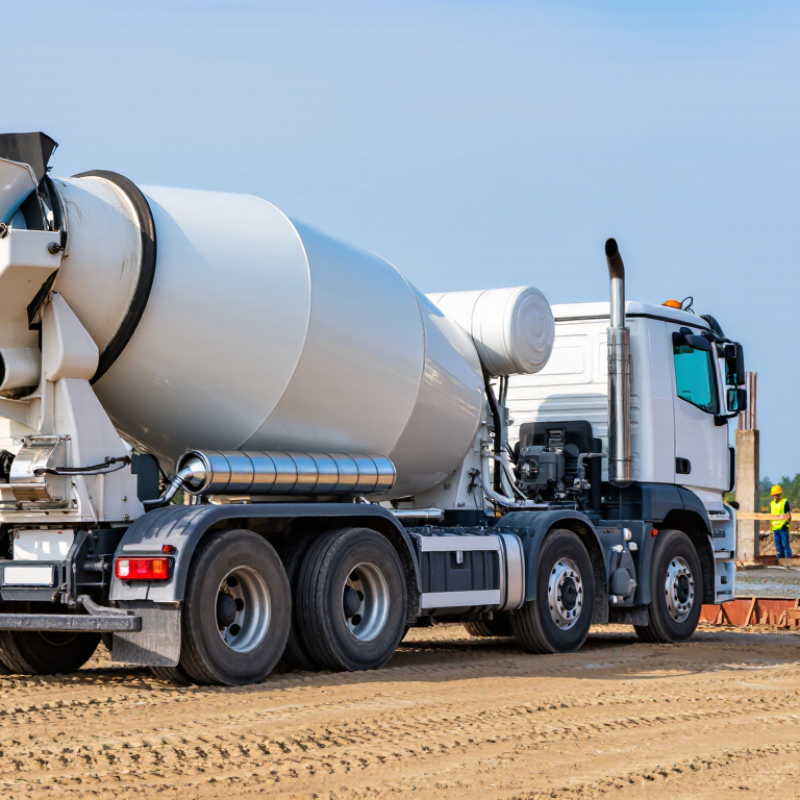
A ready-mix concrete mixer is a vehicle-mounted drum that carries fresh concrete from a batching plant to a job site. The ingredients are measured at the plant, then blended either there or during transport, depending on the production method. Inside the drum, spiral blades lift and fold the mix as the drum turns. The motion helps keep cement, water, sand, and aggregate distributed. It is not simply a rotating container. Drum direction and speed help control mixing and discharge.
During delivery, the drum usually turns slowly to keep the concrete workable and reduce settling. Before discharge, the operator changes the direction of rotation, and the blades guide concrete toward the chute. Timing matters: long delays can affect workability, while excessive mixing may change the mix’s condition. A mixer can maintain a properly designed batch, but it cannot repair poor proportioning or unsuitable materials. That distinction is easy to overlook.
Tips: Check the delivery ticket, load time, and specified mix before placement. Avoid adding water without authorization and a recorded adjustment. Keep the chute clear, and plan the truck’s position before pouring. On a busy site, even a few minutes of poor coordination can matter. I would still verify conditions on site; the drum alone tells you little about concrete quality.
| Topic | How It Works or Typical Details | What to Consider |
|---|---|---|
| What a ready-mix concrete mixer is | A ready-mix concrete mixer is usually a truck-mounted vehicle with a rotating drum that carries fresh concrete from a batching plant to a construction site. The drum’s internal blades help mix or agitate the concrete during transport. | It is designed to deliver concrete while helping limit segregation and premature stiffening; it does not replace correct batching, placement, and curing. |
| Main operating parts | The main components are the rotating drum, internal mixing blades, drive system, water tank or water-supply arrangement, discharge chute, and truck chassis. | Drum condition, blade wear, maintenance access, and compatibility with the truck’s permitted payload all affect practical performance. |
| 1. Batching | Cement, aggregates, water, and any specified admixtures are measured at a batching plant according to the approved mix design. | Accurate proportioning and consistent material moisture control are essential. A truck mixer cannot correct an incorrectly batched mix. |
| 2. Mixing or agitation | Depending on the production method, concrete may be mixed in the truck drum, mixed at the plant and then kept moving in the drum, or partially mixed at the plant and completed in transit. | The required drum operation depends on the mix, delivery distance, plant procedure, and applicable specifications. |
| 3. Transport | The drum rotates as the truck travels, helping keep the concrete in motion. The rotation direction and rate are controlled by the operator and the vehicle’s operating system. | Delivery time, traffic, weather, and the concrete specification matter. Adding water at the site should only be done when permitted and properly documented. |
| 4. Discharge | At the site, the operator changes the drum’s direction to discharge concrete through the rear outlet and chute. The chute directs the material into the placement area or suitable equipment. | Safe access, chute reach, site ground conditions, and coordination with the placing crew can affect unloading efficiency. |
| Common truck capacity | Many conventional ready-mix trucks carry roughly 6–10 cubic metres of concrete, though smaller and larger configurations exist. | Usable load depends on the truck configuration, concrete density, road-weight limits, axle limits, and local regulations. Check the permitted payload rather than relying on drum size alone. |
| Conventional truck mixer | A road-going truck with a rotating drum, commonly used to deliver ready-mixed concrete to building, infrastructure, and residential projects. | A practical choice for many jobs where road access and delivery volumes suit a standard truck. Confirm turning space, access, and discharge arrangements. |
| Small or compact mixer truck | A smaller-capacity truck intended for restricted access, lighter loads, or sites where a full-size mixer truck is difficult to maneuver. | Useful where access is the main constraint, but smaller loads may require more trips and careful delivery scheduling. |
| Volumetric mixer truck | A mobile batching unit that carries separate ingredients and combines them on site in measured quantities as concrete is needed. | Can be useful when variable quantities or on-site production are important. It requires appropriate calibration, material management, and operator skill. |
| Best choice in 2026 | There is no single best mixer for every project. For routine deliveries, a well-maintained conventional truck mixer with suitable capacity and reliable site access is often the practical choice. | Choose based on required volume, access, delivery distance, permitted payload, discharge method, maintenance support, and compliance with the project’s concrete specifications. |
| Important operating note | Concrete workability changes over time, and delivery and handling must follow the mix design, project requirements, and applicable standards. | Capacity and operating details vary by vehicle, mix, jurisdiction, and site conditions. Confirm specifications with the supplier and project engineer. |