

Industrial buyers rarely choose a Roller Table Conveyor by price alone. They need smooth transfers, predictable accumulation, and access for maintenance. A steel roller bed may suit heavy pallets, while a lighter gravity section can serve cartons and work-in-progress. The right choice depends on load, dimensions, speed, environment, and how the conveyor connects with the wider line.
The market is growing. Fortune Business Insights estimated the global conveyor system market at $10.1 billion in 2023 and projected $15.7 billion by 2032. That estimate covers more than roller tables, but it signals sustained investment in material-handling equipment. Small design details still matter. A pallet with an uneven base can snag; poor roller spacing can leave cartons rocking between supports. Real sites are rarely perfect.
This guide compares seven options for industrial buyers, focusing on load capacity, roller type, drive method, layout flexibility, and maintenance needs. It also considers where each design fits—and where it may disappoint. A named expert quotation cannot be verified from the material provided, so I have not invented one. Share a reliable source or approved quotation, and it can be incorporated accurately.
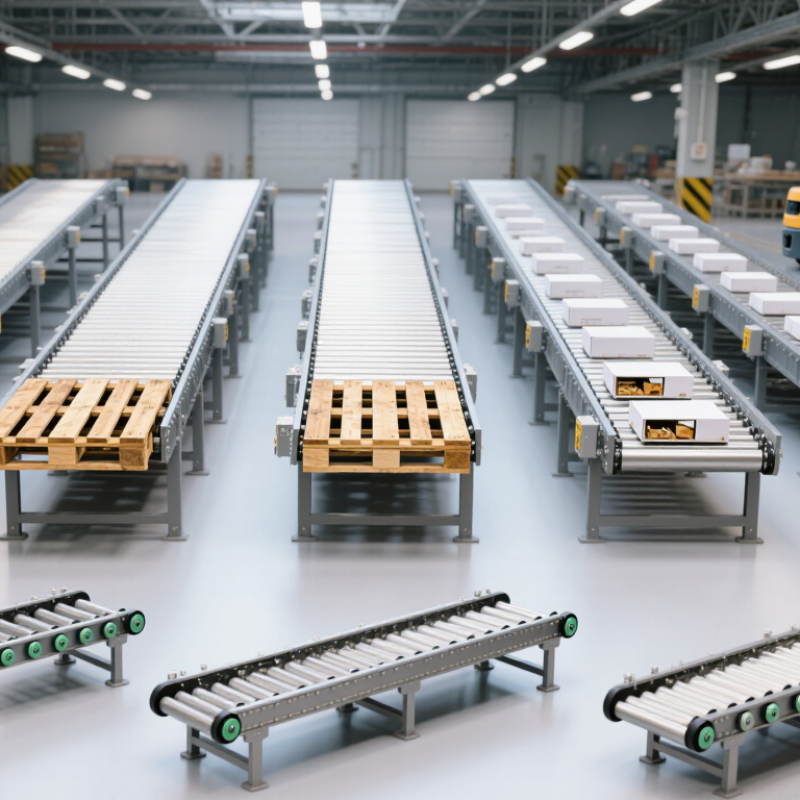
Roller table conveyors move cartons, totes, and rigid workpieces along repeated rows of rotating rollers. In gravity sections, a slight decline lets loads travel without a motor. Powered sections use driven rollers to control movement across level floors or longer routes. A package may pass from packing to inspection, then pause beside a worker for scanning. The handoff looks simple. The layout is not.
The MHI 2024 Annual Industry Report found that 55% of surveyed supply chain professionals planned to increase technology investment in 2024. That figure covers supply chain technology broadly, not roller conveyors alone.
Still, it reflects pressure to improve material flow. Roller tables can help when loads have flat, stable bases and predictable dimensions. Roller spacing matters: small containers may sag or catch if the gaps are too wide. A test with actual loads often reveals problems that drawings miss.
Facility teams should match roller diameter, spacing, frame strength, and drive method to the heaviest expected load. Curves, merges, and stops need special attention because packages can skew or collide there. Guards and accessible emergency stops also matter near powered sections.
Maintenance is not glamorous. Dust, loose fasteners, and worn rollers can quietly slow a line. And sometimes the honest answer is that a conveyor will not fix a poor process.
A roller table conveyor starts with a rigid frame, aligned rollers, and bearings suited to the load and operating environment. Roller diameter and spacing determine how smoothly products move across the bed. Small cartons need closer spacing to prevent tipping; heavy pallets need rollers and supports rated for their weight. Frame stiffness matters. Even slight sag can cause uneven movement or extra wear over time. Roller materials also affect performance: steel handles demanding loads, while corrosion-resistant options suit washdown areas. The right choice depends on the product, not just the line’s maximum capacity.
Powered designs add motors, drive rollers, chains, or belts to control movement. Gravity models rely on bed angle, so floor space and package weight influence speed. Side guides help keep loads centered, while sensors can manage accumulation between stations. Guarding around moving parts and accessible emergency stops make routine operation safer. Details matter. A smooth transfer is not guaranteed by good rollers alone; gaps at transitions can catch cartons, and poor alignment can create noise or jams. Buyers should check load ratings, maintenance access, and operating conditions together. One easy-to-miss detail is cleaning: debris around bearings can quietly reduce roller movement.
Nominal roller diameters shown in millimeters. Available sizes vary by conveyor design and supplier.
Roller diameter is one factor in conveyor selection; load capacity also depends on roller material, wall thickness, spacing, bearings, and frame design. Confirm specifications for the intended load and operating conditions.
Roller table conveyors suit different loads, layouts, and operating speeds. A gravity roller table moves cartons downhill with little equipment, but needs a controlled slope and a clear stopping point. For powered movement, belt-driven live rollers handle steady carton flow, while chain-driven live rollers suit heavier loads and demanding transfer points. Keep it simple.
Accumulation systems hold items between workstations; zero-pressure models reduce contact between queued cartons. Tapered roller curves guide packages around corners, provided their dimensions match the conveyor width. Flexible expandable tables help with temporary loading zones, though frequent repositioning can make alignment less reliable. Heavy-duty pallet roller tables support large unit loads when frame capacity and roller spacing are specified for the actual pallet.
Selection depends on more than the conveyor type. Check load weight, package base, speed, transfer height, and available floor space. A small carton with a soft underside may sag between widely spaced rollers. That matters. Confirm the duty cycle and maintenance access before installation, too. In practice, teams sometimes overlook noise or pinch points during early layout reviews; a short on-site trial can reveal issues drawings miss.
Selecting a roller table conveyor starts with the load, not the catalog rating. Record each item’s weight, footprint, base condition, and peak flow. Then check load per roller and spacing: short cartons need enough rollers beneath them to stay stable. Gravity rollers suit simple, manually fed lines. Powered rollers help when flow must be controlled or loads move over longer distances. Steel handles demanding loads; polymer rollers can reduce noise or resist corrosion. Neither choice fixes poor spacing.
Drive type and layout shape performance. Zoned accumulation can prevent packages from pressing against one another, but sensors and controls add setup needs. Measure curves, merges, transfers, and elevation changes on the actual floor plan. A tight turn may shift an uneven load. Leave access for cleaning and repairs, not just product flow. MHI’s 2024 Annual Industry Report found that 55% of surveyed respondents planned to increase supply-chain technology investment. That broad trend is not proof that powered conveyors will pay off at every site. Compare peak throughput, starts per hour, duty cycle, and maintenance access before choosing. One awkward transfer can erase a tidy spreadsheet advantage.
Before choosing a roller table conveyor, measure the full route, including turns, supports, and operator access. A few centimeters of clearance can decide whether a pallet moves freely or catches at a transfer point. Check floor level and load capacity against the heaviest item, not the average one. Keep it level. Poor alignment can cause uneven roller wear and drifting loads.
Plan installation around the actual workflow. Confirm conveyor height matches adjoining equipment, and leave room to reach guards, bearings, and emergency stops. Secure the frame to a suitable floor or support structure, following the supplier’s installation guidance. Small gaps matter. Open transfer points can pinch fingers or snag loose clothing, so assess guarding and safe access before operation. Train operators to keep hands clear and stop the line before clearing a jam.
Maintenance needs a simple, repeatable routine. Inspect rollers for dents, buildup, and unusual noise; check fasteners and supports for movement. Clean spills promptly, since dust and residue can reduce traction or hide damage. Record recurring faults, even if they seem minor. One caveat: a checklist cannot replace judgment. If a conveyor repeatedly pulls loads sideways, inspect alignment and loading practices rather than tightening parts at random. Keep maintenance access unobstructed, and isolate equipment according to site procedures before repairs.
TERMS OF USE - LEDOLUX
This site uses cookies in order to deliver services in accordance with Privacy Policy. You can use settings within your browser to control the cookies that are set on your computer – conditions of access or storage of cookies.
Your data controller will be LEDOLUX POLAND SP. ul. Innowacyjna 1; 36-060 Głogów Małopolski, which adapts the content of its website to your needs and analyses and examines them to improve it. More information.