

Buying Nickel Alloy Round Bar is not simply a matter of choosing a diameter and comparing prices. Grade, processing route, tolerances, and traceability can all affect performance. A bar intended for a corrosive chemical environment may need different properties from one used in a hot, high-stress assembly. Small details matter.
The market context makes careful sourcing worthwhile. The U.S. Geological Survey’s Mineral Commodity Summaries 2025 estimates worldwide nickel mine production at about 3.7 million metric tons in 2024, with Indonesia accounting for roughly 2.2 million tons. The International Energy Agency’s Global Critical Minerals Outlook 2024 also examines nickel’s growing role in energy technologies and the supply risks behind critical-mineral markets. These reports describe the broader nickel supply chain, not the availability or quality of any specific round bar. That distinction is easy to miss.
For buyers, reliable documentation is as important as a supplier’s quote. Verify the alloy designation, applicable material specification, dimensions, condition, and test records before ordering. Ask whether the certificate matches the actual heat and shipment. Check machining requirements, too; a low-cost bar can become expensive if it arrives with unsuitable tolerances or condition. Need a practical framework? The seven tips ahead focus on questions that help buyers compare offers, assess evidence, and reduce avoidable surprises. No checklist removes every uncertainty. Still, asking better questions can make a real difference.
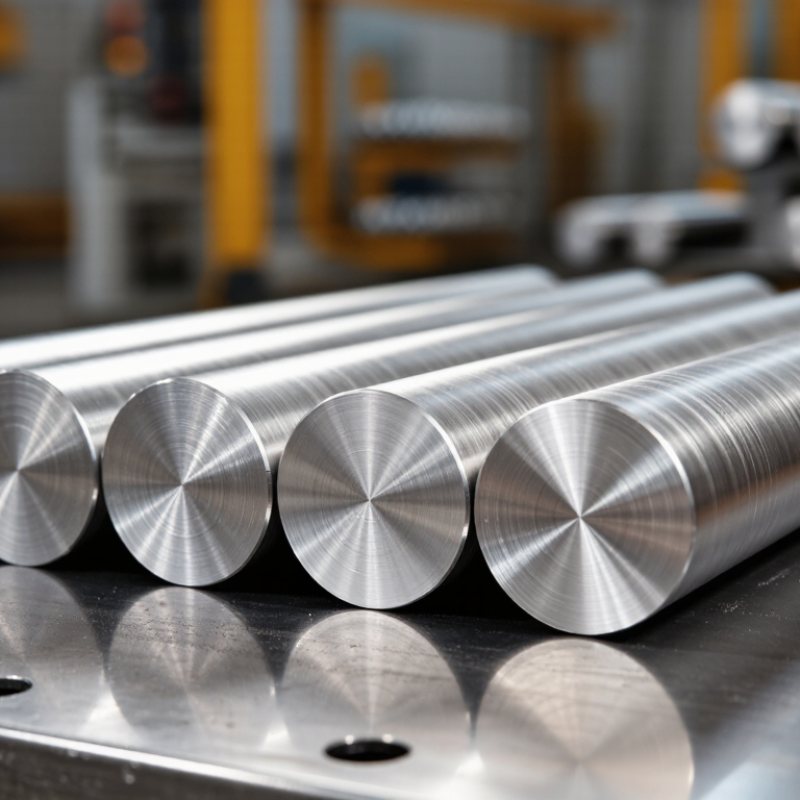
Before choosing a nickel alloy round bar, define exactly where it will work. Record the process fluid, concentration, temperature range, pressure, and cleaning chemicals. Small changes matter. A mildly acidic stream at room temperature can behave very differently when heated or concentrated. Note whether the bar will face seawater, sulfur-bearing gases, caustic solutions, or oxidizing conditions. Include start-up and shutdown cycles, not just steady operation. These details help narrow alloy families, but they do not replace compatibility checks against current technical data.
Next, describe the mechanical job. Is the bar a shaft, a fastener blank, a valve component, or stock for machining? State the expected load, vibration, wear, and required strength at operating temperature. Keep the finished diameter and machining allowance in view; a bar that looks generous on paper may leave too little material after machining. Consider weldability and heat treatment if fabrication is planned. Early estimates are often incomplete, so revisit them when the process team confirms actual peaks. Ask for chemistry, condition, size tolerance, and test documentation, then have a qualified materials professional review the selection. Real service data helps. A cautious second look does too.
Choosing a nickel alloy round bar starts with the service environment, not the catalog’s highest strength figure. For chloride-rich water or chemical equipment, compare molybdenum-bearing grades such as UNS N06625 and N10276. Molybdenum helps resist localized corrosion, including pitting and crevice attack. Nickel Institute technical guidance stresses that concentration, temperature, and crevice geometry can change performance. A small washer gap may become the weak point.
Heat changes the choice. Alloy 625 is used for oxidation resistance at elevated temperatures, but published technical data place its practical limit near 980°C in some conditions—not every atmosphere or load. For strength, ASTM B446 sets minimum room-temperature tensile strength of 827 MPa and yield strength of 414 MPa for specified 625 bar conditions. Those values are useful, not universal; confirm the product condition and purchase specification. Need higher strength? Precipitation-hardened grades may fit, though machining and heat treatment become less forgiving.
Match the grade to actual exposure. Include peak temperature, stress, fluid chemistry, and expected shutdown cycles in the specification. Then verify mill test reports and traceability before cutting. Small details matter. I would not choose from a generic “corrosion-resistant” label alone; that wording leaves too much unsaid. Check the applicable ASTM material specification and consult corrosion data for the exact environment.
Before ordering nickel alloy round bar, confirm the required diameter, length, and dimensional tolerances in writing. A nominal diameter alone is not enough. For example, a bar specified at 25 millimeters may not suit a close-fitting sleeve if its permitted variation is too wide. State the measurement units and the tolerance range on the purchase specification or drawing.
Check how dimensions will be verified. A calibrated micrometer can reveal diameter variation along the bar, while a straightedge or suitable gauge can help assess straightness. Measure more than one point, especially near the ends. Small details matter. It is easy to assume that every supplier interprets “standard tolerance” the same way; that assumption can lead to extra machining or rejected parts.
Surface finish also affects handling and later processing. Specify whether the bar may have a turned, ground, or mill finish, and identify any unacceptable marks, such as deep scoring or visible pits. Ask how the finish is inspected and whether protective packaging is used to limit scratches during transit. A smooth appearance is not proof of a precise diameter. Keep the finish requirement practical: demanding a finer surface than the application needs can add cost without improving performance.
A nickel alloy round bar can look flawless and still be the wrong grade. Match its UNS designation and product form to the applicable ASTM specification, such as ASTM B446 for certain nickel-chromium-molybdenum alloy bars. Do not rely on a supplier’s generic “625” description alone. Check the purchase order, standard edition, dimensions, and required mechanical properties together. Small mismatches matter.
Traceability should connect each bar to its heat number and original test record. The USGS Mineral Commodity Summaries 2025 estimated global nickel mine production at about 3.7 million metric tons in 2024, with Indonesia supplying roughly 2.2 million. These figures describe mined nickel, not finished alloy bars, but they underline how broad supply chains can be. Ask how identity is preserved after cutting, bundling, or repacking. A stamped number is useful only if records link it to the actual piece.
Review the material test certificate before shipment, not after installation. Where specified, an EN 10204 Type 3.1 certificate should identify the material, heat, test results, and issuing inspection authority. Compare chemistry limits and tensile values against the ordered grade and specification. Check that units and test direction make sense. Paperwork can still be incomplete. If a value is missing or a heat number differs, pause and request a corrected, traceable record; accepting a tidy certificate without checking it is an easy mistake.
A low price per kilogram can hide costly gaps. Compare nickel alloy round bar quotes against the same grade, diameter, length, and tolerance. Ask whether the price includes cutting, inspection documents, packaging, and delivery. Otherwise, two quotes may look comparable but describe different orders.
Lead time deserves equal attention. Confirm whether the requested size is in stock or must be produced, and ask when the clock starts: order approval, payment, or drawing confirmation. A supplier’s estimate should include cutting and dispatch, not just mill availability. Get dates in writing. A few extra days can matter when a machine slot or repair crew is already booked.
Build a total purchase cost that includes freight, minimum quantities, cut fees, and any testing or handling charges. For a small order, a nearby source may cost less overall, even with a higher bar price. For repeat demand, stable supply and consistent documentation may justify a modest premium. No spreadsheet catches everything. Recheck the weight assumptions; actual cut lengths and tolerances can shift the final bill, and that detail is easy to overlook.
Illustrative comparison for a 100 kg order. Costs are planning estimates—not live supplier quotes—and should be confirmed against current quotations and specifications.
How to read this: Compare the full landed-cost estimate, not just the material price. The lower-cost options in this example have longer lead times; confirm alloy grade, dimensions, certification, processing, freight and delivery dates before ordering.
TERMS OF USE - LEDOLUX
This site uses cookies in order to deliver services in accordance with Privacy Policy. You can use settings within your browser to control the cookies that are set on your computer – conditions of access or storage of cookies.
Your data controller will be LEDOLUX POLAND SP. ul. Innowacyjna 1; 36-060 Głogów Małopolski, which adapts the content of its website to your needs and analyses and examines them to improve it. More information.