China Top Transparent LED Display Manufacturers?
Choosing among China’s top Transparent Led Display manufacturers takes more than comparing price lists. A Transparent Led Display must fit the building, viewing distance, ambient light, and installation method. A bright showroom window has different needs from a glass façade facing strong afternoon sun. Pixel pitch, transparency rate, cabinet weight, and maintenance access all affect the result. Small details matter.
A credible comparison should examine product specifications, project photos, warranty terms, and the manufacturer’s ability to explain technical trade-offs. Ask how brightness is measured, how cables are routed, and whether the display can be serviced without major disruption. Request references for installations similar to yours, not just polished images. Those details help separate a capable supplier from a persuasive sales page.
There is no universal best choice. A lower price may bring compromises in control systems, spare parts, or support, while a premium model may exceed the project’s actual requirements. Even published specifications need context; testing conditions can differ between suppliers. This guide will introduce notable manufacturers and practical questions buyers can use to assess them. Treat any shortlist as a starting point, then verify claims directly with each company. That extra work can feel slow. It is still worthwhile.
How Transparent LED Displays Work and Where They Are Used
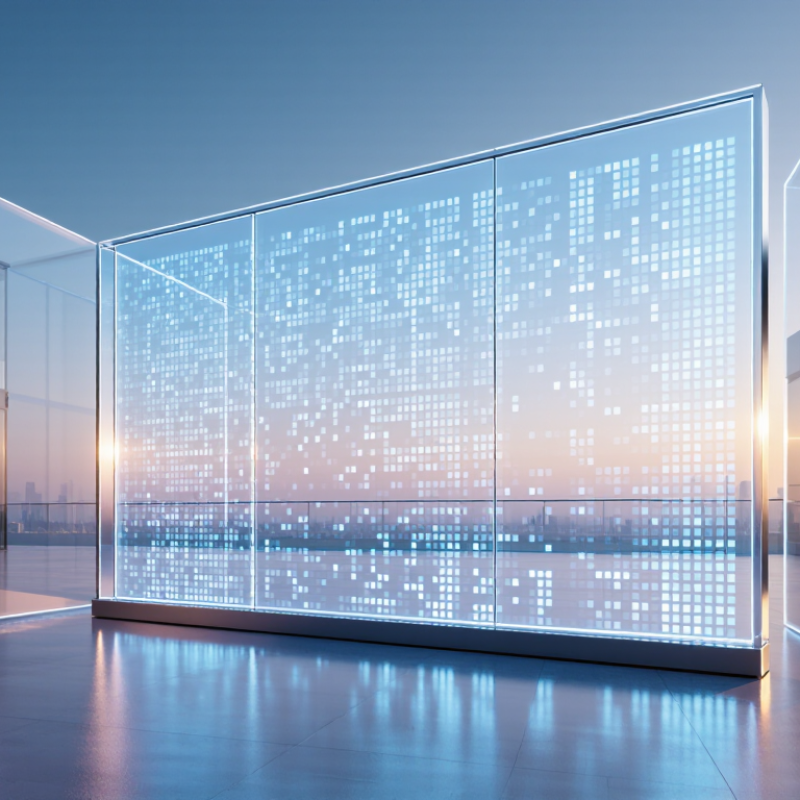
Transparent LED displays use rows of light-emitting diodes mounted on a patterned, open structure. The gaps let daylight and views pass through, while each LED forms part of an image. A controller sends video signals to the pixels, adjusting brightness and color. From a few steps away, the grid can appear nearly invisible; up close, its spacing is clear. Not magic. Pixel pitch, panel transparency, and viewing distance all affect image quality.
These screens often appear behind shop windows, across glass façades, and on exhibition partitions. They can show moving promotions without blocking the entire view. Grand View Research’s LED Display Market Size, Share & Trends Analysis Report estimated the broader global LED display market at US$7.10 billion in 2023, with an 8.4% annual growth forecast for 2024–2030. That figure covers LED displays overall, not transparent models alone. The International Energy Agency’s 2023 Buildings report says buildings account for about 30% of global final energy use. This makes daylight and heat management relevant when planning glass installations, though a transparent screen does not automatically reduce energy use. Bright sunlight can wash out images, and dense pixel layouts may reduce visibility. Site testing matters.
One overlooked detail: reflections can make a bright display look dim from outside, even when the screen is working properly.
Criteria for Evaluating Transparent LED Display Manufacturers
China Top Transparent LED Display Manufacturers?
Criteria for Evaluating Transparent LED Display Manufacturers
A transparent LED display must balance visibility, brightness, and image quality. Ask manufacturers for measured transparency and brightness data, not just promotional figures. Check pixel pitch from the viewing distance your installation requires. A display viewed across a shop floor may need different specifications from one behind a close-up retail window. Request a sample or live demonstration. Test it in lighting similar to your actual site.
Tips: Ask for a written burn-in test report, warranty terms, and the cost and availability of spare modules. Small details matter.
Evaluate installation and support, too. Ask how the structure handles heat, how panels connect, and what maintenance access is needed. A neat specification sheet can still hide a weak service plan. Request references for projects with similar dimensions and operating conditions, then ask what problems occurred after installation. Honest answers are useful. No manufacturer is perfect, and a polished demonstration may not reveal long-term performance. Compare responses, documents, and physical samples before deciding.
Criteria for Evaluating Transparent LED Display Manufacturers
Illustrative evaluation weights for comparing manufacturers. These percentages are a suggested framework, not measured ratings of specific companies.
Prioritize verified product reliability and optical performance, then assess customization, installation support, compliance, warranty coverage, and delivery capacity. Adapt the weights to your project requirements.
Notable Transparent LED Display Manufacturers in China
China’s transparent LED display manufacturers serve retail windows, atriums, and glass façades where daylight and sightlines matter. Grand View Research valued the global LED display market at about US$7.1 billion in 2023 and projected an 11.4% CAGR through 2030. This broader category includes many display types, so the figure should not be mistaken for transparent LED sales alone.
Notable manufacturers distinguish themselves through more than a high transparency rating. Ask for measured brightness, pixel pitch, refresh rate, module weight, and power consumption at the intended viewing distance. A sample panel viewed under showroom lighting can look convincing; test it against a sunlit window, too. Check how cables, control boxes, and mounting brackets affect the glass area. Small details matter.
Request a working demo and a written test report. Confirm whether replacement modules match the original batch, and ask how calibration is handled across a large façade. A supplier may quote excellent specifications, yet installation conditions can change the result. One limitation is easy to overlook: greater transparency can reduce image visibility in bright settings. A careful comparison should include both the display and the site.
How Chinese Suppliers Differ in Technology and Services
Chinese transparent LED suppliers can differ more in engineering choices than in headline specifications. One may prioritize narrow pixel pitch and high brightness, while another focuses on lighter cabinets, clearer transparency, or easier installation. Ask how brightness changes in daylight and whether nearby glass causes reflections. Details matter.
Tips: Request a current product data sheet, a short operating video, and a sample test under your intended lighting. Confirm viewing distance, cabinet dimensions, maintenance access, and power requirements in writing.
Service quality also varies. Experienced teams usually ask about the building, viewing angles, wind exposure, and installation constraints before recommending a display. They should explain how receiving cards, control systems, spare parts, and remote support will work. Ask who handles commissioning and how quickly replacement modules can be supplied. Check the warranty terms carefully; vague promises are not evidence of dependable support. Not always. A polished demonstration may not match your site conditions, and I would treat unverified performance figures cautiously. Compare written specifications with a practical test using your content and viewing distance.
Choosing a Manufacturer for Your Project Needs
Choosing a transparent LED display manufacturer starts with the installation, not the product brochure. A partner should ask about viewing distance, daylight, glass structure, mounting depth, and how the screen will be serviced. These details affect pixel pitch, brightness, transparency, and module size. Ask for measured specifications and a working sample, not just a video. Check whether text remains readable from the intended viewing point and whether the display looks acceptable when switched off. A bright showroom can hide real limitations. Real sites are messy.
Compare manufacturers on engineering support, production consistency, spare-module availability, and warranty terms. Ask how each unit is tested before shipment and what documentation comes with it. If possible, inspect a sample installation under lighting similar to your project. Confirm cable routes, ventilation, control-system compatibility, and access for repairs before signing off on the design. These questions may feel overly detailed, but they can prevent expensive changes later. No checklist catches everything. A small pilot section can reveal uneven brightness or awkward maintenance access that drawings miss. Be cautious when a supplier promises a perfect result without reviewing the building conditions; even a strong display can disappoint if the site assumptions are wrong.