

Choosing a Toyota Yaris Mirror in 2026 is not just a matter of matching the car’s color. Model year, body style, market, and trim can change the mirror assembly, connector, and available features. A power-adjustable mirror may look identical to a manual one, yet its wiring can differ. Check the vehicle identification number and compare the original part number before ordering. Fit matters.
There is a practical reason to take that step. S&P Global Mobility reported that the average age of light vehicles in the United States reached 12.6 years in 2024. Older cars often need replacement parts, but age alone does not confirm fitment. Toyota Yaris versions sold in different regions may also use different mirror specifications. Catalog listings can be incomplete, so verify details with a Toyota dealer or a parts supplier that can check the VIN.
Look closely at the features you actually need: electric adjustment, heating, folding, indicator lamps, and blind-spot monitoring. Not every Yaris has them. NHTSA’s Federal Motor Vehicle Safety Standard No. 111 addresses rear visibility, underscoring why a clear, correctly positioned mirror matters. Still, a replacement mirror should match the vehicle’s original equipment and be installed securely. A cheaper assembly may save money upfront, but a mismatched plug or poor glass view can turn a simple repair into another parts search. The small details count.
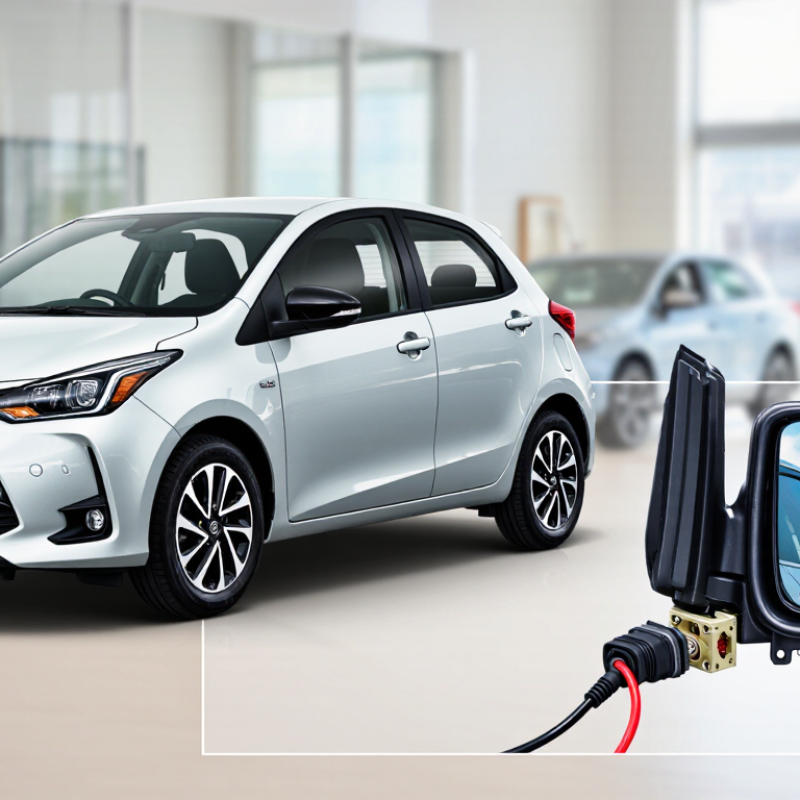
Before ordering a Yaris mirror, confirm the exact model year, sales market, and vehicle identification number (VIN). A registration year can differ from the model year. Check the door-jamb label and windshield plate, then compare both records. Under the U.S. VIN requirements in 49 CFR Part 565, a modern VIN contains 17 characters; its tenth character indicates model year within a repeating code cycle. NHTSA’s VIN Decoder can help verify the year and manufacturer details. SAE J272 also describes the World Manufacturer Identifier used within VINs. Do not rely on the tenth character alone.
Market matters. A mirror listed for one region may have a different connector, heating function, blind-spot indicator, folding mechanism, or glass shape. Enter the complete VIN into the vehicle’s electronic parts catalog (EPC), then check the catalog’s market and production-date filters. Compare the diagram and part notes with the mirror on the car, especially the plug shape and number of pins. Small details matter. Catalog data can still be incomplete, so confirm unclear fitment with a qualified parts specialist before purchase. One missed connector difference can turn a correct-looking mirror into the wrong part.
Choosing a replacement mirror for a 2026 compact hatchback begins with the OEM part number, not its shape. The housing may look right while the base angle or wiring differs. Check the number on the original unit, then confirm it using the vehicle year, trim, and side. S&P Global Mobility’s 2024 vehicle-age analysis found that the average U.S. light vehicle was 12.6 years old. Longer vehicle lifespans make precise part identification useful, while small year-to-year changes can still cause confusion.
Compare mounting points: count the studs or bolts, check their spacing, and match the gasket outline to the door opening. Even a small mismatch can leave a gap or strain the plastic base. Then count connector pins and compare the plug shape, latch, and wire positions. Matching pin counts alone do not prove compatibility.
Take a clear photo. Check heated glass, power adjustment, folding, and signal features against the original equipment. NHTSA’s FMVSS No. 111 sets rear-visibility requirements, but it does not verify a replacement mirror’s fit. After installation, test adjustment and confirm a clear view.
Easy to miss. Recheck the details.
Manual, power, heated, and folding mirrors serve different needs, so compare equipment by trim rather than assuming every version matches. Manual adjustment keeps the setup simple and usually costs less. Power adjustment is useful when drivers share the car or need to fine-tune the glass from the seat. Heated glass can clear light frost and mist, while folding housings help in narrow garages. Check whether folding is manual or powered; the distinction matters in daily use. Exact 2026 equipment can vary by market, so confirm the local trim sheet and replacement-part fitment before ordering.
A mirror is only one part of visibility. The Insurance Institute for Highway Safety reported that:
Blind-spot detection was associated with 14% fewer lane-change crashes and 23% fewer lane-change crashes involving injuries.
That data concerns electronic detection, not mirror design, but it reinforces the value of checking adjacent lanes. Honestly, trim charts can be annoyingly vague. Verify adjustment controls, heating, folding method, and connector compatibility against the vehicle’s build details.
Tips: Sit in the driver’s seat and check the mirror’s full adjustment range. If you park beside walls, prioritize folding; in cold climates, heated glass may matter more. Don’t choose by trim name alone.
A replacement mirror should match the vehicle’s model year and the rules in the market where it will be driven. In the United States, check FMVSS No. 111, which sets requirements for rear visibility and mirror equipment. In markets using UNECE rules, check Regulation No. 46, covering indirect-vision devices and their installation. The standards are not interchangeable. Small details matter.
Before ordering, compare the mirror’s side, mounting points, adjustment method, and any heating or indicator functions. Then confirm that its approval or compliance documentation applies to your market and vehicle configuration. A mirror that physically fits may still provide the wrong field of view or lack a required feature. Do not rely on appearance alone.
Requirements can vary by vehicle year, trim, and local adoption of regulations. Ask a qualified parts supplier or inspection professional to verify the exact specification against the vehicle identification details. Check the glass and housing for clear markings, and test the installed mirror from the normal driving position. I once thought a matching connector was enough; it was not. Verify the view, too.
A clear view starts with the glass. Check the full surface for cracks, cloudy patches, and uneven reflections. From the driver’s seat, scan nearby lanes and the curb. A replacement should show a similar field of view without obvious warping. If possible, compare it with the existing mirror before installation. Small differences matter.
Electrical features vary by model year and trim. Confirm which functions the original mirror has, such as power adjustment, heating, or a turn signal. Do not assume a connector will match just because the housing looks right. Compare the plug shape and wire count with the vehicle’s specifications. It is easy to focus on price and miss one small detail. That happens.
Check the mounting points, housing shape, and side before fitting the part. Confirm compatibility using the vehicle identification details and the exact model year. During installation, align the connector gently and stop if it resists. Once secured, test each available function and adjust the glass from the driver’s seat. A quick check in daylight helps reveal glare or distortion. I would not skip it.
TERMS OF USE - LEDOLUX
This site uses cookies in order to deliver services in accordance with Privacy Policy. You can use settings within your browser to control the cookies that are set on your computer – conditions of access or storage of cookies.
Your data controller will be LEDOLUX POLAND SP. ul. Innowacyjna 1; 36-060 Głogów Małopolski, which adapts the content of its website to your needs and analyses and examines them to improve it. More information.