

How to Choose Emergency Lights for Global Buyers?
Choosing Emergency Lights for global projects is not simply a matter of comparing wattage and price. Buyers must examine evacuation routes, mounting height, battery duration, beam distribution, operating temperature, and maintenance access. A bright fitting can still leave a stairwell dangerously uneven.
John Bullock, a former chairman of the Emergency Lighting Association, once stated, “Emergency lighting is about guiding people to safety, not merely lighting a room.” That principle remains practical today. It shifts attention from attractive product images to measurable performance. Request photometric data, test records, battery specifications, and clear installation instructions. Small details matter. A sealed unit may suit a dusty warehouse, while a compact self-contained fitting may work better in a hotel corridor.
Global buyers should also review certification expectations, voltage compatibility, replacement parts, and local service capability. Requirements differ between markets, so one certificate should not be treated as universal approval. Independent verification is valuable. So is a documented quality-control process.
Cost still matters. However, the cheapest Emergency Lights may create higher expenses through battery replacement, false alarms, or difficult servicing. That assumption deserves testing. Ask how the product performs after years of heat, vibration, and repeated emergency tests. Ask who responds when a shipment arrives damaged.
There is no perfect shortlist.
A reliable decision combines technical evidence, supplier experience, and realistic site conditions. Even experienced buyers can overlook glare, signage visibility, or access for future inspections. That imperfection is worth acknowledging. A careful selection process protects people, supports compliance, and keeps emergency systems dependable when normal power disappears.
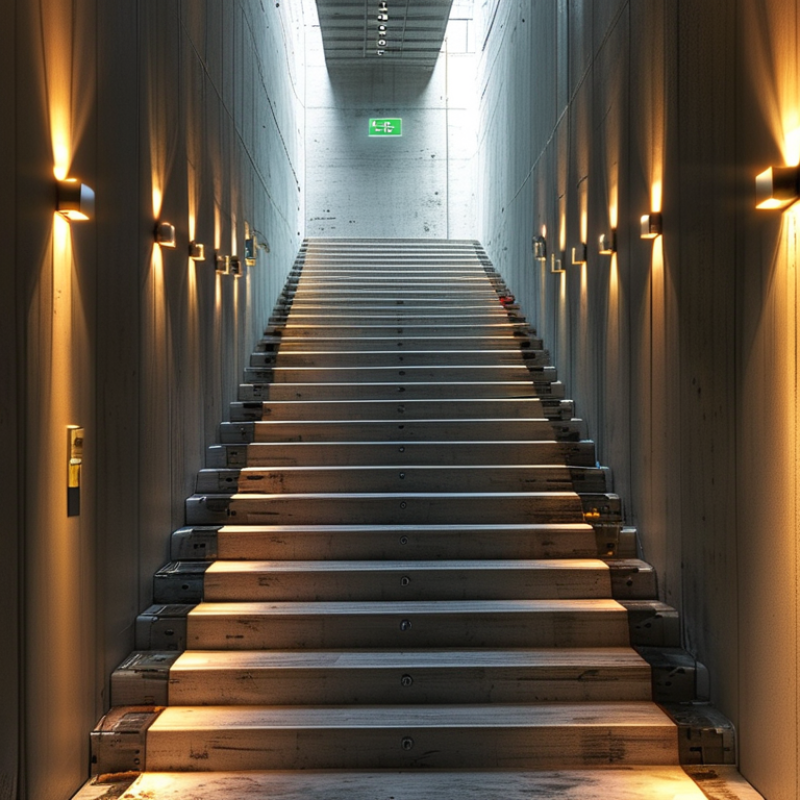
Define the Emergency Lighting Requirements for Your Market
How to Choose Emergency Lights for Global Buyers?
Define the emergency lighting requirements for your market before comparing products. Local building codes determine escape-route illumination, backup duration, testing, and installation height. For example, NFPA 101 requires emergency lighting for at least 90 minutes in many covered occupancies. It also specifies minimum illumination levels along the path of egress. European projects often reference EN 1838, which commonly requires 1 lux on escape routes and 0.5 lux in open areas. Requirements can change by building type.
Review the real site conditions. A warehouse may need wider beam coverage, while a hotel corridor may need discreet wall-mounted units. Check voltage stability, ambient temperature, humidity, dust, and battery replacement access. The U.S. Department of Energy reports that LED lighting uses at least 75% less energy than incandescent lighting and can last up to 25 times longer. That supports lower maintenance, but battery performance still needs testing. Small details matter.
Tips: Build a market checklist before requesting quotations. Include code references, duration, lux targets, ingress protection, self-testing, battery type, and certification documents. Ask for photometric files, not only lumen figures. A brighter lamp is not always safer. My practical concern is often overlooked: installers may not follow the original layout. Leave clear labeling and schedule a real discharge test after installation. A perfect specification can still fail in the field.
How to Choose Emergency Lights for Global Buyers? - Define the Emergency Lighting Requirements for Your Market
| Target Market | Common Regulatory References | Typical Supply Voltage | Typical Minimum Emergency Duration | Typical Lighting Criteria | Recommended Product Features | Key Buyer Checks |
|---|---|---|---|---|---|---|
| European Union | EN 1838; EN 60598-2-22; applicable national building and fire-safety rules | Typically 220–240 V AC, 50 Hz | Commonly 1 hour; 3-hour systems may be required for specific buildings or evacuation strategies | Usually at least 1 lux along escape routes and 0.5 lux in open areas, subject to the applicable design standard | Self-contained or central-battery operation, maintained or non-maintained mode, automatic testing, clear exit signage, low standby power | CE-related documentation, photometric files, battery service life, IP rating, operating temperature, and local certification requirements |
| United Kingdom | BS 5266-1; BS EN 1838; BS EN 60598-2-22; applicable fire-safety regulations | Typically 220–240 V AC, 50 Hz | At least 1 hour for many applications; 3 hours is commonly specified where prolonged evacuation or continued occupancy is required | Common design values include 1 lux on escape routes and 0.5 lux in open areas, with higher values where risk assessments require them | Self-test capability, suitable viewing distance for exit signs, fire-resistant mounting accessories, replaceable batteries, clear test indication | UKCA or other applicable conformity route, third-party test evidence, emergency duration under rated load, and inspection-record support |
| United States | NFPA 101; NFPA 70; UL 924; local building and fire codes | Typically 120 V AC or 277 V AC, 60 Hz; some products accept a wider input range | At least 90 minutes for many emergency-lighting applications | NFPA-based designs commonly use an average of 1 foot-candle at the floor initially, with minimum illumination requirements also applying | Listed emergency equipment, battery charging indicator, test switch, remote-head compatibility, tamper-resistant housing, suitable operating temperature | Certification to the required safety standard, enclosure rating, line-voltage compatibility, battery capacity at 90 minutes, and local authority approval |
| Canada | National Building Code of Canada; Canadian Electrical Code; applicable product certification requirements | Typically 120 V or 347 V AC, 60 Hz | Commonly 30 minutes or 90 minutes, depending on building classification and local code requirements | Illumination must support safe egress; project requirements should be verified against the adopted provincial or territorial code | Cold-temperature performance, robust battery charging, remote testing, clear status indicators, and compatibility with local emergency circuits | Canadian certification mark, voltage selection, winterized battery performance, wiring method, and provincial inspection requirements |
| Australia and New Zealand | AS/NZS 2293 series; applicable building, electrical, and fire-safety regulations | Typically 220–240 V AC, 50 Hz | Commonly 90 minutes for emergency evacuation lighting | Design levels are determined by the applicable category, installation type, and photometric assessment under AS/NZS 2293 | Automatic discharge testing, visible test indicators, high-temperature battery options, corrosion-resistant housing, and suitable exit pictograms | RCM or applicable local compliance evidence, test records, battery replacement access, ambient-temperature rating, and installation category |
| China | GB 17945; GB 51309; applicable construction and fire-protection regulations | Typically 220 V AC, 50 Hz | Often 90 minutes for evacuation lighting; high-risk or special facilities may require different durations | Required illuminance depends on the space, evacuation route, occupancy, and fire-safety classification | Centralized control compatibility, automatic inspection, fault indication, reliable battery management, fire-rated materials, and clear evacuation signs | CCC or other applicable approval, GB test reports, emergency-mode data, communication protocol, and installation environment |
| Japan | Building Standard Law; Fire Service Law; applicable JIS requirements and local authority rules | 100 V or 200 V AC, 50/60 Hz depending on region and installation | Determined by building use and regulatory classification; confirm the required duration before specification | Illuminance and placement depend on the designated emergency-lighting category and building application | Compact housing, seismic-resistant mounting, automatic testing, bilingual or locally approved signage, and 50/60 Hz compatibility | Local approval route, voltage and frequency, earthquake-resistant installation, battery replacement procedure, and authority acceptance |
| Middle East and Gulf Markets | Local civil-defense codes; adopted IEC or BS/EN standards; project-specific fire and life-safety specifications | Commonly 220–240 V AC, 50 Hz | Frequently 1–3 hours depending on the building, authority, and project specification | Escape-route and open-area values are normally based on the adopted IEC, EN, or local civil-defense requirements | High-temperature battery capability, UV-resistant materials, dust protection, corrosion resistance, surge protection, and IP-rated enclosures | Maximum ambient temperature, battery derating, IP rating, fire authority approval, Arabic or bilingual signage, and project submittal documents |
| Latin America | National electrical codes; local fire regulations; adopted IEC, EN, or North American requirements | Typically 110–127 V or 220–240 V AC, 50/60 Hz depending on the country | Commonly 1–2 hours, but the exact requirement varies by country, occupancy, and authority | Use the adopted local standard for escape routes, open areas, stairs, ramps, and high-risk task areas | Wide-input power supply, surge protection, replaceable batteries, clear local-language signage, and resistance to humidity and dust | Country-specific certification, input voltage, frequency, import documentation, language requirements, and local emergency testing rules |
| Industrial and Hazardous Locations | Applicable emergency-lighting standard plus IECEx, ATEX, NEC, or local hazardous-area requirements | Project-specific; commonly 110–240 V AC or low-voltage DC systems | Usually determined by risk assessment, process shutdown time, and the adopted life-safety code | Higher lighting levels may be required for hazardous tasks, machinery isolation, chemical handling, or controlled shutdown | Explosion-protected construction where required, high IP rating, impact resistance, chemical resistance, thermal protection, and remote monitoring | Hazardous-area zone or division, gas or dust group, temperature class, emergency duration, cable glands, and authority certification |