

How to Choose HDPE Sheet Plastic in 2026?

Choosing Hdpe Sheet Plastic in 2026 takes more than comparing thickness and price. A sheet that looks smooth on a warehouse rack may behave differently once it faces sunlight, cleaning chemicals, repeated impacts, or a loaded fastener. Start with the job: indoor or outdoor use, contact with moisture, expected temperature range, and the weight or force the sheet must handle. Then compare grade, thickness, dimensions, surface finish, and documented test data. Small details matter. A 6 mm panel may flex where a 10 mm panel stays firm, but added thickness also changes weight, cost, and installation needs.

As a practical, illustrative perspective—not a verified quotation from a real person—HDPE materials specialist Elena Brooks offers this selection rule: “Choose for the conditions the sheet will face, not just the price on the quote.” Treat that as a useful prompt, not a substitute for technical data. Ask suppliers for grade identification, tolerances, and guidance on machining or fabrication. Check whether the stated properties apply to the exact product, rather than HDPE in general. Compare samples under realistic conditions when possible. Feel the surface. Inspect the edges. Measure the sheet yourself.

There is no perfect choice. Even careful buyers can overlook a detail, especially when specifications are incomplete. This guide explains how to assess Hdpe Sheet Plastic, question broad claims, and match material properties to a real application. The goal is a sound decision, not a confident guess.
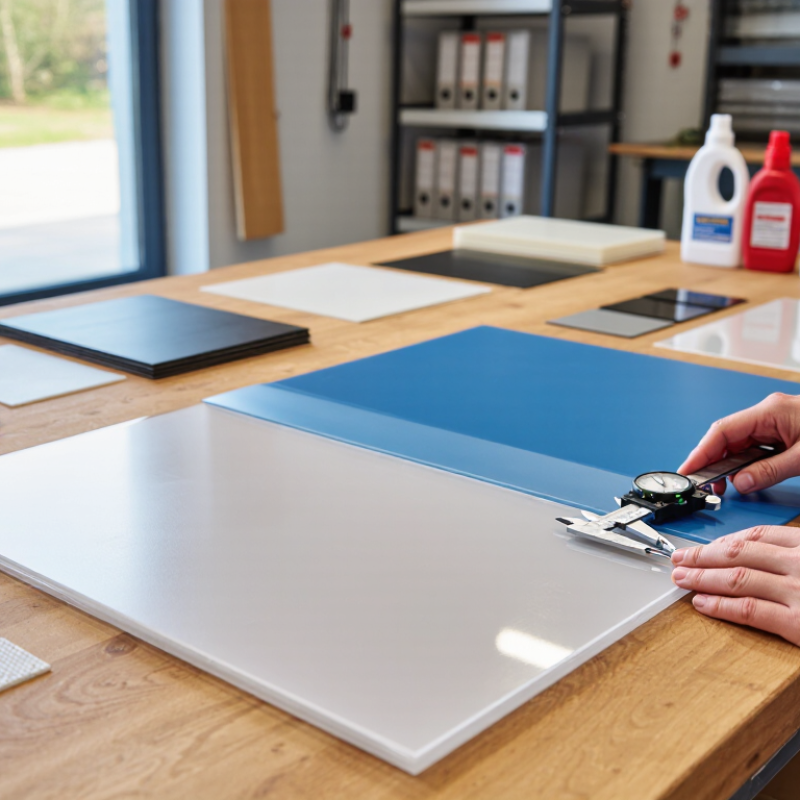
How to Choose HDPE Sheet Plastic in 2026?

Define the Project Requirements for HDPE Sheet

Before choosing an HDPE sheet, define what it must do. Start with the load. Will it support a person, slide against a moving part, or contain liquid? Record the load, contact points, operating temperature, and expected service life. A thick sheet is not automatically a stronger design; unsupported spans can still bend.

The PlasticsEurope report Plastics – the Fast Facts 2024 estimates global plastics production at 413.8 million tonnes in 2023. That scale makes material selection consequential, but the figure does not identify the right grade for your project. Specify sheet dimensions, tolerances, surface finish, color, and fabrication method.

For outdoor use, consider UV exposure; for sliding parts, assess friction and wear. If chemicals will contact the sheet, check a compatibility chart for the exact chemical and temperature.

A common design mistake is treating “HDPE” as one uniform material. It isn’t. Ask suppliers for current technical data, including density, tensile properties, and temperature limits, then verify critical values against the intended test method.

Food-contact or other sensitive uses need documented suitability for the actual application, not a broad material claim.

One detail is easy to overlook: holes and cut edges can change how a sheet carries load. Test a small sample when the consequences of failure matter.

Compare HDPE Grades, Properties, and Certifications

HDPE sheet is not one uniform material; grade and formulation shape how it behaves during cutting, bending, and service. General-purpose grades suit covers, liners, and machine guards. Higher-molecular-weight grades can offer better wear resistance, but may be harder to machine cleanly. UV-stabilized sheet is a safer choice outdoors, where sunlight can gradually dull and weaken unprotected surfaces. Labels can mislead.

Compare the properties that affect your actual part. Stiffness matters for a wide panel; impact strength matters near drilled holes or edges that may be struck. Check the data sheet for density, tensile strength, operating-temperature guidance, and test methods. A sheet that looks rigid on the rack may still flex across a long span. I would not choose by one headline strength value alone; that is an easy mistake to make.

Certifications should match the application, not just sound reassuring. For food-contact use, request documentation for the exact grade and intended conditions. For drinking-water components, check whether the relevant NSF/ANSI/CAN 61 listing applies to that product and use. Ask for a current certificate or test report, plus traceability to the supplied sheet. Check the paperwork. One detail is often overlooked: colorants and additives can change whether a grade meets a requirement, so verify the specific formulation before ordering.

Select Sheet Thickness, Size, and Surface Finish

How to Choose HDPE Sheet Plastic in 2026?
Select Sheet Thickness, Size, and Surface Finish

Choosing the right HDPE sheet starts with its job. A thin panel may work for a liner or lightweight cover, while a thicker sheet can better resist bending under load. Check the distance between supports, expected weight, and operating temperature. HDPE can expand with heat, so leave room around fixed panels. A small fit-up detail can become annoying later.

Measure the finished part, not just the available space. Note holes, cutouts, and edge allowances before ordering, then confirm the supplier’s sheet dimensions and thickness tolerance. Large sheets reduce seams, but they may be harder to handle and cut accurately. Surface finish matters, too: smooth sheets are easier to wipe clean, while textured surfaces can offer more grip. Texture may hold dirt in small grooves, so consider cleaning needs.

Tips: Sketch the part and mark its support points. Compare the drawing with the sheet’s stated tolerances. If the application is load-bearing, test a sample or consult a qualified fabricator; thickness alone does not guarantee stiffness. I’d recheck the measurements once more. It’s easy to miss a few millimeters.

How to Choose HDPE Sheet Plastic in 2026? - Select Sheet Thickness, Size, and Surface Finish

Selection Factor Typical Options Useful Guidelines Check Before Ordering
Sheet thickness 1/16 in (1.6 mm), 1/8 in (3.2 mm), 1/4 in (6.4 mm), 1/2 in (12.7 mm), 3/4 in (19.1 mm), and 1 in (25.4 mm) Thin sheets suit lightweight liners and covers; thicker sheets are generally more suitable for wear surfaces, machine components, and parts that need greater rigidity. Choose thickness based on load, unsupported span, fastening method, temperature, and expected deflection. HDPE can flex, and thickness alone does not determine load capacity.
Common sheet sizes 4 × 8 ft (1,219 × 2,438 mm), 4 × 10 ft (1,219 × 3,048 mm), and 5 × 10 ft (1,524 × 3,048 mm) Standard and cut-to-size panels are available in many markets; larger formats can reduce seams on broad panels. Confirm actual finished dimensions, thickness tolerance, cut-edge allowance, and whether the full sheet size is available in the selected thickness and color.
Surface finish Smooth, matte, or textured finishes, depending on product and supplier Smooth surfaces are easy to wipe clean. Textured finishes may help disguise scuffs or provide a less slick surface, but are not automatically slip-resistant. Ask for a finish sample when appearance, friction, cleanability, or contact with another material matters. Surface options can vary by sheet type.
General-purpose fabrication Often 1/8–1/2 in (3.2–12.7 mm), selected to suit the part design HDPE can be cut, drilled, and machined with suitable tooling. It has relatively low surface energy, so many common adhesives do not bond reliably without appropriate preparation or a compatible bonding system. Allow for material movement with temperature changes; use suitable fasteners and clearances, and test the intended joining method on a sample.
Outdoor or wet-area use Thickness and finish chosen for the panel’s span, mounting, and exposure HDPE absorbs little water and is commonly used in damp environments. Outdoor service life depends on the specific grade, UV stabilization, color, exposure, and design. Verify that the selected grade is intended for UV exposure if used outdoors. Check chemical compatibility and operating-temperature limits for the application.
Material identification Natural or pigmented sheet; grade and certification depend on the product HDPE sheet density is commonly around 0.94–0.97 g/cm³, though the exact value varies by grade and formulation. For food contact, regulated environments, or specific chemical service, request documentation for the exact grade rather than relying on a general HDPE description.

Note: Sizes, thicknesses, finishes, tolerances, and certifications vary by manufacturer and region. Confirm the current product data sheet and application requirements before purchasing.

Check Fabrication and Environmental Requirements

Choosing HDPE sheet plastic starts with the job it must perform and the way it will be fabricated. For a machined tank liner, check chemical exposure, sheet thickness, and the required flatness. For welded parts, confirm that the sheet grade is suitable for the welding method. A supplier’s technical data sheet can clarify limits for temperature, strength, and chemical resistance. Test a sample.

Machining can leave burrs, while heat can soften edges or distort thin panels. HDPE also expands noticeably as temperatures change. Allow for movement around fasteners, and avoid clamping panels so tightly that they cannot shift. If a part needs tight dimensions, make a small trial piece and measure it after cooling. Details matter.

Environmental conditions affect service life, too. Outdoor sheets may need UV protection; indoor parts may face cleaning agents, moisture, or repeated temperature changes. Record the actual exposure rather than relying on broad labels like “weather-resistant.” Recycling is another practical consideration: keep clean offcuts separate and ask local processors whether they accept the specific material. Plans can miss small realities, such as dusty scraps or limited storage space, so account for those before choosing a sheet size.

Evaluate Suppliers, Pricing, and Product Documentation

When comparing HDPE sheet suppliers, request the same specification from each: thickness, tolerance, dimensions, color, UV exposure, and intended use. A low quote can still be the wrong buy. Check whether freight, cutting, minimum order quantities, and lead times are included. OECD’s Global Plastics Outlook reports that global plastics production rose from 234 million tonnes in 2000 to 460 million tonnes in 2019. That industry-wide figure is not a sheet-price benchmark; it does show why broad market claims cannot replace a quote for your exact grade and quantity.

Ask for a lot-specific certificate of analysis, resin grade, and documented test results. ASTM D4976 describes polyethylene materials for molding and extrusion; density and melt-flow testing may be reported using ASTM D1505 and D1238. Confirm that the paperwork matches the delivered sheet, not just a generic product brochure. For outdoor use, request the stated UV stabilization details and warranty limits. Small omissions matter. I would still verify tolerances against a sample; paperwork alone cannot show how a sheet will machine in your process.

Tips: Compare landed cost per usable sheet, not just the unit price. Keep the quote, specification, and certificate together, and flag any mismatch before ordering.

Skip to content