How to Choose the Best Eyeglass Showcase for Your Store?
Choosing the right Eyeglass Showcase is more than a styling decision. It shapes how customers notice frames, compare details, and move through your store. The World Health Organization reports that at least 2.2 billion people worldwide have near or distance vision impairment. That figure describes a broad need for vision care, not retail demand. Still, it helps explain why eyewear remains an important product category—and why clear, accessible presentation matters.
Industry research can guide the decision, but it has limits. The Vision Council’s Consumer inSights reports track eyewear-related consumer behavior in the United States. They offer useful context on shoppers and purchases, but they do not establish that one showcase design increases sales. That distinction matters. Store owners should combine market evidence with practical observation: Which frames draw attention? Can customers see lens colors under the existing lights? Does the counter feel welcoming, or crowded?
A suitable showcase should fit your assortment, floor plan, and daily routines. Measure the available space before comparing cabinet sizes. Check whether shelves leave room for oversized frames, and whether lighting reveals frame finish without harsh glare. Consider glass visibility, cleaning access, secure storage, and comfortable viewing height. Small details show quickly.
There is no universal best choice. A sleek, locked cabinet may suit premium frames, while open displays can make browsing feel easier. Neither works everywhere. Test the layout with real products, then ask staff and customers what feels awkward. A polished case cannot compensate for poor selection or service, but the right one can make good frames easier to explore.
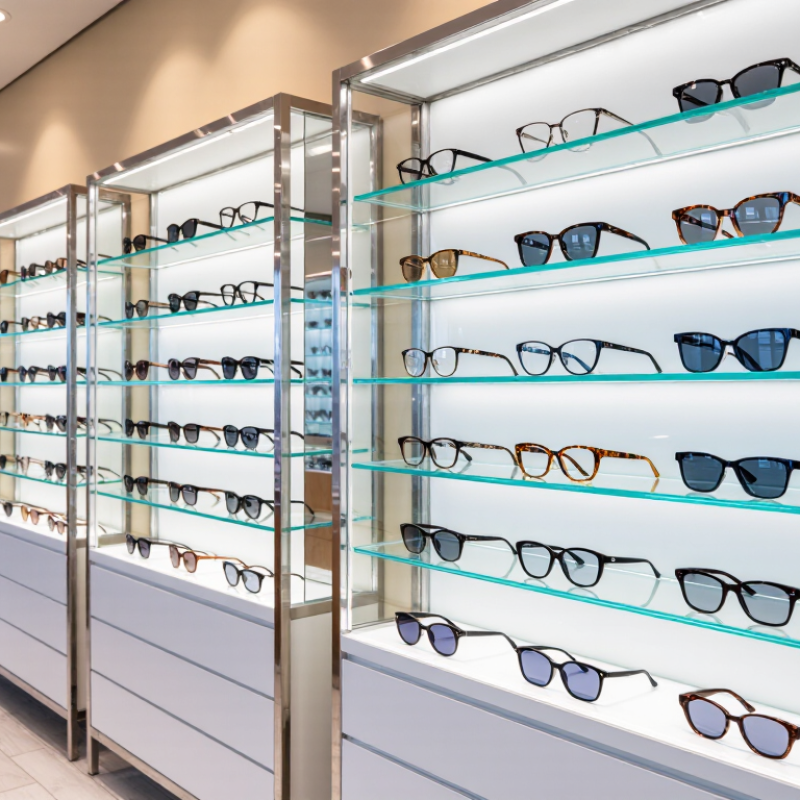
Identify Your Store’s Display Needs and Product Range
Before choosing a showcase, measure the floor area and note where customers pause, queue, and approach staff. Count the frames you plan to display, then sort them by type: everyday prescription styles, children’s frames, and sunglasses. A compact shop may need shallow cases that preserve a clear walkway. A larger store can use a central island without blocking sightlines. Keep it simple. Note busy hours, too; displays that look spacious when the shop is empty may feel awkward when customers gather. Leave staff room to reach stock and clean the glass without shifting nearby trays.
Match the case layout to how shoppers compare products. Evenly spaced rows make shapes easier to scan, while adjustable trays suit collections that change often. If customers regularly ask to try on frames, place popular styles near a staffed counter, but avoid creating a bottleneck. For higher-value frames, consider lockable storage and secure fittings without hiding the selection. Lighting should show colors accurately, not cast bright reflections across the lenses. Test it at different times of day. A large collection does not always need more visible slots. Too many frames can look cluttered, so try a small sample arrangement and ask staff where customers hesitate. Revise the layout after real use.
Compare Eyeglass Showcase Types and Configurations
Choosing an eyeglass showcase starts with how customers browse. Countertop cases keep featured frames near the point of sale, but they can crowd a small counter. Wall-mounted displays free floor space and make frame rows easy to scan. Freestanding units offer more capacity and can guide movement through a larger store. Enclosed cases help protect delicate frames from dust and handling. Open displays make trying frames quicker. There is a trade-off.
Configuration matters as much as type. Adjustable shelves fit different frame shapes, while narrow dividers keep temples from tangling. Place popular styles around eye level, and leave enough space for customers to lift frames without bumping neighboring pairs. Soft, even lighting reveals colors more naturally than a bright spot aimed at one shelf. Check for reflections on glass from the entrance and windows. Small details count. A layout may look tidy on paper yet feel awkward when two customers browse side by side. Test the spacing with real frames, then ask staff where hands or sightlines feel cramped. Some plans need another pass. Keep a little room for seasonal changes, cleaning access, and frames that do not fit the original display plan.
How to Choose the Best Eyeglass Showcase for Your Store?
Compare approximate frame capacity by showcase type
Wall-mounted and freestanding displays can hold more frames, while countertop options suit smaller collections or featured styles. Capacity ranges are estimates and vary with fixture dimensions, frame spacing, and layout. Check the usable display area before choosing.
Evaluate Materials, Lighting, Visibility, and Security
A good eyeglass showcase should protect frames while making them easy to inspect. Glass panels offer a clear view, but fingerprints and glare can quickly distract shoppers. Wipe a sample panel under the store’s actual lights before choosing; a surface that looks clean in a catalog may show every smudge in person. Metal frames feel sturdy and are usually simple to maintain, while wood can add warmth but may need more careful cleaning. Check hinges, edges, and locks for smooth movement. Small details matter.
Lighting should reveal lens shape and frame color without creating bright reflections. Use adjustable, evenly spaced fixtures, then view the display from the doorway and at standing height. Too much light can wash out subtle finishes. Too little makes customers lean closer. That happens. Arrange frames with enough space for staff to lift them without bumping neighboring pieces, and keep popular styles near eye level. Visibility also depends on sightlines: tall signs or bulky stands can hide items from the sales counter. For security, choose a showcase with dependable locks and sturdy construction, but make routine access practical for staff. A display that is difficult to open may slow service, so test it during a normal workday. No setup is perfect; revisit the arrangement after customers begin using it.
Match Showcase Capacity and Layout to Store Traffic
Choose showcase capacity from observed store traffic, not the number of frames you hope to sell. Count entries during ordinary weekdays and busy weekend hours, then note where customers pause. Placer.ai’s 2024 Retail Trends report analyzes visits by retail category and location, reinforcing the value of local traffic patterns over broad averages. A Saturday rush may need more open counter space, not simply more glasses. Leave breathing room.
The U.S. Census Bureau reported that e-commerce accounted for 16.1% of total U.S. retail sales in the fourth quarter of 2024. That leaves physical stores an important role in letting shoppers handle and compare products. Keep popular frames at comfortable eye level, with clear sightlines from the entrance and enough room for two people to browse without bumping elbows. Match display density to how customers actually move: narrow aisles call for slimmer cases, while wider areas can support island showcases. I would still question any layout that looks full but makes customers hesitate. Recheck it after a busy day; fingerprints, empty slots, and bottlenecks reveal what a floor plan misses.
How to Choose the Best Eyeglass Showcase for Your Store? — Match Showcase Capacity and Layout to Store Traffic
| Estimated Daily Visitors | Traffic Level | Suggested Display Capacity | Recommended Layout | Typical Showcase Setup | Planning Considerations |
| Up to 40 | Low | 80–150 frames | Compact perimeter displays with one central feature unit | 2–4 wall-mounted or counter showcases; 1–2 frames per display position | Keep the entrance and consultation area open. Use a smaller assortment organized by frame type or price range. |
| 41–100 | Moderate | 150–300 frames | Perimeter displays with a short island or grouped product zones | 4–8 showcases, combining wall units and low central displays | Allow customers to browse without crowding one another. Keep popular styles easy to reach and clearly grouped. |
| 101–200 | Busy | 300–500 frames | Defined aisles with perimeter shelving and two or more display zones | 8–12 showcases, including wall units, islands, and a secure premium display | Plan clear sightlines for staff and enough aisle space for customers to pass comfortably. Refill high-demand sections regularly. |
| More than 200 | High | 500–800+ frames | Several product zones arranged along clear customer paths | 12+ showcases, sized to the floor plan and assortment | Use consistent category signage and avoid overfilling display positions. Keep checkout, fitting, and service areas accessible. |
Planning note: Capacity ranges are practical starting estimates, not fixed standards. Actual capacity depends on showcase dimensions, frame spacing, product mix, and the amount of open floor space required for comfortable browsing.
Assess Budget, Durability, and Maintenance Requirements
A showcase’s purchase price is only the opening cost. Compare it with delivery, installation, lighting, replacement parts, and routine cleaning. A low-cost cabinet may need more attention if its hinges loosen or its finish shows fingerprints easily. Ask suppliers for written warranty terms and the price of replacement locks, shelves, and light strips. Then check whether staff can clean corners and adjust shelves without special tools. Small details matter.
Durability should match daily use. In a busy store, inspect door alignment, edge protection, and how securely shelves sit when frames are moved. Glass looks refined, but it needs frequent wiping; darker finishes can make dust more visible under bright lights. Lighting adds another running cost. The U.S. Department of Energy’s Energy Saver guidance says LEDs use at least 75% less energy and can last up to 25 times longer than incandescent lighting. That can reduce power use and lamp changes, though actual savings depend on the fixture and hours of operation. Not the full picture. A cheaper case with inaccessible wiring may still cost staff time during repairs. Before choosing, price a realistic maintenance year and ask who can service the cabinet locally. I would revisit that estimate after observing one busy week; paper calculations miss fingerprints, queue traffic, and hurried cleaning.