

How to Choose the Best Nitrogen Generator from China?
Choosing the best Nitrogen Generator from China requires more than comparing prices on a supplier website. It requires matching purity, flow rate, pressure, operating hours, and service capability with your actual application. A laboratory may need stable 99.999% nitrogen, while food packaging often prioritizes dependable flow and low operating costs. The wrong match can create pressure drops, product waste, or unnecessary energy consumption.
Market research shows why this decision deserves careful attention. Grand View Research has reported continued growth in the global nitrogen generator market, supported by demand from food packaging, electronics, chemicals, and healthcare. MarketsandMarkets also identifies membrane and pressure swing adsorption technologies as important market segments. These reports reflect a broader shift from delivered nitrogen cylinders toward on-site generation. It can reduce delivery schedules and storage risks. However, savings are not automatic.
A reliable evaluation should examine the generator’s nitrogen purity, capacity at the required pressure, compressor efficiency, and maintenance intervals. ISO 8573-1 air-quality requirements can help buyers assess compressed-air cleanliness, especially where oil or moisture may damage downstream equipment. Suppliers should provide test data, factory inspection records, warranty terms, and clear spare-parts support. Ask for performance results under realistic conditions. Not only laboratory conditions.
Chinese manufacturers offer broad product choices, competitive pricing, and increasing export experience. Still, quality varies between factories. A polished brochure is not proof of stable performance. Buyers should compare third-party certifications, reference installations, remote monitoring options, and response times for technical support. The “best” generator is rarely the cheapest model. It is the system that delivers dependable nitrogen, measurable lifecycle value, and practical support after installation. Mistakes happen. A careful selection process reduces them.
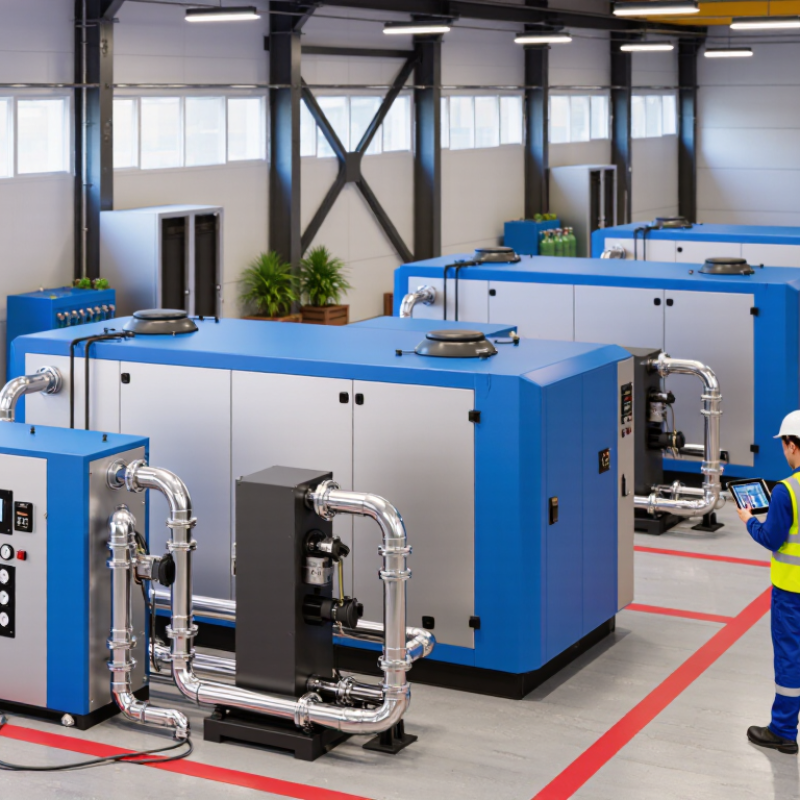
Define Nitrogen Demand, Purity, Flow Rate, and Operating Pressure
Choosing the Best Nitrogen Generator from China starts with accurate operating data. Define nitrogen demand before contacting suppliers. Record normal, peak, and future consumption. Include every machine that uses nitrogen. A laser cutter may need stable flow, while packaging equipment may need less.
Purity requirements must match the application. Food packaging, electronics, and heat treatment may require different oxygen limits. Do not choose 99.999% purity automatically. Higher purity can increase energy use and equipment cost. Ask for oxygen, moisture, and residual impurity data. Confirm how purity was tested, and request results under real operating conditions. A laboratory certificate alone may not represent daily performance.
Flow rate and operating pressure must be reviewed together. A generator rated at 100 Nm³/h may deliver less at your required pressure. Check whether the stated flow is measured at standard conditions. Confirm outlet pressure, pressure stability, and response during demand changes. In practical evaluations, small pressure drops often reveal an undersized compressor or storage tank. Leave capacity for leaks and seasonal production changes, but avoid excessive oversizing. It wastes power. Request a factory acceptance test, operating manual, maintenance schedule, and spare-parts list. Compare these documents with your actual site conditions. A neat specification sheet can still hide important gaps.
| Selection Dimension | Typical Requirement | Practical Design Range | How to Define It | Recommended Selection Consideration |
|---|---|---|---|---|
| Application | Laser cutting, food packaging, electronics, metal heat treatment, pharmaceutical packaging, or oil and gas | Application-specific | Identify whether nitrogen is used for blanketing, purging, oxidation prevention, cutting, packaging, or process control. | Choose the generator technology and purity level according to the process risk, not only the highest available purity. |
| Nitrogen Demand | Average and peak nitrogen consumption | Approximately 5–5,000 Nm³/h for on-site industrial systems | Calculate the total consumption of all connected equipment, including simultaneous operation, start-up demand, and future expansion. | Size the generator for the peak demand and consider a reserve capacity of approximately 10–20% where continuous production is required. |
| Required Nitrogen Purity | Purity expressed as nitrogen concentration | 95% to 99.999% N₂, depending on the process | Confirm the maximum acceptable oxygen concentration and whether residual moisture, oil, or hydrocarbon limits apply. | Higher purity generally requires additional separation capacity, more energy, or lower product flow at the same equipment size. |
| Low-Purity Nitrogen | Blanketing, pneumatic conveying, fire prevention, and some metal applications | 95–98% N₂ | Suitable when moderate oxygen reduction is sufficient and the process does not require oxygen-sensitive protection. | Membrane systems can be economical for stable, moderate-purity requirements and continuous operation. |
| Medium-Purity Nitrogen | Food packaging, tank blanketing, laser cutting, and general industrial purging | 98–99.9% N₂ | Verify the required oxygen concentration at the point of use rather than relying only on the generator outlet specification. | PSA systems are commonly selected because they provide flexible flow and purity adjustment. |
| High-Purity Nitrogen | Electronics, pharmaceutical processes, laboratory use, and sensitive heat treatment | 99.99–99.999% N₂ | Define oxygen, moisture, and hydrocarbon limits separately because nitrogen purity alone may not describe gas quality. | Use high-purity PSA or membrane polishing, with suitable filtration, drying, monitoring, and storage equipment. |
| Required Flow Rate | Continuous nitrogen production capacity | 5–5,000 Nm³/h, depending on system size | Specify flow in Nm³/h or Sm³/h and state the reference temperature and pressure used for the gas measurement. | Compare suppliers using the same reference conditions; actual volumetric flow changes with temperature and pressure. |
| Peak Flow and Intermittent Demand | Short-duration demand above the average consumption | Typically 1.2–2.0 times the average demand for intermittent processes | Record the duration and frequency of peak events, such as vessel purging, laser piercing, or packaging line start-up. | Use a nitrogen buffer tank for short peaks when a larger generator would otherwise be needed. |
| Operating Pressure | Nitrogen pressure required at the point of use | Commonly 4–10 barg; some systems require up to approximately 40 barg with compression | Separate generator outlet pressure, storage pressure, distribution pressure, and final equipment inlet pressure. | Select a generator and compressor combination that meets the required pressure after allowing for filters, piping, valves, and pressure losses. |
| Feed-Air Pressure | Compressed air pressure supplied to the generator | Commonly 7–10 barg for PSA systems; membrane systems may use similar or higher pressure | Check the minimum pressure available during compressor unloading, peak plant demand, and seasonal operating changes. | Insufficient feed-air pressure can reduce nitrogen flow, purity, or both. |
| Recommended Generator Technology | Membrane, PSA, or cryogenic separation | Membrane: generally lower-to-medium purity; PSA: flexible medium-to-high purity; cryogenic: very large flow and very high purity | Compare required purity, flow, pressure, operating hours, footprint, and expansion plans. | For most small and medium on-site industrial applications, membrane or PSA technology is typically more practical than cryogenic production. |
| Product Dew Point | Moisture content of the nitrogen gas | Commonly −40°C atmospheric-pressure dew point for industrial systems; lower values may be specified | State whether the dew point is measured at atmospheric pressure or operating pressure. | Use an air dryer and suitable downstream filtration when the application is sensitive to moisture. |
| Compressed-Air Quality | Oil, liquid water, particles, and hydrocarbons in feed air | Clean, dry, filtered compressed air is required | Review compressor type, air-treatment equipment, filter ratings, drain arrangements, and maintenance records. | Poor feed-air quality can damage separation media, increase operating costs, and cause unstable product purity. |
| Operating Schedule | Daily operating hours and annual duty cycle | Intermittent, single-shift, multi-shift, or 24/7 operation | Estimate annual running hours and identify whether production must continue during maintenance. | For continuous operation, consider automatic switching, duty/standby equipment, remote alarms, and critical spare parts. |
| Buffer Storage | High-pressure nitrogen receiver or buffer tank | Often sized for short-term peak demand and pressure stabilization | Base the tank volume on peak flow, required hold-up time, pressure range, and allowable pressure fluctuation. | A correctly sized receiver can reduce generator cycling and improve supply stability. |
| Energy Consumption | Electricity used by compressors, dryers, controls, and auxiliary equipment | System-specific; commonly evaluated in kWh per Nm³ of nitrogen | Request power consumption at the specified purity, flow rate, feed pressure, and operating condition. | Do not compare power figures unless the purity, flow reference, inlet conditions, and product pressure are identical. |
| Instrumentation and Control | Monitoring of purity, pressure, flow, dew point, and alarms | Basic local control to PLC-based remote monitoring | Define required sensors, data logging, alarm contacts, communication protocol, and automatic shutdown functions. | Online oxygen analysis is recommended when nitrogen purity is a critical process parameter. |
| Safety and Compliance | Pressure equipment, oxygen-deficiency risk, ventilation, and electrical safety | Must comply with the applicable local regulations and site standards | Review pressure-vessel documentation, relief valves, ventilation, oxygen-deficiency monitoring, and electrical requirements. | Nitrogen is non-flammable but can displace oxygen; enclosed areas require appropriate ventilation and safety controls. |
| Supplier Documentation | Technical proposal and performance guarantee | Performance data at defined test conditions | Request P&ID, datasheets, utility requirements, purity-flow curves, noise data, manuals, certificates, and recommended spares. | Require the supplier to state guaranteed purity and flow at the exact operating pressure and feed-air conditions. |
| Example Selection | Food packaging line with moderate continuous demand | 50 Nm³/h at 99.5% N₂ and 6 barg delivery pressure | Add peak-flow data, required dew point, operating hours, and available compressed-air pressure. | A PSA or membrane system may be suitable; final selection should be based on the verified purity-flow curve and total operating cost. |
| Planning note: The ranges above are general engineering guidelines. Actual generator performance depends on feed-air temperature, pressure, humidity, air quality, product purity, product pressure, operating cycle, and site conditions. Always compare nitrogen generators using the same measurement standards and guaranteed operating points. | ||||