How to Choose the Right M8 Pico Connector
Choosing an M8 Pico Connector starts with the equipment it must serve, not just the plug diameter. These compact circular connectors often appear on sensors, actuators, and control devices where installation space is tight. A mismatch in pin count, coding, or cable type can stop a straightforward installation from working. Small, but consequential.
The scale of automation makes careful component selection increasingly relevant. The International Federation of Robotics’ World Robotics 2024 report counted 4,281,585 industrial robots operating worldwide in 2023, a 10% rise from 2022. That figure does not measure connector demand, but it illustrates how many automated systems depend on reliable connections. In practice, the connector must match the device interface, signal or power requirements, and installation environment. Check the details.
Compare pole count and coding first, then verify rated voltage, current, shielding, and cable specifications against the equipment manufacturer’s documentation. Confirm the required ingress-protection rating for the actual exposure; a rating alone does not guarantee suitability after incorrect assembly. IEC 61076-2-104 is a useful reference for M8 connector dimensions and interfaces, but product datasheets still matter. Two connectors that look alike may not be interchangeable.
I would also check mating cycles, temperature limits, and available mounting space before ordering. A tiny connector can be easy to overlook during design review. That is where assumptions creep in. This guide explains how to evaluate the key specifications, compare common configurations, and choose an M8 Pico Connector that fits the application—not merely the catalog description.
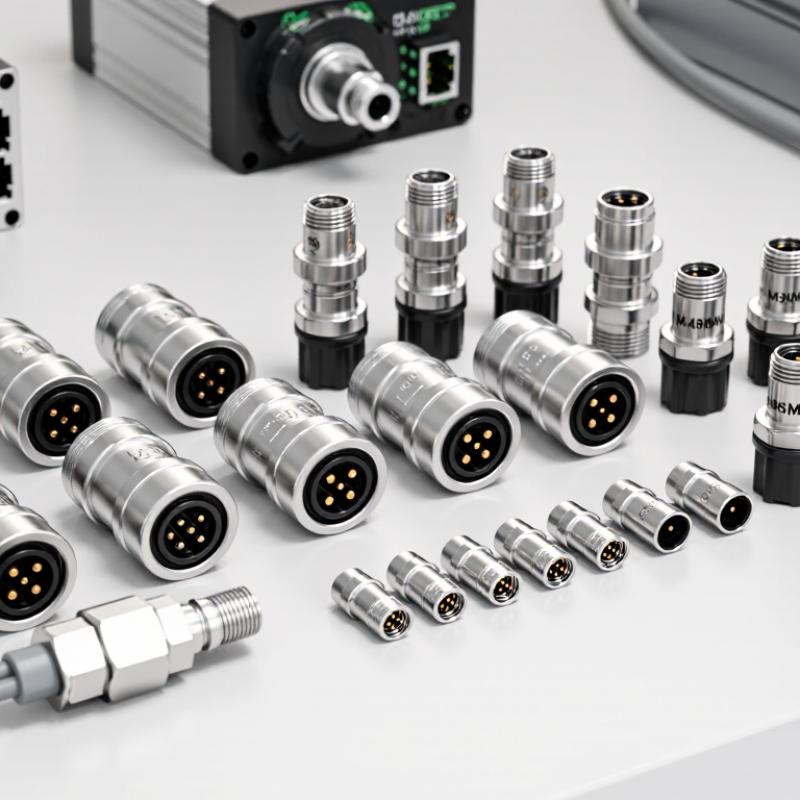
Identify M8 Connector Forms and Coding Under IEC 61076-2-104
How to Choose the Right M8 Pico Connector
Identify M8 Connector Forms and Coding Under IEC 61076-2-104
An M8 connector has a nominal 8 mm screw-locking thread, but size alone does not identify its function. IEC 61076-2-104 defines connector dimensions and mating details for this family. Check the pin count, keyway shape, and contact layout against the standard and the equipment drawing. A-coded versions are common for sensors and actuators; D-coded versions are used for some Ethernet links. Do not assume that matching pin counts mean matching functions.
The keyways matter.
The IO-Link Community reported more than 61 million installed IO-Link nodes worldwide in 2023. That figure signals broad growth in sensor connectivity, not a specific M8 share. Treat it as context, not proof that any M8 assembly suits your application.
On a panel drawing, compare the connector’s coding, pin assignment, cable exit, and available clearance. Check the mating face, too. A slight mismatch can prevent connection or create costly rework. The labels still trip people up.
I would verify the exact IEC edition and the device manufacturer’s pinout before ordering; the standard does not replace application-specific checks. A connector can look right and still be wrong.
Match Pole Count and Pin Layout to the Required Signals
Choose the pole count from the signals the device actually uses, not from the connector’s appearance. A three-wire sensor may need supply, 0 V, and one switching output. A communication device can require an additional data line. Check the device pinout and cable wiring diagram together; wire colors alone are not enough. Small detail. An unused pin is not automatically a safe spare, especially when the mating cable assigns it differently.
For M8 connectors, confirm the coding and pin layout as well as the number of poles. IEC 61076-2-104 specifies requirements for M8 circular connectors, but the device documentation still determines the signal assignment. The IO-Link Community reported more than 50 million installed IO-Link nodes worldwide in its 2024 update, reflecting how common compact sensor connections have become. That figure does not mean every M8 connector supports the same signals. For a four-pole connection, compare each contact against the sensor’s supply, return, and communication needs. I would still check the drawing twice: pin numbering can look reversed when viewed from the mating face. A quick continuity check can catch that mistake before installation.
Compare Rated Current and Voltage; Many M8 Models Support 4 A
An M8 connector may be small, but its current rating matters. Many models are rated at 4 A per contact; that figure is not universal. Check the exact pin count, voltage rating, and operating temperature in the product’s technical data. A four-pin version and a higher-pin-count version may handle different loads. Don’t assume they match.
IEC 61076-2-104 sets interface requirements for M8 connectors, while electrical limits are specified for individual products. Compare the rated current with the load’s steady draw and startup peak. Then check whether the published rating changes with ambient temperature or simultaneous loading. A connector inside a warm, crowded machine cabinet may need more margin than one mounted in open air. Small detail. Easy to miss. I would also verify the cable’s conductor size and the mating connector’s rating; the weakest component sets the practical limit. If a datasheet lists 4 A but gives no test conditions, ask for clarification before designing around that number.
Choose an IP Rating, Such as IP67 for 1 m Immersion for 30 Minutes
When choosing an M8 Pico connector for a damp or submerged installation, check the IP rating of the complete connection. IP67 indicates protection against dust and temporary immersion in water. For the immersion test, the stated condition is up to 1 meter for 30 minutes. That is a defined test, not a promise of safe operation at greater depth or for longer periods.
The distinction matters. IP67 does not automatically mean the connector can withstand water jets, repeated immersion, or cleaning chemicals. Ratings can also depend on whether the connector is fully mated, correctly sealed, and fitted with its specified cap when unused. Check the product documentation for the tested configuration. A bare connector and an assembled cable connection may not have the same rating. That detail is easy to miss.
Before installation, inspect the sealing surfaces for grit, cuts, or trapped cable strands. Even a small defect can create a leak path. Follow the stated tightening method; overtightening may damage a seal rather than improve it. If the connector sits near a washdown area, confirm whether the actual exposure involves spray or pressure, not just brief immersion. The rating may not cover that condition. Check the real installation.
Verify the 8 mm Thread, Cable Type, and Mounting Fit Before Ordering
How to Choose the Right M8 Pico Connector
Verify the 8 mm Thread, Cable Type, and Mounting Fit Before Ordering
An M8 connector has a nominal 8 mm thread, but that alone does not confirm compatibility. Check the mating thread, pin count, coding, and connector gender against the equipment drawing. A sensor may have the right thread and still use the wrong pin arrangement. Check closely. The IEC 61076-2-104 standard covers M8 circular connectors; use the specified interface details rather than relying on appearance.
Cable choice depends on the installation. PVC can suit a stable indoor route, while PUR is often selected where abrasion or repeated movement is expected. Confirm conductor count, wire gauge, temperature range, and bend radius. A cable that kinks behind a bracket can fail even when its connector fits perfectly. I have seen this detail overlooked on crowded machine panels.
Mounting fit deserves the same care. Measure the available clearance, panel thickness, and wrench access, then confirm whether the connector is front- or rear-mounted. Check the required sealing rating under the actual mating conditions; an unmated connector may not retain the same protection.
The International Federation of Robotics reported 4.28 million industrial robots operating worldwide in 2023, in World Robotics 2024. That scale makes dependable field connections important, but it does not mean every sensor needs an M8 interface. Verify the equipment specification before ordering, and recheck the drawing—sometimes the drawing itself is incomplete.