

How to Choose the Right Plastic Tarpaulin?

Choosing the right Plastic Tarpaulin starts with the job it must do. A cover resting over patio furniture faces different demands from one protecting tools on a worksite. Rain, sunlight, wind, abrasion, and storage conditions all matter. So does the size of the area, including the extra material needed to secure the edges.

Materials-selection expert Michael F. Ashby’s approach can be captured in this editorial paraphrase: “Choose for the job’s constraints, not for one impressive number.” It is not a direct quotation. The principle is useful because buyers can focus too narrowly on thickness or weight. A heavier sheet may feel reassuring, but it can be awkward to handle or store. Check the fabric construction, coating, seam quality, and grommet placement together. Look closely at the corners. That is where weak reinforcement may show first.

Match the tarp to real conditions. For repeated outdoor use, ask about UV resistance and water protection, and check whether the manufacturer explains its ratings. For occasional indoor coverage, a lighter option may be easier to fold and carry. Read care instructions, inspect the edge finish, and consider how the tarp will be fastened without stretching it too tightly. Specifications help, but they cannot predict every use. Sometimes the perfect choice is not obvious. Compare the trade-offs, and be willing to reconsider if the sheet feels cumbersome or wears sooner than expected.
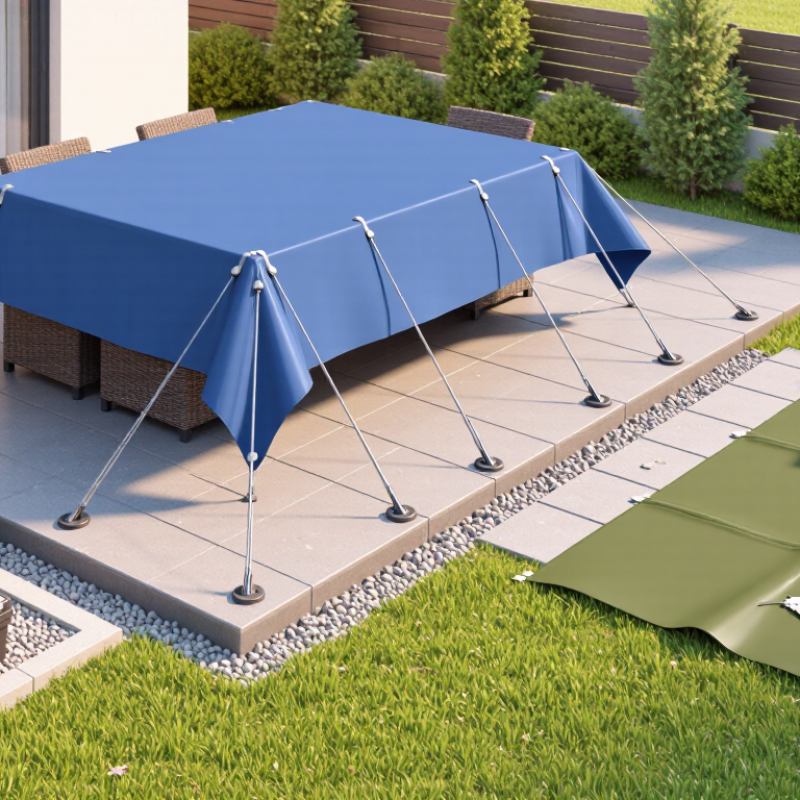
How to Choose the Right Plastic Tarpaulin?

Identify the Intended Use and Conditions

Identify the job before comparing plastic tarpaulins. Will it cover patio furniture, protect tools at a worksite, or shield a load during transport? Each use puts different demands on the sheet. A garden cover may face weeks of sun and rain, while a temporary groundsheet may need to resist abrasion from gravel. Start with the job. Then note how long the tarp will stay in place and how often you will handle it.

Check the conditions where it will be used. Strong sunlight can make some plastics brittle over time, and wind can strain corners and eyelets. For exposed areas, look for UV resistance and reinforced edges. If rain is likely, consider how the tarp sheds water; a sagging sheet can collect puddles even when its surface is waterproof. Details matter. Measure the area with room for overlap and secure fastening, rather than choosing a sheet that barely fits.

Think about temperature, sharp edges, and cleaning, too. A lightweight tarp is easier to fold and carry, but may wear sooner against rough surfaces. Thicker material can be tougher, yet heavier to position alone. Check the product specifications for intended conditions, since “heavy-duty” is not a universal performance standard. I have found that the overlooked detail is often the fastening point: one poorly secured corner can flap all night. Conditions also change, so inspect the sheet after storms and reconsider whether it still suits the job.

Compare Tarpaulin Materials and Construction

Choosing a plastic tarpaulin starts with its material and the conditions it must handle. Polyethylene tarps usually use woven plastic strips with laminated surfaces. They are lightweight, fold easily, and suit short-term cover for firewood or garden tools. Check the stated weight and coating, not just the word “heavy-duty.” Two tarps can look similar but differ in weave density and tear resistance.

PVC-coated polyester is generally heavier and more flexible in cold weather, though it costs more and can be awkward to carry. Neither material is right for every job.

Construction details often decide how long a tarp lasts. Look for reinforced edges, securely attached grommets, and seams that resist water entry. A tarp with grommets spaced about every two feet can be easier to tie down, but spacing alone does not prove strength. Pulling hard on one corner may still cause a tear.

UV treatment can help when a cover stays outdoors, yet sunlight and wind gradually wear down even treated material. Check the product specifications, then inspect the stitching and corners in person when possible. I have found that a thick-looking tarp can still fail at a weak edge. That detail is easy to miss.

For a windy site, use enough tie-down points and avoid letting loose fabric flap. Even good construction has limits.

Choose the Right Weight, Thickness, and Size

How to Choose the Right Plastic Tarpaulin?

Choose the Right Weight, Thickness, and Size

Weight, thickness, and size describe different things. Weight, often listed in grams per square metre (gsm), helps compare material mass. Thickness may be given in mils, but a heavier tarp is not automatically thicker or stronger; coatings and fabric construction matter. For a useful comparison, request the product’s weight, thickness, and tear-strength results. ASTM D751 outlines test methods for coated fabrics, including tests for breaking strength and tear resistance. Specifications are more informative than vague labels such as “heavy duty.”

Size the tarp for the object’s widest points, then allow extra material for draping and fastening. For a stack measuring 8 by 10 feet, a 10-by-12-foot tarp leaves about one foot per side, before accounting for height or a peaked cover. Water can add surprising weight: one inch of pooled rainwater weighs about 5.2 pounds per square foot. A loose tarp can sag and collect it, so secure the cover and avoid pockets.

Tip: Match weight to exposure. A light tarp may suit brief, sheltered use; repeated wind, sharp corners, or prolonged outdoor exposure call for a tougher construction. Check the stated dimensions, too—some listings describe cut size, not usable coverage. I have seen sizing look right on paper, then fall short once the load is covered.

Assess Weather Resistance and Special Features

A tarp facing steady sun needs UV resistance, not merely a heavy feel. NOAA’s UV Index classifies readings of 6–7 as high exposure, a useful warning for outdoor storage areas. Compare local sunlight, rainfall, and temperature patterns with NOAA’s 1991–2020 Climate Normals before choosing a material. A light-colored sheet may reflect heat, while a UV-stabilized coating can slow sunlight damage. Check the product’s stated exposure limits; “water-resistant” does not always mean suitable for months of rain.

Look for test details, too. ASTM D751 covers coated-fabric tests, including breaking strength, tear resistance, and hydrostatic resistance. These measurements help compare fabrics, but they do not predict every result in the field. A tarp stretched tightly over a sharp crate can still tear at the edge. Reinforced hems, rust-resistant grommets, and closely spaced tie points help reduce strain in gusts. Small details matter.

It is easy to overvalue thickness. A thick tarp with weak seams may fail before a lighter, well-finished one. For windy sites, inspect corner patches and test whether ties can hold the sheet without pulling the grommets sideways. Mesh vents can reduce trapped condensation, but they also let rain through. Choose them only where airflow matters more than full coverage.

How to Choose the Right Plastic Tarpaulin? — Assess Weather Resistance and Special Features

Tarpaulin Type Water Resistance Sun and UV Resistance Wind and Tear Considerations Useful Special Features Typical Applications Key Trade-Off
Woven polyethylene (PE), laminated Usually waterproof when the coating and seams are intact. Varies by UV stabilizers and construction; untreated or lightly treated material can degrade faster in prolonged sunlight. Woven reinforcement helps resist tearing, but exposed edges and grommet areas can fail under strong, sustained tension. Lightweight, flexible, often easy to fold; may include reinforced hems and spaced grommets. Temporary covers, camping, landscaping, and general outdoor storage. Economical and versatile, but durability varies considerably with thickness, weave, coating, and UV treatment.
PVC-coated polyester Generally highly water-resistant when properly coated and seams are sealed or welded. Often suitable for extended outdoor use, but UV performance depends on the formulation and product specification. Strong fabric construction can handle demanding use; secure anchoring is still essential in high winds. Can be made with welded seams, reinforced edges, and attachment hardware; some versions are treated for specific requirements. Equipment, vehicles, outdoor enclosures, and repeated-use covers. Typically heavier and less compact than lightweight PE tarps; confirm flexibility and temperature limits for the intended use.
Polypropylene (PP) woven tarpaulin Water resistance depends on whether the fabric is coated or laminated; uncoated woven fabric is not fully waterproof. Varies by UV stabilization; check the product specification for outdoor exposure guidance. Woven construction can provide useful strength, while edges and attachment points remain common stress areas. Lightweight construction; coated versions may provide improved water resistance. Light-duty covers, packaging, and short-term outdoor protection. Do not assume all PP tarps are waterproof or UV-resistant; verify the coating and intended exposure.
Breathable tarp fabric with a water-repellent finish Can shed light rain, but is generally not a substitute for a fully waterproof, coated tarp in prolonged heavy rain. Depends on the fiber, finish, and UV treatment; inspect the product details for outdoor-use suitability. Performance depends on fabric weight and reinforcement; use appropriate tie-downs to limit flapping. Allows more air and moisture vapor to pass through than many impermeable coated tarps. Covering items that need ventilation, such as some building materials or stored goods. Better ventilation may reduce condensation, but usually means less protection from wind-driven rain.
Mesh shade tarp Not waterproof; water passes through the open weave. Designed to provide shade; UV protection varies with material, weave, and coverage rating. Open mesh can allow airflow, but the tarp still needs secure fastening and can be damaged by excessive wind load. Airflow and partial shade; some products state a shade percentage, which should be checked before purchase. Patios, garden shade, fencing, and privacy screening. Choose it for shade and airflow, not rain protection or a sealed cover.
Reinforced heavy-duty tarp Often waterproof if it has a continuous, intact coating and suitably constructed seams. May be specified for longer outdoor exposure; confirm UV treatment rather than relying on “heavy-duty” wording alone. Reinforced hems, patches, and grommets can improve load distribution when correctly installed. May include reinforced corners, extra attachment points, or welded seams. Repeated-use storage covers, construction, and larger equipment protection. Greater weight and strength do not eliminate wind risk; avoid undersized tie-downs and unsupported spans.

Selection note: Actual performance depends on fabric weight, weave, coating, seam construction, UV stabilizers, installation, and exposure. Check the product specification for stated waterproofing, UV suitability, temperature limits, and intended service conditions. Secure tarps to reduce flapping, pooling water, and wind stress.

Check Safety, Handling, and Maintenance Requirements

A plastic tarpaulin should suit the job and the people handling it. Check its intended use, edge construction, and any fire-resistance test documentation before purchase. For covers near heat or sparks, confirm the material is rated for that exposure; ordinary polyethylene can soften or melt. Ask suppliers for test results, not just broad claims.

Handling matters, especially with wet or oversized sheets. NIOSH’s Revised Lifting Equation sets a 51-pound load constant under ideal lifting conditions, then adjusts it for reach, twisting, frequency, and grip. That figure is not a safe target for a bulky tarp. Roll the sheet close to the body, use a second person for awkward loads, and keep hands clear of tensioned ropes. Small details count.

Inspect seams, eyelets, and corners before each use. Look for pinholes, brittle patches, fraying, or stretched grommets. ASTM D751 describes tests for coated fabrics, including tear and breaking strength; ask whether supplied test data reflects the tarp’s actual construction. Clean off grit with mild soap and let the sheet dry fully before storage. A folded damp tarp can trap moisture and develop mildew. Still, visual checks can miss hidden damage, so replace a sheet that repeatedly tears under normal tension.

How to Choose the Right Plastic Tarpaulin

Compare the typical density ranges of HDPE and PVC resin. Density can influence material handling, but it does not determine the weight of a finished tarp.

How to use this: PVC resin is denser than HDPE resin, but finished-tarp weight also depends on fabric construction, coating, thickness, and reinforcement. Before buying, check the product’s stated weight, UV protection, waterproofing, safe load limits, and care instructions. Resin density ranges are typical and vary by formulation.

Skip to content