Why Are Die Casting Molds Essential for Efficient Manufacturing?
Die Casting Molds play a crucial role in modern manufacturing. These molds are necessary for producing precise and consistent metal parts. With the right die casting molds, manufacturers can achieve efficiency and reduce production costs.
Efficient manufacturing relies on the quality of die casting molds. They must be designed to withstand high pressures and temperatures. A well-made mold can produce thousands of parts before wear occurs. However, mold maintenance is often overlooked. Neglecting this can lead to defects in the final product.
The importance of die casting molds extends beyond production. They influence product design and material choice. Understanding their role allows manufacturers to optimize operations. Yet, many still fail to recognize their value. This gap can result in inefficiency and wasted resources. As industries evolve, recognizing the importance of effective die casting molds is vital for competitive manufacturing.
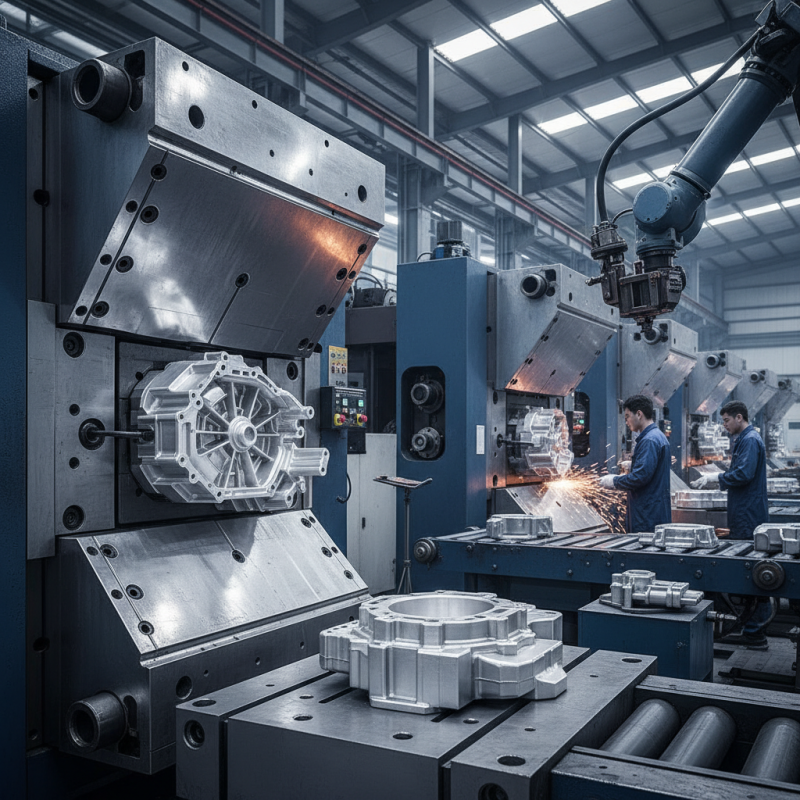
Importance of Die Casting Molds in Manufacturing Processes
Die casting molds play a crucial role in modern manufacturing. They ensure high precision in shaping metal parts. This process minimizes material waste. As a result, manufacturers can save costs and boost productivity. A well-designed mold leads to faster production cycles. It allows for consistent quality in every unit produced.
However, creating these molds is not without challenges. Designers often face limitations in mold materials and manufacturing techniques. These can affect durability and the mold's lifespan. If the mold breaks, it results in downtime and lost revenue. Furthermore, the initial investment in molds can be significant. Manufacturers must weigh this against potential gains in efficiency.
Incorporating advanced technologies can improve mold design. Utilizing 3D printing for mold prototypes offers flexibility. This allows for easy adjustments before final production. Nevertheless, the adaptation of new technologies requires skilled personnel. Ongoing training and development are essential for maintaining production efficiency. It’s vital to continually assess and enhance the die casting process. Embracing these changes can lead to significant advantages in manufacturing.
Types of Die Casting Molds and Their Applications
Die casting molds are crucial in manufacturing. They create precise and consistent metal parts. Various types of molds exist for different applications. Understanding these options can improve production efficiency.
Two common types of die casting molds are permanent molds and sand molds. Permanent molds are made of metal. They can withstand high temperatures and are durable. This type allows for faster production runs. On the other hand, sand molds are more flexible. They are often used for complex shapes. However, they have a shorter lifespan and may lead to imperfections.
The choice of mold greatly affects the final product. Each type has its pros and cons. For instance, permanent molds deliver better surface finishes. However, they require a larger initial investment. Sand molds are less expensive upfront but may incur higher costs over time due to their limited usage. Manufacturers must weigh these factors carefully.
Die Casting Mold Types and Their Applications
Factors Influencing Die Casting Mold Design and Durability
Die casting molds play a crucial role in manufacturing efficiency. The design and durability of these molds greatly affect production quality and cost. A comprehensive report from the American Foundry Society states that up to 25% of production costs can be attributed to mold issues. Poor design can lead to defects and delays, impacting overall productivity.
There are several factors influencing mold design. Material choice is critical. Molds made from high-quality steel last longer and withstand higher temperatures. For instance, aluminum molds offer lighter alternatives, but often lack longevity. The design process must consider thermal conductivity. Improper heat management can cause warping and surface defects. A study highlighted that molds with optimal cooling channels improve cycle times by 30%.
Durability is not simply about material. Regular maintenance plays a significant role. According to industry experts, neglected molds can reduce efficiency by up to 15%. Monitoring wear and tear prevents unexpected downtimes. Balancing cost and quality is a continual challenge. Manufacturers must ask: How can we design better molds? What improvements can minimize failures? Addressing these questions is essential for future advancements.
The Role of Die Casting Molds in Cost Reduction and Efficiency
Die casting molds are crucial for efficient manufacturing processes. They enable the production of consistent and accurate parts. Each mold is designed to produce multiple units in a single cycle. This reduces the material waste seen in other methods. Companies can benefit from lower production costs significantly.
Moreover, die casting molds lead to shorter lead times. Manufacturers can quickly bring products to market. High-quality molds facilitate fast cooling, which minimizes cycle times. However, the initial investment in high-quality molds can be substantial. It requires careful planning and design expertise.
In practice, not all molds perform perfectly. Sometimes, defects occur due to improper design or material choice. This can lead to higher scrap rates and increased costs. Manufacturers must continually assess and improve their molds. Regular maintenance is also essential to keep production running smoothly. Identifying issues early can prevent bigger problems in the long run.
Advancements in Die Casting Mold Technology and Their Impact
Die casting mold technology has evolved dramatically in recent years. Advanced materials and processes are now available. These developments enhance the durability of molds. They can withstand higher temperatures and pressures. For instance, research shows that high-performance alloys increase mold life by 20-30%. This can lead to significant cost savings in manufacturing.
The precision of modern die casting molds has improved as well. 3D printing technology allows for more intricate designs. This means more complex shapes can be achieved quickly. A recent industry report indicated that 85% of manufacturers are adopting 3D printing in mold production. This innovation speeds up the prototyping process. However, there are challenges. Some manufacturers still face issues with transitioning from traditional methods. Adjustments to workflows and training are often necessary.
Despite these advancements, the industry must reflect on its practices. Energy consumption remains a concern. Studies highlight that die casting processes can use vast amounts of energy. Manufacturers need to find ways to make their practices more sustainable. This requires a commitment to research and development. Only then can the die casting industry truly thrive amid competition and environmental challenges.