

China’s manufacturing base is driving demand for precise, dependable motion control. The International Federation of Robotics’ World Robotics 2024 report recorded 541,302 industrial robot installations worldwide in 2023. China accounted for 276,288 installations, about 51 percent of the total. These figures describe industrial robotics, not the Multi Axis Motion System market itself. Still, they show the scale of automation projects that rely on coordinated movement, repeatable positioning, and reliable components.
Precision matters. A gantry moving a camera over a production line has different requirements from a compact stage positioning a laser head. Buyers comparing Chinese manufacturers should therefore examine more than axis count or advertised speed. Check positioning accuracy, payload limits, controller compatibility, service access, and the availability of technical documentation. Ask how the system performs under the actual duty cycle, not just in a showroom demonstration. Small details matter, too: cable routing, encoder feedback, and how quickly replacement parts can be supplied.
This overview introduces notable Multi Axis Motion System manufacturers in China and the capabilities buyers should verify. Rankings can vary with application, budget, and integration needs; a supplier strong in standard stages may not suit a custom machine. No shortlist replaces testing. Product specifications can also be incomplete, so request written performance data and confirm it against your operating conditions. That extra check takes time, but it may prevent costly rework later.
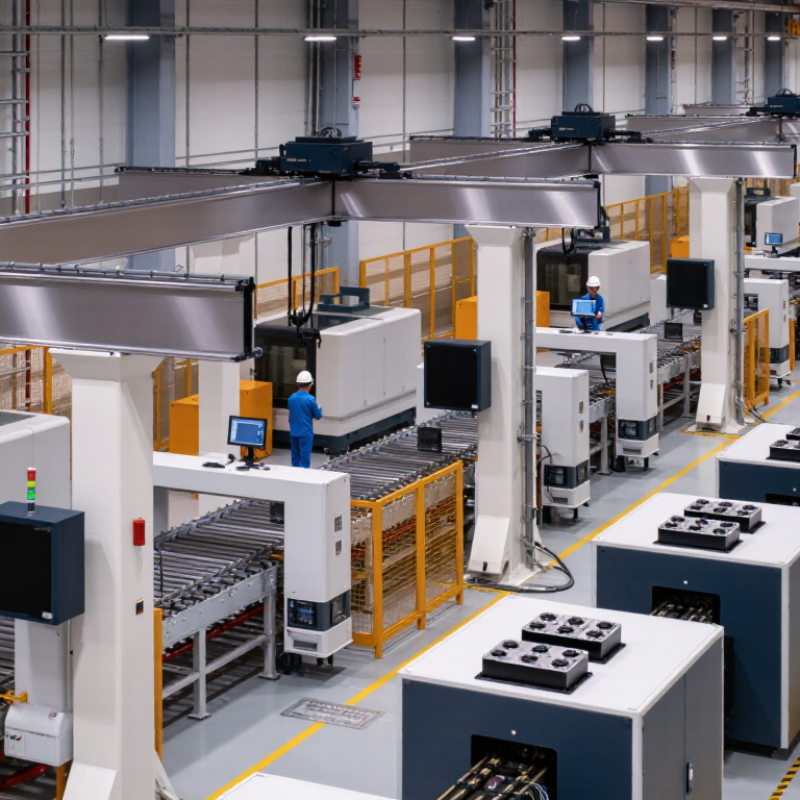
A multi-axis motion system coordinates movement along two or more axes to position a tool, part, or sensor. It typically combines motors, mechanical guides, a controller, and sometimes position feedback. In practical terms, an XYZ stage can move a camera above a workpiece while maintaining a repeatable path. Add a rotary axis, and the system can approach angled surfaces. That matters.
Systems are commonly classified by their mechanical layout. Cartesian systems use straight-line axes arranged at right angles; gantry designs support wider work areas with a bridge structure. Articulated systems use rotating joints, while hybrid designs combine linear and rotary movement. The number of axes describes available directions of motion, but it does not alone indicate accuracy or capability. Payload, travel range, speed, and workspace also shape performance.
Control provides another useful distinction. Coordinated systems move several axes together along a planned path, while simpler setups may move axes independently. Feedback-based systems use encoders or other sensors to compare actual position with the commanded position. Open-loop systems generally do not measure position in the same way. In real projects, categories can blur: a machine may be Cartesian mechanically yet highly coordinated in software. Classification is a starting point, not a substitute for checking the actual motion requirements.
A motion system is commonly classified by the number and type of independently controlled axes. The examples below show typical configurations—not manufacturer rankings or market-share data.
Axis configurations vary by application: Cartesian systems use linear axes, rotary axes add rotational motion, and industrial robots typically combine multiple rotary joints.
Top Multi Axis Motion System Manufacturers in China
When evaluating multi-axis motion system manufacturers in China, compare more than catalog travel and speed. Ask how each system is tested under a realistic payload, not just an empty bench. Request repeatability data, positioning accuracy, and test conditions, including temperature and operating speed. Numbers help. Check whether axes remain synchronized during acceleration and direction changes. A short demonstration using your actual workpiece can reveal vibration, cable interference, or settling delays that a specification sheet may miss.
Review the engineering and service process, too. Can the team explain motor sizing, controller compatibility, and expected maintenance intervals in plain terms? Ask for sample inspection records, calibration procedures, and clear drawings of mounting points and cable routes. Confirm how design changes are documented and how replacement parts are identified. A factory visit or live video inspection may help verify assembly and testing practices. Still, neither guarantees trouble-free operation. Price often receives too much attention during early comparisons; I have seen that choice create more integration work later. A detailed acceptance plan is useful, even if it needs revision after the first trial. Look for specific answers, not polished promises.
Use this criteria matrix to compare suppliers consistently. It lists verifiable evaluation points rather than ranking or assigning unverified scores to individual manufacturers.
| Evaluation Dimension | Suggested Weight | What to Verify | Evidence or Practical Benchmark | Score (0–5) |
|---|---|---|---|---|
| Application and system design | 12% | Whether the proposed configuration matches the required number of axes, travel, orientation, duty cycle, and operating environment. | Request a system layout, axis-by-axis specification, operating assumptions, and a written explanation of design choices. | — |
| Positioning accuracy and repeatability | 12% | Specified accuracy and repeatability for each axis, including the conditions under which the figures apply. | Check test methods, measurement instrument, travel range, temperature conditions, and whether results are for a component or the assembled system. ISO 230-2 may be relevant for testing positioning accuracy and repeatability of numerically controlled axes. | — |
| Load, speed, and duty-cycle capability | 10% | Payload and moment limits, maximum and recommended speed, acceleration, and continuous or intermittent operating limits. | Compare the load case with the supplier’s sizing calculations and published ratings; confirm whether payload includes tooling and workpiece mass. | — |
| Mechanical components and serviceability | 10% | Guideway, drive, bearing, encoder, and cable-chain specifications, plus access to adjustment and replacement parts. | Request bills of materials or component specifications, maintenance intervals, spare-parts lists, and procedures for replacing wear components. | — |
| Motion control and synchronization | 10% | Supported axis count, coordinated motion functions, interpolation, synchronization, and fault-handling behavior. | Ask for a demonstration using the intended motion profile and confirm controller interfaces, supported fieldbus or communication protocols, and recovery behavior after a fault. | — |
| Software, documentation, and integration | 8% | Availability of programming tools, manuals, electrical and mechanical drawings, parameter backups, and integration support. | Review sample documentation and confirm language, version control, access to configuration files, and compatibility with the buyer’s PLC, robot, or host software. | — |
| Quality control and factory testing | 8% | Inspection traceability, calibration practices, assembly checks, and acceptance testing for the completed system. | Request example inspection records, a documented factory acceptance test plan, and agreed pass/fail criteria tied to the purchase specification. | — |
| Safety and regulatory documentation | 8% | Risk-related documentation, electrical safety provisions, guarding interfaces, and documentation needed for the destination market. | Confirm which party is responsible for system-level conformity and request applicable declarations and test records. IEC 60204-1 addresses electrical equipment of machinery; applicability depends on the machine and market. | — |
| Customization and project execution | 7% | Ability to manage non-standard travel, mounting, tooling, environmental protection, and interface requirements. | Review a project schedule, design-change process, responsibility matrix, and written confirmation of scope, milestones, and acceptance criteria. | — |
| Warranty, service, and spare parts | 7% | Warranty coverage, response process, remote troubleshooting, repair options, and spare-parts availability for the intended service period. | Check written warranty terms, exclusions, service contacts, lead-time commitments, and recommended critical spares. | — |
| Commercial and export readiness | 8% | Quotation clarity, delivery terms, packing and shipping arrangements, export documents, and payment milestones. | Confirm the contracting entity, itemized scope, Incoterms® rule and named place, delivery schedule, packaging requirements, and document list in writing. | — |
| Total suggested weight | 100% | Enter scores only after reviewing comparable documentation, test results, or demonstrations. | ||
Scoring guide: 0 = no evidence provided; 1 = major gaps; 2 = partial evidence with notable gaps; 3 = meets stated requirements; 4 = strong evidence and low implementation risk; 5 = independently verifiable evidence and a strong fit for the application. Apply each score to the evidence reviewed, not to marketing claims alone.
Leading multi-axis motion system manufacturers in China serve automation, inspection, packaging, and laboratory equipment projects. Their systems may combine servo motors, precision stages, controllers, and safety interlocks. A three-axis gantry might travel along a 1.2-meter rail, while a compact vision stage may prioritize low vibration over speed. Details matter. Experienced buyers compare positioning accuracy, repeatability, payload, and duty cycle under clearly stated conditions. They also check whether specifications apply to one axis or the assembled system. That distinction is easy to miss.
Technical support matters after delivery. Ask how engineers handle tuning, cable routing, homing routines, and connection to existing controls. Request a sample motion profile or a factory test using representative loads. During repeated cycles, watch for overshoot, audible vibration, and heat buildup. A clean demonstration helps, but it is not the whole story. Manufacturers differ in customization and documentation, so compare drawings, wiring schedules, and response times alongside price. Even a small change, such as moving a limit switch, can delay commissioning when responsibilities are unclear. That happens. Clear explanations of engineering trade-offs are useful, though final testing in the intended machine remains essential.
Multi-axis motion systems combine linear stages, motors, guides, encoders, and motion controllers to position tools or components across several directions. Common configurations include XY tables, XYZ gantries, and rotary-linear assemblies. Their value depends on how well the axes work together, not simply on how many axes are installed.
Drive choices shape speed, force, and maintenance needs. Ball screws can provide strong thrust and controlled movement, while linear motors suit applications that need rapid acceleration. Encoders report position to the controller, which adjusts motion when the measured path differs from the command.
Small errors matter. A flexible frame or poorly aligned guide can reduce accuracy, even when the motor is highly capable. Repeatability figures should therefore be checked alongside payload, travel, speed, and operating conditions.
Manufacturers in China offer systems for inspection, dispensing, machining, and automated handling, with capabilities varying by design and configuration. Useful technical documentation should state axis travel, positioning repeatability, maximum load, and supported control interfaces.
Ask how performance changes with an offset load; catalog values may reflect ideal setups. This detail is easy to overlook.
Integration also takes work: cable routing, vibration, and machine-level calibration can all affect results. A system that looks precise on paper may need adjustment on the factory floor.
Chinese multi-axis motion system manufacturers serve factories where tools must move accurately across several directions. Typical applications include electronics assembly, automotive production, metal machining, packaging, and laboratory equipment. A six-axis platform can guide a dispensing head around a phone frame, while a gantry system may move heavy components between machining stations. Small differences in payload, speed, and repeatability matter.
The International Federation of Robotics’ World Robotics 2024 report recorded 276,288 industrial robot installations in China in 2023, about 51% of global installations. This scale supports demand for motion systems in robot cells, welding lines, and material handling. Electronics plants often need compact stages for inspection and component placement. Automotive lines favor systems that can handle heavier loads and repeated cycles. Precision matters.
Chinese suppliers also serve battery production, food processing, and medical-device manufacturing, where motion paths may involve coating, cutting, sorting, or inspection. The application requirements are not interchangeable. A fast stage can still disappoint if vibration blurs camera images, or if heat shifts alignment during a long production run. IFR figures describe robot installations, not multi-axis system sales, so they should not be treated as a direct measure of this market. That distinction is easy to miss.
TERMS OF USE - LEDOLUX
This site uses cookies in order to deliver services in accordance with Privacy Policy. You can use settings within your browser to control the cookies that are set on your computer – conditions of access or storage of cookies.
Your data controller will be LEDOLUX POLAND SP. ul. Innowacyjna 1; 36-060 Głogów Małopolski, which adapts the content of its website to your needs and analyses and examines them to improve it. More information.