

10 Sewer Drain Cleaning Equipment Tips for Global Buyers

Sewer Drain Cleaning Equipment is becoming more important as cities expand, rainfall intensifies, and aging pipelines face heavier demand. The U.S. Environmental Protection Agency’s 2022 Clean Watersheds Needs Survey identified approximately $630.1 billion in documented clean-water infrastructure needs. Wastewater collection and conveyance represent a substantial part of that challenge. For global buyers, this figure signals more than market opportunity. It highlights the need for dependable tools that protect public health and reduce avoidable excavation.

A practical purchasing decision should begin with field conditions, not catalog appearance. Pipe diameter, blockage type, access depth, water pressure, power supply, and local climate all affect equipment performance. A compact electric drain cleaner may suit indoor maintenance, while a truck-mounted water jetter can handle longer municipal lines. The Water Environment Federation recommends structured inspection, preventive maintenance, and operator training within effective collection-system programs. Equipment must support those practices safely.

Small details matter.

Look for hose flexibility, nozzle compatibility, corrosion resistance, noise control, and replacement-part availability. Buyers should also verify emergency shutoff systems, guarding, grounding, and documented operating instructions. Standards and requirements vary between countries, so technical claims need careful checking against local regulations and service capabilities.

No checklist is flawless. Even experienced purchasers can underestimate transport, operator skill, or seasonal flooding. That is why this guide examines ten practical Sewer Drain Cleaning Equipment tips for international buyers. It connects published infrastructure evidence with real maintenance conditions, while recognizing an uncomfortable truth: the cheapest machine may become the most expensive choice after repeated downtime, weak support, and difficult repairs.
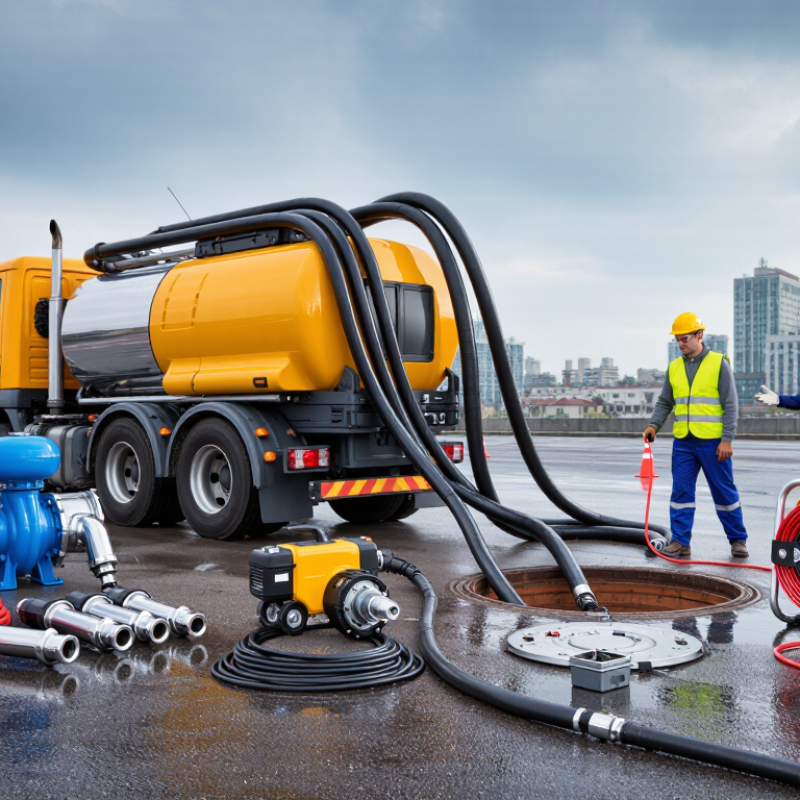
10 Sewer Drain Cleaning Equipment Tips for Global Buyers

Define the Sewer Cleaning Task and Required Equipment Capacity

Before choosing sewer cleaning equipment, define the actual task. A narrow household drain needs different capacity than a 600-millimeter municipal line. Record the pipe diameter, length, access points, flow condition, and blockage type. Grease, roots, sand, and hardened deposits require different cleaning methods. Camera inspection can reveal whether the pipe is cracked, collapsed, or simply obstructed. Do not rely on pipe size alone.

Measure the working distance from the machine to the blockage. Then select a hose, cable, or vacuum system that can reach it without excessive tension. Water jetting capacity depends on pressure, flow rate, nozzle design, and pipe condition. High pressure is not always better. Fragile pipes may suffer damage, while low flow may leave heavy sediment behind. For vacuum work, calculate the expected solids volume and lifting height. A small tank can fill quickly beside a deep manhole. That mistake is expensive.

Leave practical capacity for uncertainty. Real sites contain bends, poor access, standing water, and unknown deposits. I have seen equipment selected from catalog numbers alone, then struggle after only a few meters. Add a reasonable operating margin, but avoid oversized machines that waste water, power, and transport space. The right specification should match the sewer’s condition, not just the buyer’s preferred price. Recheck the assumptions after inspection.

Compare Drain Cleaning Machines by Pipe Size and Blockage Type

10 Sewer Drain Cleaning Equipment Tips for Global Buyers

Compare machines with the pipe diameter and blockage material in mind. For household lines from 50 to 100 millimeters, a compact drum machine often handles hair, soap, and soft grease. Its enclosed cable is cleaner, but it can hide cable damage. That weakness matters.

For pipes from 100 to 200 millimeters, sectional machines usually provide stronger torque and longer reach. They suit heavy grease, compacted sludge, and moderate root intrusion. Larger stormwater lines may require a high-pressure water jetter with carefully selected nozzles. Jetting removes deposits along the pipe wall, while a cable machine works better on a single dense obstruction. Neither method solves every problem. I learned this after treating a root-filled line as ordinary grease.

Hard mineral scale needs more than force. A rotating chain flail or specialized descaling head can break deposits, but the pipe condition must be checked first. Old clay or corroded metal may crack under aggressive cleaning. Camera inspection helps confirm the blockage type before buying equipment. Check cable diameter, hose length, pump pressure, flow rate, and access size. Ask whether local technicians can repair the motor, pump, or control system. Electrical voltage and safety certification also vary between markets. A lower purchase price can become expensive when spare parts arrive slowly. Test the machine on representative pipe sections, not only in a showroom.

Evaluate Cables, Nozzles, Water Pressure, and Cutting Tools

Global buyers should match cable design to blockage material, pipe diameter, and access length. Sectional cables offer control in tight commercial lines. Continuous cables cover longer runs, but storage and torque handling require discipline. Check core construction, coupling strength, and bend radius. A cable that kinks beside a basement cleanout is already a liability. The U.S. EPA’s 2022 Clean Watersheds Needs Survey estimated $630.1 billion in wastewater infrastructure needs over 20 years. Equipment durability deserves serious attention.

Water pressure alone does not clean a sewer. Nozzle orifice size, flow rate, hose diameter, and jet angle determine transport. A penetrating nozzle suits compacted sediment. A flushing nozzle moves loose debris. Root-cutting heads need controlled rotation and compatible water flow. Verify working pressure, not the advertised maximum. Many professional systems operate around 1,500–4,000 psi, but pipe material and local rules may require less. Use gauges at the pump and hose reel. Watch the return water. Dark grit, rag fragments, or sudden flow changes reveal conditions better than a brochure.

For cutting tools, compare chain, blade, and root-saw configurations against the obstruction. Confirm shaft diameter, replacement access, and retrieval provisions before purchase. The WHO/UNICEF Joint Monitoring Programme reported that 3.5 billion people lacked safely managed sanitation in 2022. Repairability therefore matters across different markets. Check metric and imperial fittings, spare-part access, and operator training. I would not accept a catalog pressure figure without a flow test. That assumption can produce disappointing cleaning results.

Check Equipment Safety, Durability, Maintenance, and Local Standards

Buying sewer drain cleaning equipment requires more than comparing motor power or cable length. Safety, durability, maintenance, and local standards should guide every decision.

Inspect guards, emergency stops, electrical protection, and cable handling systems before purchase. Operators need clear controls, stable frames, and gloves that maintain grip in wet conditions. I once tested a machine beside a narrow access point and found its wheels too small for uneven ground. That detail delayed the work. It also changed my checklist. Ask whether the equipment suits confined spaces, local voltage, drainage layouts, and transport conditions. Compliance documents should be current and easy to verify.

Durability depends on construction quality and daily treatment. Check corrosion-resistant parts, sealed bearings, reinforced hoses, and replaceable wear components. A strong machine still fails when debris remains inside the housing. After each job, remove residue, inspect cables for flattening, and dry electrical areas completely. Keep a written maintenance log. It reveals patterns that memory misses. Spare parts should be available through dependable local channels, not only distant suppliers.

Maintenance instructions must match the skills of your service team. Clear diagrams are valuable. Vague manuals create avoidable mistakes. Confirm that the equipment meets applicable safety, electrical, noise, and environmental requirements in the destination market. Requirements may differ between regions, ports, and municipal projects. Ask an authorized inspector or qualified technician to review uncertain points. No checklist is perfect. Recheck it after real field use.

10 Sewer Drain Cleaning Equipment Tips for Global Buyers

Representative operating ranges commonly used when comparing sewer cleaning equipment. Always verify the final specification against the application, electrical system, safety regulations, and service capability in the destination market.

Cable diameter is shown in millimetres and represents typical working ranges: hand augers for light blockages, drum machines for routine indoor and smaller-diameter lines, sectional machines for heavier-duty work, and water jetters using larger high-pressure hoses. Buyers should check guarding, emergency-stop functions, RCD/GFCI protection, corrosion resistance, spare-part availability, maintenance access, and local conformity requirements before purchase.

Verify Supplier Quality, Operating Costs, Shipping, and After-Sales Support

10 Sewer Drain Cleaning Equipment Tips for Global Buyers

Supplier quality deserves more than a polished catalog. Ask for pressure-test records, component specifications, factory inspection photos, and a live demonstration with debris. Check welds, hose connections, wheel strength, and corrosion protection. A reliable supplier should explain maintenance intervals clearly. Vague answers are warning signs.

Calculate operating costs before comparing purchase prices. Include electricity or fuel, water consumption, nozzle wear, hose replacement, labor, and scheduled servicing. Request a written estimate for two years. It may be wrong. Seasonal blockage levels can change the result, so test the calculation against your own service records. Equipment with higher power is not always more economical.

Shipping details can quietly damage a budget. Confirm packed dimensions, gross weight, crate protection, delivery terms, customs documents, and destination voltage. Ask whether spare parts can ship separately. Before payment, obtain a packing list with every accessory named. After-sales support matters just as much. Confirm warranty coverage, response times, remote troubleshooting, operator training, and local parts availability. Ask how a failed pump or damaged hose will be handled. A strong supplier provides manuals, wiring diagrams, maintenance schedules, and practical video guidance. One overlooked detail can stop a machine for weeks.

10 Sewer Drain Cleaning Equipment Tips for Global Buyers - Verify Supplier Quality, Operating Costs, Shipping, and After-Sales Support

No. Buying Tip Equipment Specification to Check Typical Commercial Range Supplier Quality Evidence Typical Operating Cost Shipping and After-Sales Check
1 Match the machine to pipe diameter and blockage type Choose between sectional machines, drum machines, high-pressure water jetters, and vacuum units according to pipe size, access, and blockage material. Drain cables commonly cover approximately 20–150 mm pipes; commercial jetters often cover about 50–600 mm pipes, depending on pressure and flow. Request a written application chart, demonstration video, load test, and references for similar pipe conditions. Approx. US$2–10 per operating hour for electricity or fuel, excluding labor and water. Confirm packed dimensions, lifting points, spare-cable storage, and whether remote troubleshooting is available.
2 Verify motor, pump, and electrical compatibility Check rated power, voltage, frequency, phase, motor protection, pump material, and starting current. Portable electric drain cleaners commonly use 0.75–2.2 kW motors; jetters may use approximately 5.5–30 kW motors or petrol/diesel engines. Ask for nameplate photos, electrical diagrams, insulation-test records, and confirmation of the required plug and protection device. Electricity cost depends on local tariffs; a 2.2 kW motor uses about 2.2 kWh per full-load hour. Confirm conformity documents required in the destination market and whether replacement motors or pumps are stocked.
3 Evaluate pressure and flow together Do not compare pressure alone; review working pressure, maximum pressure, water flow, nozzle size, hose length, and duty cycle. Professional jetters often range from about 100–250 bar and 30–150 L/min; continuous operation may require derating. Request pump curves, calibrated gauge readings, a continuous-load test, and written limits for pressure and flow. Water use may range from roughly 30–150 L per minute, creating disposal, supply, and wastewater-handling costs. Check hose-reel dimensions, frost protection, drain valves, and the availability of compatible nozzles and seals.
4 Inspect materials and corrosion protection Review frame steel thickness, weld quality, hose reinforcement, cable material, pump wetted parts, coatings, and fastener grade. Heavy-duty frames commonly use painted or powder-coated steel; stainless or corrosion-resistant components cost more but suit wet environments. Request material certificates where relevant, weld photographs, coating specifications, and a corrosion-protection statement. Poor corrosion control can increase hose, cable, fastener, and pump replacement frequency; inspect and rinse equipment after use. Use moisture-resistant export packaging, sealed electrical components, and a documented preservation method for sea transport.
5 Calculate total operating and maintenance cost Include power or fuel, water, nozzles, cables, hoses, seals, filters, lubricants, labor, and scheduled servicing. Consumable replacement intervals vary widely; high-use operators should budget regular nozzle, hose, cable, seal, and filter replacement. Request a parts-price list, service schedule, expected consumable life, and a five-year total-cost estimate. A realistic comparison should separate energy, consumables, labor, transport, and downtime rather than using purchase price alone. Ask whether parts are standard sizes, stocked regionally, and shipped under clear harmonized tariff classifications.
6 Check safety features and operator ergonomics Look for emergency stop controls, residual-current protection, pressure relief, hose restraints, splash guards, brakes, and stable transport handles. Commercial units should provide controlled start/stop operation and secure handling of rotating cables or high-pressure hoses. Request risk assessments, user manuals, safety labels, test records, and an operating demonstration by trained personnel. Ergonomic controls can reduce setup time, injury risk, and labor cost, even when the purchase price is higher. Confirm that manuals and warning labels are available in the required language and that replacement safety parts can be ordered.
7 Confirm portability and vehicle compatibility Measure machine weight, wheel size, turning radius, handle height, hose reach, cable reach, and vehicle loading requirements. Compact units may weigh about 25–80 kg; trailer or truck-mounted systems can exceed several hundred kilograms. Request verified net and gross weights, center-of-gravity information, loading instructions, and a dimensional drawing. Lower setup time and fewer workers can materially reduce service cost on multi-location jobs. Compare pallet, crate, and container volume; verify forklift access and whether batteries or fuel components affect transport rules.
8 Review shipping, customs, and landed cost Compare EXW, FOB, CIF, and DDP quotations while identifying freight, insurance, duties, taxes, port fees, and inland delivery. Final landed cost can be substantially higher than the equipment price, especially for bulky frames, tanks, trailers, and vacuum systems. Require a commercial invoice, packing list, certificate of origin when applicable, HS-code confirmation, and shipment insurance terms. Include port storage, customs brokerage, local delivery, installation, and possible demurrage in the purchase calculation. Confirm lead time, production date, inspection point, export packaging, tracking documents, and responsibility for damage claims.
9 Test the supplier's quality-control process Check incoming-material inspection, assembly checks, pressure testing, electrical testing, final inspection, and serial-number traceability. Quality systems should provide repeatable test criteria rather than relying only on visual inspection or a short demonstration. Request inspection checklists, test certificates, serial-number records, nonconformance procedures, and permission for third-party inspection. Consistent quality reduces rework, rejected shipments, emergency freight, and downtime after installation. Agree on acceptance criteria before payment, including performance, appearance, accessories, documentation, and packaging condition.
10 Secure warranty and after-sales support Review warranty duration, exclusions, response times, technical support hours, training, spare-parts availability, and repair procedures. Commercial warranties commonly cover manufacturing defects for about 12 months, subject to documented terms and operating conditions. Request a sample warranty, service-level commitment, troubleshooting guide, parts lead times, and references from international users. Calculate downtime exposure and the cost of urgent parts, remote diagnosis, technician travel, and local training. Clarify who pays return freight, whether replacement parts are sent in advance, and how warranty claims are documented and resolved.

Note: The figures shown are indicative commercial ranges for initial comparison only. Actual performance, operating cost, shipping cost, and warranty terms depend on the equipment configuration, local energy prices, site conditions, destination regulations, and negotiated supplier contract.

Skip to content