Top Silent Diesel Generator Set Manufacturers in China
Reliable backup power is becoming more important as electricity use rises and supply needs grow more complex. The International Energy Agency’s Electricity 2024 report projects global electricity demand growth averaging about 3.4% annually through 2026. That forecast does not measure diesel generator sales, but it gives useful context for evaluating dependable standby equipment.
China is a major manufacturing base for generator sets, yet choosing a supplier takes more than comparing rated output or price. A Silent Diesel Generator Set must be assessed for its acoustic enclosure, cooling design, fuel consumption, control system, and service support. Buyers should also check test records and clarify whether quoted power is standby or prime-rated. ISO 8528-1:2018 provides a recognized framework for classifying generator-set performance, although specifications still need to match the intended site and duty cycle.
This guide introduces notable Chinese manufacturers and the practical differences buyers should examine. It focuses on production experience, product range, customization, quality documentation, and overseas support—not unsupported sales rankings. A polished brochure is not proof of long-term reliability. Still, public information is uneven, and no shortlist can replace factory verification, reference checks, or a clear review of operating requirements. That caveat matters.
How Silent Diesel Generator Sets Are Designed and Classified
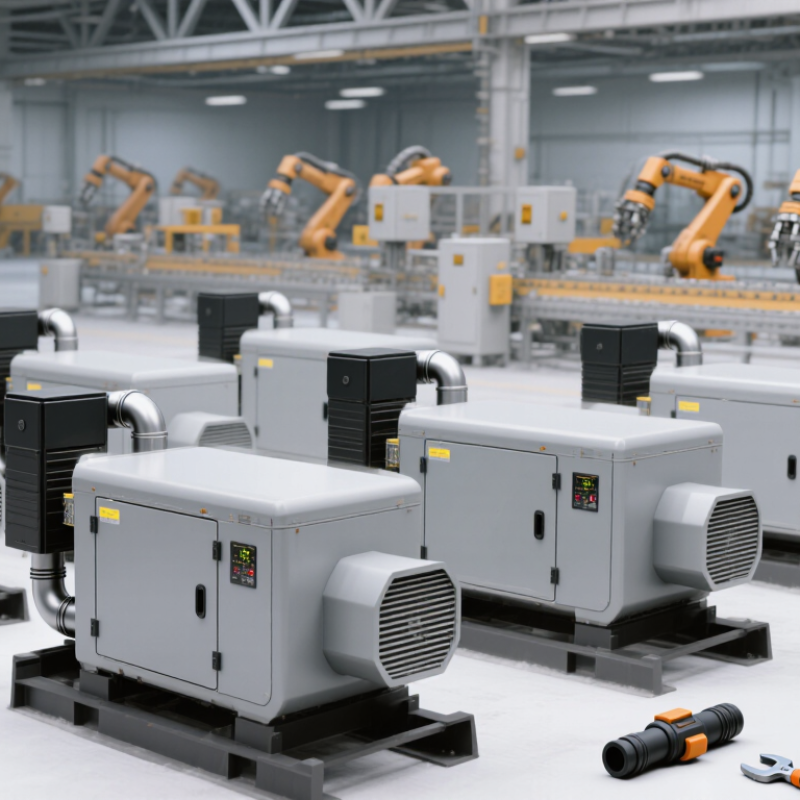
Silent diesel generator sets control noise at its source, along its path, and around the enclosure. A typical design combines a rigid canopy, sound-absorbing internal panels, intake and exhaust silencers, and vibration isolators beneath the engine. Airflow openings need careful treatment: undersized passages can trap heat, while poorly baffled openings leak noise. Details matter. A quiet rating also depends on load, distance, and test conditions, so figures from different suppliers may not be directly comparable.
Classification describes a different feature: how the set is expected to operate. ISO 8528-1:2018 defines emergency standby power (ESP), limited-time running power (LTP), prime power (PRP), and continuous power (COP). These ratings reflect operating duty and permitted loading, not acoustic performance. The World Bank Group’s 2007 General EHS Guidelines use 85 dB(A) over eight hours as an occupational noise reference, while community limits vary by setting and time of day. That is a useful reminder: “silent” is not a universal sound level. In practice, buyers should compare the declared rating, measurement distance, and operating load. I would also check ventilation and service access; a very enclosed canopy can make routine maintenance less convenient.
Criteria for Evaluating Chinese Generator Set Manufacturers
When evaluating Chinese silent diesel generator set manufacturers, compare verified performance, not canopy appearance or headline kilowatts. The International Energy Agency’s Electricity 2025 report says global electricity demand grew 4.3% in 2024. That growth makes dependable backup capacity valuable, but it does not prove any supplier’s quality.
Ask whether quoted output is prime or standby, and request test records aligned with ISO 8528. Look for witnessed load-bank results at several load levels, including fuel use, voltage stability, and response to sudden load changes. Check sound-pressure readings with distance, load, and test conditions stated; a decibel figure without these details is hard to compare. Inspect the enclosure’s seals, ventilation path, and access around filters and service panels. Small details matter in a noisy plant room.
Review alternator and engine documentation, component traceability, warranty terms, spare-parts availability, and the manufacturer’s service response process. Request recent third-party inspection records where available. A factory visit helps, but it can miss weak after-sales support. I would also ask for references from installations with similar climates and duty cycles. Be cautious: paperwork can look complete while test conditions remain unclear. A careful buyer should verify the numbers independently before placing an order.
Profiles of Leading Silent Diesel Generator Set Manufacturers in China
Profiles of leading silent diesel generator set manufacturers in China are best compared through their production strengths, not polished catalogues alone. Some focus on compact units for shops and small facilities. Others build higher-capacity sets for factories, construction sites, or backup power rooms. Their enclosures typically combine acoustic insulation, ventilation paths, and service doors. The details matter.
A useful profile looks at how each manufacturer handles design, assembly, and testing. Ask whether the company can explain its noise-control approach, engine and alternator options, control-panel functions, and maintenance access. Strong technical teams provide clear specifications and test records rather than broad promises. Factory visits, when practical, can reveal assembly practices and inspection steps. A brochure cannot show everything.
After-sales support also separates manufacturers. Check parts availability, warranty terms, commissioning help, and response times in the destination market. Some suppliers have wider export experience; others may offer more flexible configuration for a particular project. Neither advantage guarantees a better fit. Compare the proposed load, operating hours, site conditions, and service plan. Even careful reviews have limits: published noise figures can vary with measurement distance and test conditions, so confirm the method before comparing models.
Comparing Product Range, Power Capacity, and Certification
Top Silent Diesel Generator Set Manufacturers in China
Chinese manufacturers offer silent diesel generator sets for construction sites, factories, hospitals, and backup power rooms. Product ranges often start with compact units and extend to large containerized systems. Check whether a quoted rating is standby or prime power; the distinction matters during long operating hours. Look beyond the headline kilowatt figure. A 500 kW set may need a different cooling package, fuel tank, or exhaust arrangement depending on its site and duty cycle.
A well-designed acoustic enclosure should control noise without restricting airflow. Ask for sound-pressure readings, and confirm the distance and load used during testing. Small details count. Inspect door seals, ventilation louvers, and access around the oil filter. They affect maintenance in real conditions. The comparison is rarely tidy: published capacity ranges can vary by engine, alternator, and regional configuration, so request the exact model data sheet.
Certification also deserves careful checking. ISO 8528 references can help clarify performance classifications, while ISO 9001 relates to quality-management systems. CE documentation may be relevant for certain markets, but it does not replace local emissions or installation requirements. Request certificates and factory test records for the specific unit, not just a general brochure. Paperwork can look convincing. Verify model numbers, test conditions, and issuing details before comparing suppliers.
How to Select a Manufacturer for Different Applications
Top Silent Diesel Generator Set Manufacturers in China
Selecting a manufacturer starts with the application, not the catalog. Start with the load. A small office may need backup for lighting, network equipment, and pumps, while a factory may require reliable support for motors with high starting currents. Ask for load calculations and a clear explanation of the generator’s rated and standby outputs. If the figures are vague, keep asking.
Noise requirements also depend on the site. A unit near homes or a clinic needs careful enclosure design, suitable ventilation, and measured sound data. For construction sites, mobility and resistance to dust may matter more than the lowest noise rating. Check the operating temperature range, fuel use at partial load, and access for routine maintenance. A quiet enclosure that traps heat is not a good trade.
Before choosing a manufacturer, request application-specific drawings, inspection records, and a witnessed load-bank test when practical. Confirm that filters and other service parts are available locally, and ask how technical support works after delivery. Compare warranty terms in writing. A polished brochure can help, but it cannot replace service records or clear answers. One detail is easy to overlook: the installation conditions may reduce performance, so have the proposed setup reviewed by a qualified engineer.