

7 Tips for Choosing a Fire Resistant Fan?

Choosing a Fire-Resistant Fan requires more than comparing airflow numbers and steel thickness. Heat, smoke, dust, installation space, and operating hours can change the right choice. A fan that performs well in a clean workshop may struggle near a commercial kitchen, boiler room, or industrial drying line.

This guide introduces seven practical tips for selecting safer and more dependable equipment. It considers temperature ratings, airflow performance, motor protection, construction materials, certification records, installation conditions, and maintenance access. Each detail matters. For example, a powder-coated housing may resist corrosion, while a high-temperature motor may better tolerate sustained heat. These features are not interchangeable.

Look closely at the manufacturer’s technical documents. Confirm test conditions, rated temperature, duty cycle, and intended application. Certification names should be verified through reliable sources, not copied from a product page. Local building and electrical requirements may also affect the final decision.

Small details matter.

A common field mistake is choosing a fan by capacity alone. Excessive airflow can increase noise, energy use, and pressure problems. Insufficient airflow can leave hot pockets around equipment. The best selection begins with a clear site assessment and realistic operating data. Even experienced buyers can miss maintenance clearance or wiring limitations. That possibility deserves attention.

The following tips are designed to support careful comparison, professional consultation, and safer long-term operation. A Fire-Resistant Fan is only as reliable as its design, installation, and ongoing inspection.
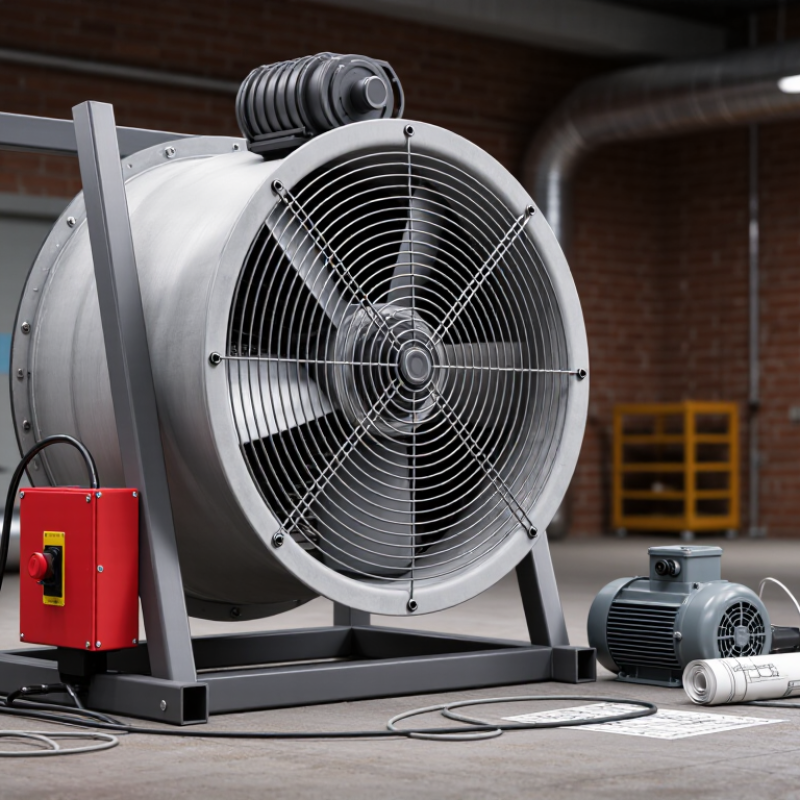
7 Tips for Choosing a Fire Resistant Fan?

Understand Fire-Resistant Fan Classifications and Safety Standards

7 Tips for Choosing a Fire Resistant Fan

Understand Fire-Resistant Fan Classifications and Safety Standards

Choosing a fire-resistant fan starts with its classification, not its advertised temperature. In practice, ratings describe tested performance under specific fire conditions. Under EN 12101-3, F300 and F400 indicate operation at 300°C and 400°C. The duration also matters, often 60 or 120 minutes. Check the full classification. A temperature number alone is incomplete.

Match the fan to the building’s smoke-control design. Confirm airflow, pressure, duty point, and installation direction. Verify third-party test reports and the exact model configuration. Ask whether the motor, bearings, cabling, and controls share the rating. Review NFPA 92, local fire codes, or applicable national standards with a qualified engineer. Check maintenance access, emergency power, and automatic start signals. Keep certificates and commissioning records on site.

Do not treat corrosion resistance or high airflow as fire approval. Kitchen exhaust systems may require separate provisions, such as NFPA 96. Ask how dampers, flexible connectors, and supports behave during heat exposure. Small details matter. I would question unclear wording like “fireproof,” because it may lack a recognized test basis. A witnessed functional test before handover is practical. Revisit the selection when building use changes; renovation can make a previously suitable fan unsuitable.

Assess Temperature, Airflow, and Pressure Requirements

7 Tips for Choosing a Fire Resistant Fan

Temperature is the first practical check. A fan rated for 120°C may not deliver its published airflow at that temperature. Read the rating as an operating limit, not a marketing number. Record the normal temperature, peak temperature, and exposure duration. Hot air becomes less dense, so volume and mass flow can change. I have seen quick estimates fail when engineers ignored this detail. Leave a realistic safety margin.

Measure the required airflow at the actual operating condition. Do not rely only on a free-air figure. Ducts, filters, dampers, bends, and grilles create resistance. Calculate the system’s static pressure, then compare it with the fan curve. A fan may move enough air at low pressure but stall in a restrictive duct. That mistake can produce heat, noise, and weak extraction. Check whether the pressure requirement changes during filter loading. It often does.

Review motor protection, impeller materials, bearings, emergency duty, and tested temperature performance. Select construction that matches corrosive dust, moisture, and cleaning methods. Confirm certifications through reliable technical documents, not vague claims. Ask for test conditions and measurement tolerances. Inspect wiring, clearances, and access points before installation. Maintenance records should include temperature, airflow, vibration, and pressure readings. Small trends matter. I would also recheck the design after commissioning, because field conditions rarely match the original drawing perfectly.

Choose Suitable Materials for Heat and Corrosion Resistance

7 Tips for Choosing a Fire Resistant Fan?

Choose Suitable Materials for Heat and Corrosion Resistance

Choosing a fire-resistant fan starts with understanding its working environment. The material must survive heat, moisture, chemicals, and repeated temperature changes. During site inspections, I have seen fans fail because the casing was suitable for heat but vulnerable to corrosion. A stainless-steel housing can resist condensation, but it is not automatically suitable for every fire zone. Check continuous and peak temperature ratings carefully. Short exposure claims can be misleading. Request test reports, material certificates, and clear installation limits.

For dry, hot air, coated carbon steel may offer practical strength and cost control. However, a scratched coating can expose the metal quickly. Stainless steel is often safer near salt, cleaning chemicals, or humid exhaust. The correct alloy still depends on the pollutants present. Small details matter. High-temperature bearings, seals, fasteners, and cable glands should match the casing material and operating temperature. Avoid mixing metals without checking for galvanic corrosion.

I once focused too heavily on the outer casing and overlooked the shaft seal. That mistake changed how I review fan specifications. Corrosive dust can enter through small gaps, damage bearings, and reduce airflow. A fan moving hot chemical vapors needs more than a heat-resistant shell. Review actual gas concentrations, dust loads, cleaning methods, and maintenance access. When operating data is incomplete, select conservative materials and ask a qualified engineer to verify compliance with relevant fire and smoke-control standards.

7 Tips for Choosing a Fire-Resistant Fan: Material Selection

Approximate continuous-use temperature limits in air for common fan construction materials

Heat-resistant stainless steels generally provide a wider safety margin than aluminum in high-temperature fan applications. Type 316 stainless steel is often preferred where chlorides or moisture are present, while Type 310 stainless steel offers strong oxidation resistance at elevated temperatures. These values are indicative engineering figures; the final material choice should also consider airflow temperature, exposure time, welding, mechanical strength, and the specific corrosive environment.

Reference basis: typical published engineering service-temperature ranges for aluminum 6061 and stainless steels 304, 316, and 310. Actual limits vary by design and operating conditions.

Verify Motor Protection, Certification, and Installation Conditions

7 Tips for Choosing a Fire Resistant Fan

Verify Motor Protection, Certification, and Installation Conditions

A fire resistant fan must match the real hazard, not just a sales description. Check the motor’s insulation class, thermal protection, enclosure rating, and approved operating temperature. These details show whether the motor can tolerate heat, dust, moisture, and continuous operation. Ask for test reports and certification documents from recognized, independent bodies. Confirm the tested duration, temperature range, airflow limits, and installation position. A certificate without these details may provide false confidence.

Motor protection also depends on the control system. Overload relays, temperature sensors, and correctly sized wiring can prevent overheating during demanding operation. Check whether the motor sits inside the airflow or outside the heated zone. This small difference can affect performance during an emergency. The fan’s protection device must suit the actual motor, not a similar model. That mistake is easy to make.

Installation conditions deserve equal attention. Measure the duct size, available clearance, ambient temperature, access space, and direction of airflow. Keep combustible materials away from hot surfaces and follow the approved mounting method. Confirm that dampers, supports, cables, and seals meet the same safety requirements. Poor alignment can create vibration and extra heat. Even a certified fan can fail when installed incorrectly. Recheck the site after commissioning, because conditions often differ from the original drawing. A neat installation is not always a safe one.

Compare Maintenance Needs, Energy Use, and Long-Term Reliability

7 Tips for Choosing a Fire Resistant Fan

Compare maintenance needs, energy use, and long-term reliability before choosing a fire resistant fan. In field inspections, I have seen simple maintenance gaps create costly ventilation problems. Check whether technicians can access bearings, belts, wiring, and thermal sensors without removing major panels. Easy access reduces service time and improves inspection quality. Ask for a clear maintenance schedule, including cleaning intervals and replacement parts. Dust buildup can restrict airflow and force the motor to work harder. That wastes energy.

Review the fan’s airflow performance at your actual operating pressure, not only its maximum rating. A power meter can reveal inefficient operation during normal shifts. Variable-speed control may reduce energy use when demand changes. However, controls must match the fan’s fire-safety requirements. Confirm that the assembly has appropriate testing documentation and installation guidance. A qualified professional should verify compatibility with ducts, dampers, alarms, and emergency power. Small details matter.

Long-term reliability depends on vibration control, corrosion resistance, and stable temperature performance. Look for accessible inspection points and durable housing materials. Keep records of vibration readings, motor temperature, cleaning, and repairs. Trends often reveal trouble before failure. I would not trust a fan judged only by its purchase price. A cheaper unit may consume more electricity or require frequent shutdowns. Still, no checklist is perfect. Site conditions can change, so review performance after installation and during seasonal maintenance.

7 Tips for Choosing a Fire Resistant Fan? - Compare Maintenance Needs, Energy Use, and Long-Term Reliability

# Selection Tip What to Check Typical Maintenance Need Energy-Use Consideration Long-Term Reliability Indicator Practical Recommendation
1 Confirm the fire-resistance requirement Review the required operating temperature, exposure duration, airflow direction, and applicable local safety standards. Low to moderate when the fan is correctly selected and installed. A correctly sized fan avoids unnecessary oversizing and wasted electricity. Documented test results, traceable materials, and clearly stated temperature limits. Do not treat a standard ventilation fan as fire resistant without verified test documentation.
2 Match airflow and static pressure Compare the required airflow, measured in m³/h or CFM, with the system’s total duct resistance and pressure drop. Inspect ducts, grilles, dampers, and bearings at least annually; dusty systems may need more frequent cleaning. Operating near the duty point generally reduces throttling losses and excessive motor load. Stable airflow without abnormal vibration, overheating, or repeated overload trips. Use a fan curve rather than comparing airflow capacity alone.
3 Evaluate motor efficiency and controls Check motor input power, duty cycle, speed control compatibility, and whether variable-speed operation is permitted for the application. Electrical connections and control settings should typically be checked annually. Variable-speed control can reduce energy use when full airflow is not always required; savings depend on the system curve and operating schedule. A motor that runs within its rated load and temperature range is less likely to suffer premature failure. Compare kW at the required operating point, not only the motor’s maximum rating.
4 Choose serviceable construction Look for accessible inspection panels, replaceable bearings where appropriate, corrosion-resistant surfaces, and standard fasteners. Routine cleaning and visual inspection are usually easier when internal components are accessible. Efficient maintenance helps preserve fan balance and airflow, preventing energy increases caused by fouling. Replaceable wear parts and accessible components can extend useful service life and reduce downtime. Avoid designs that require complete removal of the fan for basic inspection.
5 Consider the installation environment Assess smoke, grease, moisture, corrosive gases, dust concentration, ambient temperature, and outdoor exposure. Grease- or dust-laden environments may require cleaning monthly or quarterly, depending on contamination levels. Blocked filters, coated blades, and restricted ducts increase pressure drop and power consumption. Correct material protection and environmental suitability help prevent corrosion, imbalance, and insulation damage. Select enclosure, coating, seals, and electrical protection according to the actual environment.
6 Plan inspection and testing Establish checks for airflow, vibration, bearing noise, motor temperature, electrical current, alarms, and emergency operation. Basic visual checks can be monthly; functional and electrical testing is commonly scheduled at least annually, subject to local rules. Trend monitoring can identify fouling or mechanical problems before they cause higher power consumption. Recorded test trends provide early warning of bearing wear, imbalance, or motor deterioration. Keep inspection records and follow the applicable building and fire-safety maintenance schedule.
7 Compare total cost of ownership Include purchase price, installation, controls, spare parts, electricity, inspections, downtime, and expected replacement needs. Lower-cost units may require more frequent cleaning or have less convenient access to service parts. Annual energy cost depends on input power, operating hours, electricity price, and actual load. Long-term value is better indicated by service history, parts availability, stable performance, and documented testing. Use a multi-year lifecycle comparison instead of choosing solely by initial purchase price.

Note: Maintenance intervals and performance requirements vary with installation conditions, operating hours, contamination levels, local regulations, and the specific fire-safety design.

Skip to content