

10 Tips for Choosing the Best Enclosure Boxes

Enclosure Boxes protect the parts people rarely notice until a system fails: terminals, sensors, power supplies, and control boards. Choosing one is not just a matter of finding a box that fits. Heat, moisture, dust, vibration, cable entry, and access for maintenance all shape its performance. A compact plastic enclosure may suit an indoor sensor, while a metal cabinet with a sealed gland plate may better protect equipment on a factory floor. Small details matter.

The need for dependable protection is growing alongside digital infrastructure. The International Energy Agency’s Electricity 2024 report estimates that electricity use from data centres, artificial intelligence, and cryptocurrency could reach about 1,000 terawatt-hours in 2026—roughly double the 2022 level. That figure does not measure enclosure sales, but it signals expanding demand for equipment that must operate reliably in varied environments. The right enclosure supports that reliability; the wrong one can trap heat or leave openings around cables. Easy to miss.

This guide presents ten practical tips for choosing Enclosure Boxes, from material and size to ingress protection, thermal management, and installation needs. It also points readers toward recognized ratings and manufacturer documentation, rather than relying on appearance alone. A tidy specification sheet can still overlook a real constraint, such as a door that cannot open fully beside a wall. That deserves a second look. Use the tips as a careful starting point, then confirm the final choice against the equipment, site conditions, and supplier’s verified specifications.
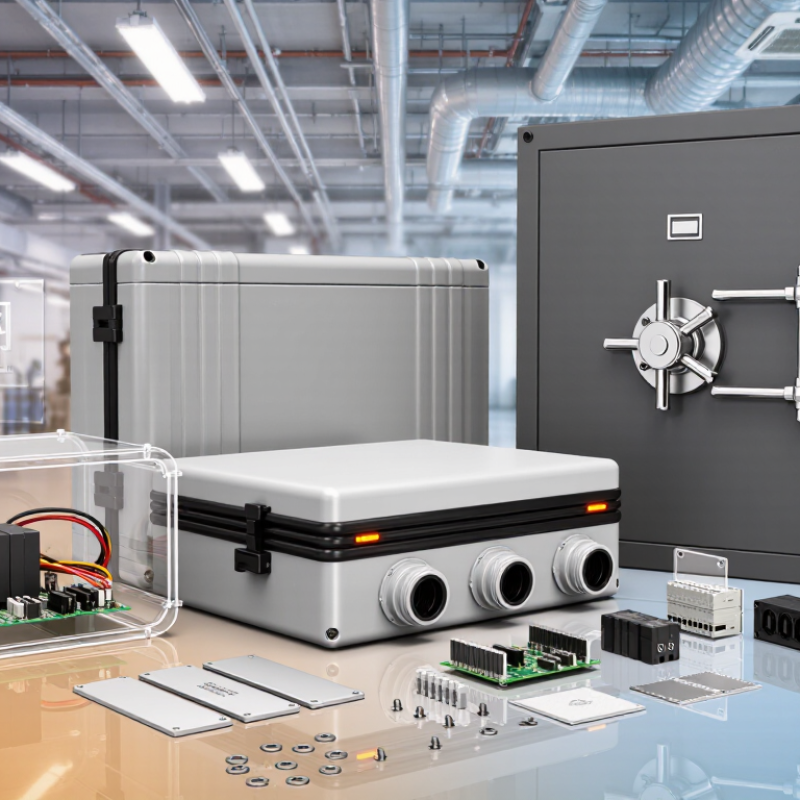
10 Tips for Choosing the Best Enclosure Boxes

What Enclosure Boxes Protect and Where They Are Used

An enclosure box is a barrier between sensitive equipment and dust, water, accidental contact, and physical knocks. You’ll find them around motor controls in factories, wiring junctions on outdoor walls, and monitoring equipment in utility cabinets. The right protection depends on the actual site: a washdown area needs different sealing from a dry indoor control room. IEC 60529 defines IP ratings for protection against dust and water ingress. But an IP rating does not, by itself, describe resistance to corrosion, impact, or every installation hazard. Small details matter.

The NFPA report Home Fires Involving Electrical Distribution and Lighting Equipment estimated an annual average of 32,620 U.S. home fires involving this equipment from 2015 to 2019. It also reported 430 civilian deaths, 1,070 injuries, and $1.3 billion in direct property damage annually. These figures do not show that enclosure boxes alone prevent fires. They do underline why equipment protection and sound installation deserve attention. In practice, check cable entries, door seals, mounting points, and heat buildup—not just the box’s label. A tidy cabinet can still trap heat. Recheck it after equipment changes, because a once-suitable enclosure may no longer fit the conditions.

How to Define Equipment, Space, and Access Requirements

Start with the equipment, not the enclosure. List each device, its dimensions, mounting method, and operating temperature. Record cable connectors, bend radius, and any parts that need frequent replacement. These details affect both internal layout and door clearance. Measure twice.

Next, map the available space around the enclosure. Note wall obstructions, nearby pipes, floor clearance, and the route used to bring equipment inside. A box may fit on paper yet leave no room to open its door. Leave breathing room. Allow space for ventilation and for a technician to remove a component without shifting everything beside it.

Access needs deserve the same attention as dimensions. Decide which controls must be reached during normal operation and which panels should remain secured. Check whether tools, gloves, or a portable work light will be needed. A common planning mistake is measuring only the enclosure footprint; service access can demand more room than expected. Even a careful equipment list can become outdated when connectors or accessories change late in a project. Recheck the actual hardware before finalizing the layout, and mark cable-entry points on a simple drawing. A little ambiguity here is worth revisiting.

How to Compare Materials, Ratings, and Environmental Protection

Start with the environment, not the material label. A steel box handles impact well, but untreated edges can rust where condensation collects. Stainless steel resists corrosion better, though grade and finish still matter near salt spray or cleaning chemicals. Aluminum is lighter and sheds heat, yet it can dent more easily. Polycarbonate and fiberglass avoid rust and suit damp locations, but sunlight, solvents, and heat can shorten service life. Check the manufacturer’s temperature and chemical-resistance data. No material wins everywhere.

Ratings need the same careful reading. An IP rating describes resistance to dust and water under specified test conditions; it does not prove resistance to corrosion, impact, or UV exposure. Match the rating to actual washdown, dust, and outdoor exposure, and inspect the lid gasket, hinges, and cable-entry fittings. A high-rated enclosure can still leak if a fitting is poorly sealed or the door is misaligned. If possible, review test reports and installation instructions, then check clearances around heat-producing components. Field conditions are messy. A rating is a starting point, not a promise.

10 Tips for Choosing the Best Enclosure Boxes - How to Compare Materials, Ratings, and Environmental Protection

Tip What to Compare Typical Material or Design Choice Environmental Protection to Consider Trade-Off or Practical Check
1. Define the installation environment Indoor or outdoor location, exposure to rain, dust, washdown, sunlight, and corrosive substances. Indoor painted-steel enclosures suit many dry settings; outdoor installations may call for coated metal, stainless steel, or UV-stabilized polymer. NEMA 1 is intended for basic indoor protection. NEMA 3R is commonly used for outdoor protection against rain and sleet. Choose a rating for the actual exposure. A rating does not guarantee protection against every chemical, temperature, or installation condition.
2. Match the material to corrosion risks Humidity, salt spray, cleaning chemicals, process fluids, and dissimilar-metal contact. Stainless steel is often selected for demanding washdown or corrosive environments; fiberglass-reinforced polyester and suitable polymers can also resist many corrosive conditions. NEMA 4X includes corrosion-resistance requirements in addition to specified enclosure protection. Corrosion resistance varies by alloy, finish, resin, fasteners, and the particular chemical. Check compatibility rather than relying on material name alone.
3. Compare weight and structural strength Mounting load, vibration, transport, impact exposure, and the enclosure's size. Aluminum is relatively light; steel is generally strong and rigid; polycarbonate and fiberglass are lighter nonmetallic options. For impact resistance, check the enclosure's specified IK rating where applicable. IK08 corresponds to 5 J and IK10 to 20 J of impact energy under IEC 62262 test conditions. Impact performance depends on the complete enclosure, including doors, windows, hinges, and mounting. Do not infer an IK rating from the material alone.
4. Check dust and water ingress protection Dust exposure, water jets, rain, and possible temporary immersion. Gasketed designs with sealed doors and properly rated cable entries are used where ingress protection is needed. IP66 indicates dust-tight protection and protection against powerful water jets. IP67 includes protection against temporary immersion under specified test conditions. IP ratings apply to the tested configuration. Cable glands, vents, windows, and field modifications can affect the assembled enclosure's protection.
5. Consider washdown and hose exposure Whether routine cleaning involves a hose, high-pressure spray, detergents, or hot water. Gasketed stainless-steel or nonmetallic designs are common candidates for washdown applications, subject to chemical compatibility. NEMA 4 covers specified protection against windblown dust and water, including hose-directed water. NEMA 4X adds corrosion-resistance requirements. Neither rating alone confirms suitability for every high-pressure or high-temperature cleaning procedure. Follow the enclosure's documented limits.
6. Evaluate sunlight and temperature exposure Direct UV exposure, ambient temperature, internal heat, and temperature cycling. Use UV-stabilized polymer or fiberglass for exposed nonmetallic installations; coated metals may also be suitable when the finish is maintained. Look for documented UV and operating-temperature limits for the complete enclosure and its seals. Solar heating can raise internal temperature above ambient. Check component heat loads and ventilation or cooling needs as well as material limits.
7. Plan for condensation and drainage Temperature changes, humidity, condensation, and water that may collect inside or around the enclosure. Depending on the application, designs may use drain or breather accessories, sealed construction, or controlled ventilation. Confirm that any drain, vent, or pressure-equalization device has an appropriate ingress rating for the required protection level. Adding an opening or accessory can change the enclosure's tested rating. Use compatible parts and follow installation instructions.
8. Check electrical and grounding needs Protective bonding, grounding, shielding, and electrical installation requirements. Metal enclosures can provide a conductive body for bonding when designed and installed correctly; nonmetallic enclosures may require separate grounding and shielding provisions. Verify applicable electrical codes, bonding provisions, and any required enclosure or assembly approvals. Do not assume that a metal door, painted surface, or nonmetallic enclosure provides the required grounding path. Confirm the design details.
9. Compare access, sealing, and maintenance Door frequency, latch type, hinge durability, gasket replacement, and space for wiring or servicing. Choose a door and latch arrangement that allows safe access while maintaining even gasket compression when closed. Ingress protection depends on correct closure, gasket condition, and proper assembly. Allow room for cable bends and service access. Inspect seals periodically, especially where doors are opened frequently or exposed to chemicals.
10. Verify the complete configuration Enclosure, door, window, fittings, glands, mounting orientation, and any modifications. Request documentation for the exact assembled configuration rather than comparing enclosure shells alone. NEMA types and IP codes are separate classification systems; they should not be treated as direct equivalents. Confirm the applicable test standard, certification or listing, installation instructions, and limits for the finished assembly.

Note: Ratings and material performance depend on the specific product and complete installed configuration. Verify current manufacturer documentation and applicable codes before selection.

How to Assess Mounting, Cable Entry, and Future Expansion

When comparing enclosure boxes, assess the mounting surface before settling on dimensions. A panel fixed to a vibrating machine may need sturdier supports than one mounted inside a quiet utility room. Check the enclosure’s weight, expected contents, and access for tools. Leave enough clearance to open the door fully and remove components without dismantling nearby equipment. A common oversight is placing the box where a conduit elbow blocks the latch. Measure the actual installation area, not just the wall space. Small details matter.

Plan cable entry around the route cables will take. Bottom entry can help limit direct water exposure, but it is not suitable for every layout. Confirm gland sizes, cable bend radius, and the enclosure’s specified protection rating before drilling. Keep power and signal cables separated where the design calls for it, and leave a service loop if technicians may need to move a device. One detail is easy to miss. Extra room can help with future additions, but an oversized box may be awkward to mount or service. Reserve space on the rail for likely components, and mark unused entry points clearly. Be realistic about growth; a little spare capacity is useful, while guessing can waste space.

How to Check Safety Standards, Maintenance, and Total Cost

Before comparing prices, match the enclosure to its actual surroundings. IEC 60529 classifies protection against dust and water; NEMA 250 addresses enclosure types and environmental conditions. These ratings are not interchangeable. An IP rating alone does not establish resistance to corrosion, impact, or chemical exposure. Check the test scope and installation requirements. A door gasket can fail even when the box looks sturdy.

Plan maintenance before installation. Inspect seals, hinges, cable entries, and signs of condensation or corrosion at intervals suited to the site. Dusty workshops may need more frequent checks than clean indoor spaces. Keep replacement parts accessible, and record inspection dates. Small details matter. A blocked drain can trap water; an overtightened cable gland can damage a seal. The schedule may need adjusting after the first season.

Compare total cost, not just purchase price. Include installation labor, inspection time, replacement seals, expected service life, and the cost of equipment downtime. NACE International’s 2016 IMPACT study estimated corrosion costs at $2.5 trillion globally, or 3.4% of world GDP, and reported that better corrosion management could reduce costs by 15–35%. That estimate is not a savings guarantee for one enclosure. Still, it shows why material choice and maintenance deserve a place in the budget. One awkward trade-off: a higher upfront cost may be sensible, but only when the conditions justify it.

Skip to content