

Choosing a Weigh Feeder is not just a matter of comparing prices or selecting the largest capacity. The right unit must match the material, production rate, and conditions on your line. Fine powder may behave very differently from coarse granules. Moisture, bulk density, and flow consistency can also affect feeding performance. Small details matter.
A useful selection process starts with the actual application. Check the required feed rate, belt or screw arrangement, available space, and how the feeder will connect with existing controls. Ask suppliers how accuracy is specified and under what operating conditions it was tested. Request clear information about calibration, maintenance access, spare parts, and technical support. These questions help turn product claims into practical comparisons.
There is no perfect unit for every line. That sounds obvious, but it is easy to overlook when a specification sheet looks convincing. Real operating conditions can expose gaps that a brochure cannot show. The seven tips in this guide focus on practical checks, from material characteristics to after-sales support. They are intended to help buyers ask sharper questions and reduce avoidable selection errors. Not every recommendation will fit every plant; verify critical requirements with your engineering team and the equipment supplier before making a decision.
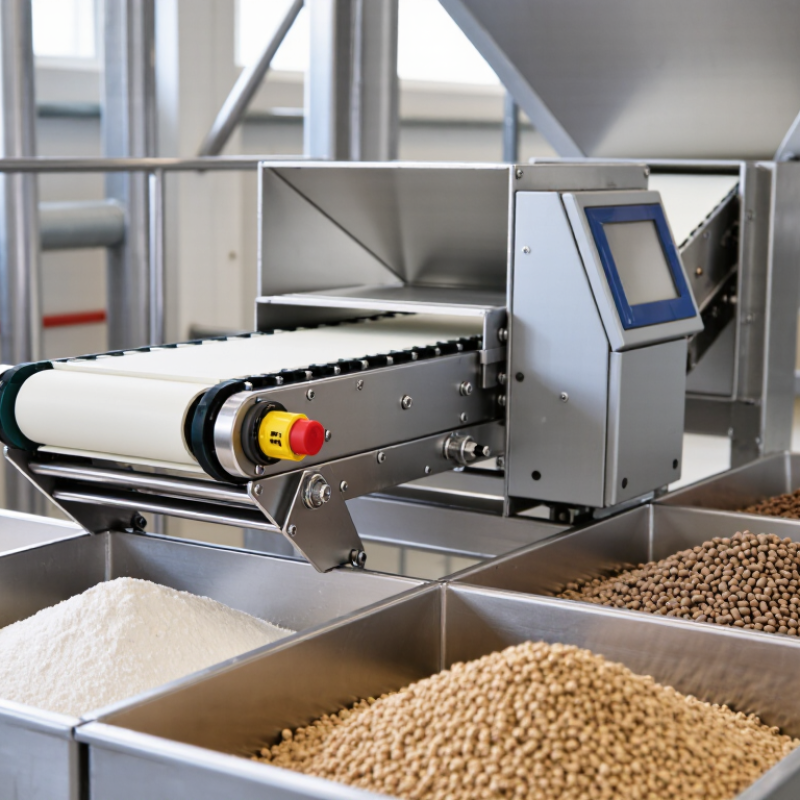
A weigh feeder measures and controls the rate of bulk material moving into a process. On a belt model, load cells detect material weight while a speed sensor tracks belt movement. The controller uses both readings to calculate mass flow and adjust belt speed. Screw feeders apply the same principle through a rotating screw. This differs from volumetric feeding, which estimates delivery from volume rather than measured mass. Small changes in bulk density can therefore affect volumetric accuracy.
The function matters in cement, where steady ingredient ratios support consistent product quality. The U.S. Geological Survey’s Mineral Commodity Summaries 2024 estimated U.S. cement production at 91 million metric tons in 2023. The International Energy Agency has reported that cement production accounts for about 7% of global CO2 emissions. Accurate feeding cannot solve that challenge alone, but it can help avoid unnecessary material variation.
In practice, dust, vibration, sticky material, and belt buildup can distort readings. A clean test run may still mislead. Check performance under real operating conditions, and review calibration regularly. That detail is easy to miss.
A weigh feeder should match the material before it matches the production target. Record bulk density, particle size, moisture, abrasiveness, and flow behavior using samples from actual operating conditions. A dry granule may feed steadily, while the same material can bridge after absorbing moisture. Dust changes everything. Check whether the hopper, feeder belt, and discharge point can handle the material without buildup or surging. A capacity rating alone is not enough: define both the normal feed rate and the maximum rate, then confirm the feeder can control them across the required range.
Accuracy needs a clear definition. Is the priority steady instantaneous flow, batch total, or both? OIML R 50-1:2014 defines four accuracy classes for belt weighers: 0.2, 0.5, 1, and 2. These are standard classes, not a promise that a particular feeder will achieve that performance in your process. Installation, calibration, belt tension, vibration, and material changes all matter. Ask for test results using comparable material and operating conditions, and check how often calibration is needed. I would also leave room for field variation; clean test conditions rarely capture every production-day surprise.
| Tip | What to Assess | Practical Selection Guidance | Questions to Ask |
|---|---|---|---|
| 1. Characterize the material | Bulk density, particle size, moisture, flowability, abrasiveness, and tendency to bridge or segregate. | Use representative material samples where possible. Free-flowing granules and cohesive powders may require different hopper outlets, agitation, or feeder designs. | Does the material change with moisture or temperature? Is it dusty, fragile, abrasive, or prone to sticking? |
| 2. Define the capacity range | Minimum, normal, and maximum feed rates, along with required start-up and short-term peak rates. | Size the feeder around the actual operating range rather than only its maximum rate. Confirm that the minimum rate is stable for the intended material and process. | What are the required rates in kg/h or t/h? How often will the process run near its minimum or maximum rate? |
| 3. Set accuracy requirements | Allowable feed-rate variation, totalized quantity tolerance, and the measurement method used for acceptance testing. | Specify accuracy under defined operating conditions. Performance depends on material behavior, installation, calibration, and operating range; avoid relying on a single accuracy figure without test conditions. | Is the requirement for instantaneous rate, batch quantity, or both? Over what test duration and operating range will performance be verified? |
| 4. Match the feeder design | Whether the process needs continuous gravimetric feeding, batch dosing, or volumetric metering. | Belt weigh feeders are commonly used for continuous feeding of bulk solids. Screw, vibratory, or other designs may suit different materials and duties; confirm suitability with a material trial when flow behavior is uncertain. | Must the feeder measure and correct its output continuously? Is the material suitable for the proposed conveying surface or mechanism? |
| 5. Check turndown and control | The ratio between the highest and lowest required feed rates, plus the response needed when setpoints change. | Ask for verified performance across the intended operating range. A feeder that performs well at its nominal rate may not maintain the same control at very low rates. | What is the lowest stable rate? How quickly must the feeder respond to setpoint changes or process disturbances? |
| 6. Review installation and integration | Available space, inlet and discharge arrangement, supporting structure, access, utilities, and control-system interfaces. | Consider vibration, material head pressure, and transfer-point effects. Confirm compatible signals and communications, such as analog I/O or the plant’s supported industrial network. | Can the feeder be installed without excessive external vibration? Are the required signals, interlocks, and operating modes defined? |
| 7. Plan for calibration and maintenance | Access to load-cell and speed-sensor components, cleaning needs, wear parts, calibration checks, and service access. | Choose an arrangement that allows safe inspection and routine calibration. Include procedures for zero checks, material tests, and verification after maintenance or process changes. | How will calibration be performed? Are spare parts, cleaning access, and maintenance isolation points practical for the site? |
Selection note: Capacity and accuracy figures are application-specific. Confirm performance using the actual material, required operating range, installation conditions, and agreed acceptance-test method.
Comparing Feeder Types, Sensors, and Control Systems
Choosing a weigh feeder starts with the material, not the catalog. Belt feeders often suit free-flowing powders and granules, while screw feeders can contain dusty or cohesive materials. Vibratory feeders may move fragile pieces gently, but moisture and particle shape can change their flow. Test your actual material. A small sample can reveal bridging, separation, or uneven discharge before installation.
Sensors and controls shape how consistently the feeder maintains its rate. A belt scale measures material moving along a belt; a loss-in-weight system tracks changes in hopper weight. Each has different space and refill requirements. Match sensor resolution to the smallest rate change your process needs, not only its maximum capacity. Calibrate with a known weight or verified material quantity, then check performance during normal operation. Small details matter.
A control system should respond steadily without chasing every brief fluctuation. Ask how it handles refills, startup, alarms, and data logging. Compare commanded rates with measured output over time. Operators need clear settings and understandable fault messages. Complex tuning may look impressive but can be hard to maintain. It is easy to focus too much on accuracy figures; material tests, plant constraints, and maintenance skills matter just as much.
Installation accuracy depends on more than the load cell. Check floor strength, frame alignment, belt clearance, and access for removing covers before installation. A slight frame twist can shift the load-cell reading. Dust changes everything. Keep the weighing area clear of buildup, and consider vibration from nearby equipment. NIST Handbook 44, Section 2.21, sets technical requirements for belt-conveyor scale systems; use it as a reference when defining acceptance checks.
Calibration should fit the material and operating conditions. Record zero readings, test-weight results, belt speed, and material-test comparisons at commissioning. Repeat checks after belt replacement, structural work, or unexplained drift. Keep the records. A clean test-weight result does not always match real material flow, so verify performance with a timed catch test when practical.
Plan maintenance around reachable wear points, not just the service manual. Inspect belt tracking, idlers, scrapers, wiring, and load-cell mounts on a documented schedule. The U.S. Department of Energy’s Operations & Maintenance Best Practices Guide reports predictive-maintenance savings of 8–12% over preventive programs across industrial settings. That is a broad benchmark, not a feeder-specific promise. Even a sensible schedule can fail when nobody owns the logbook; assigning responsibility is easy to overlook.
A weigh feeder is only as dependable as the support behind it. When comparing suppliers, ask who will help with commissioning, calibration, and fault diagnosis after installation. Confirm whether support comes from a trained technician or a general service desk, and ask for typical response times. Ask for specifics.
Share details about your material, target feed rate, and operating conditions. A supplier should explain how these affect feeder selection and what information is still uncertain. Request a written scope covering installation checks, operator training, spare parts, and maintenance intervals. A polished proposal can still leave gaps; review the service terms before making a decision.
Long-term support should be practical, not just a promise. Check whether critical parts are stocked locally, how service visits are arranged, and whether remote troubleshooting is available. Clarify what the warranty excludes, including wear parts and process changes. Keep records. Save calibration results, maintenance notes, and recurring alarms so both your team and the supplier can spot patterns. If the supplier cannot explain how support works during a busy shift, ask again. A lower initial price may not be the better choice when downtime is costly, but extended service plans are not automatically worthwhile either. Compare the actual coverage with your operating hours and in-house skills.
TERMS OF USE - LEDOLUX
This site uses cookies in order to deliver services in accordance with Privacy Policy. You can use settings within your browser to control the cookies that are set on your computer – conditions of access or storage of cookies.
Your data controller will be LEDOLUX POLAND SP. ul. Innowacyjna 1; 36-060 Głogów Małopolski, which adapts the content of its website to your needs and analyses and examines them to improve it. More information.