China Top 10 Galvanized Steel Strip Suppliers?
China’s galvanized steel industry serves construction, appliance, automotive, and infrastructure markets. Choosing a supplier involves more than comparing quoted prices. Buyers should examine coating weight, strip thickness, width tolerance, steel grade, surface finish, and available production capacity. These details affect forming, welding, corrosion resistance, and the consistency of finished parts.
This guide to China’s top 10 Galvanized Steel Strip suppliers offers a practical starting point for sourcing research. It considers factors such as product range, manufacturing experience, quality controls, export support, packaging, and communication. A supplier’s stated capabilities are useful, but they are not proof of performance. Request current specifications, mill test certificates, sample coils, and clear answers about lead times before making a commitment. Check how each company handles edge protection, moisture control, and coil labeling; a damaged shipment can complicate an otherwise sound purchase.
Fit matters. A large producer may suit high-volume orders, while a smaller mill could offer more flexible dimensions or scheduling. Neither option is automatically better. Rankings also have limits: public information can change, and individual project requirements differ. Treat the companies as candidates, then compare them against your own drawings, order quantities, delivery plans, and inspection needs. Ask follow-up questions. Verify the details. A careful review can reduce avoidable surprises, though no supplier list can replace direct due diligence.
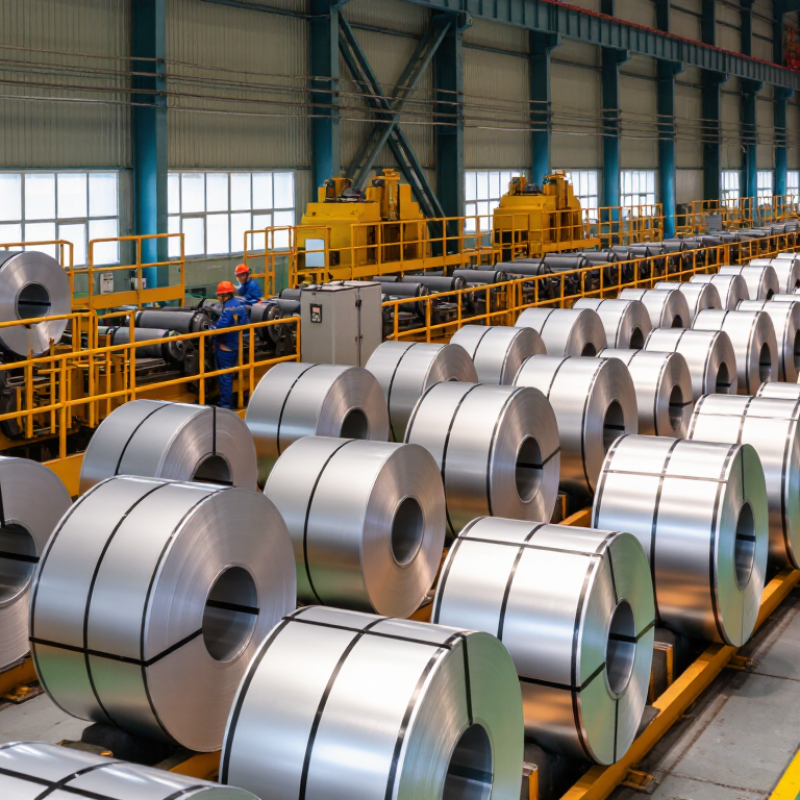
What Galvanized Steel Strip Is and How It Is Manufactured
Galvanized steel strip is a flat, narrow steel product coated with zinc to slow corrosion. The steel provides strength; the zinc forms a protective barrier and can protect exposed areas nearby. It is used in applications such as ducting, shelving, and appliance components. The coating is useful, but it does not make steel immune to rust.
Manufacturing usually begins with a coil of steel, which is uncoiled and cleaned to remove oil and surface residue. The strip passes through a controlled heating section, then enters a bath of molten zinc. Air knives remove excess zinc and help control coating thickness. Small details matter. Line speed and bath conditions can affect the finish. After cooling, the strip may be leveled, inspected, and recoiled. Thickness, coating weight, and surface appearance are commonly checked. A bright surface is not proof of perfect protection. Cut edges and damaged areas still deserve attention, especially in damp conditions. Buyers should match coating specifications and strip dimensions to the intended use; the right choice depends on the environment, not appearance alone.
Galvanized Steel Strip: Zinc-Coating Designations
A comparison of common Z coating designations used for galvanized steel strip.
The Z number indicates the coating mass in grams per square metre across both strip surfaces. Higher values represent a heavier zinc coating; actual coating distribution and corrosion performance depend on the product specification and service conditions.
How to Evaluate Galvanized Steel Strip Suppliers in China
China Top 10 Galvanized Steel Strip Suppliers?
How to Evaluate Galvanized Steel Strip Suppliers in China
China’s scale makes careful supplier checks essential, but national output cannot prove an individual mill’s quality. The World Steel Association’s World Steel in Figures 2025 reports that China produced 1,005.1 million tonnes of crude steel in 2024. This provides market context, not a measure of galvanized-strip capacity. Ask for coil-level traceability. Check that certificates identify steel grade, thickness, width, zinc coating mass, and production batch. Compare these details with your purchase specification, not just the supplier’s general brochure.
Request recent test records and verify coating mass through an independent laboratory when order value or service conditions justify it. Inspect sample strips for bare patches, edge damage, uneven coating, and oily residue. A clean sample matters. Also review monthly output, minimum order quantity, delivery records, packaging, and claim handling. Ask how the supplier controls coating uniformity across a coil, not only on a small sample. One weakness in many evaluations is trusting paperwork without checking whether the reported tests match the actual batch. A short factory audit can reveal storage and handling problems that certificates miss. Compare several suppliers using the same checklist, then clarify any specification that seems vague before signing.
China’s Top 10 Galvanized Steel Strip Suppliers at a Glance
China’s Top 10 Galvanized Steel Strip Suppliers at a Glance
China’s galvanized steel strip market draws on a vast steelmaking base. The World Steel Association reported that China produced 1,019.1 million tonnes of crude steel in 2023, out of 1,888.2 million tonnes worldwide. These figures show scale, not galvanized-strip output. A supplier shortlist should therefore compare product evidence, not assume capacity guarantees quality. Check strip thickness, coil width, zinc-coating mass, and available inspection records. Ask for mill test certificates tied to the actual coil. Small details matter.
A useful at-a-glance comparison can group suppliers by application, coating options, order flexibility, and export experience. For example, roofing and appliance components may need different coating specifications and surface finishes. Confirm tolerances against the drawing, then request a sample or recent test report. Lead time deserves equal attention; a low quoted price means little if shipment timing is unclear. Supplier rankings can look tidy. Real procurement is messier, and public information may not show production performance.
Tips: Compare like with like. Specify coating mass on both sides, dimensions, packaging, and required test standards in writing. Check coil labels and certificates before dispatch. If a supplier cannot explain a specification clearly, pause and ask for supporting data.
China Top 10 Galvanized Steel Strip Suppliers? — China’s Top 10 Galvanized Steel Strip Suppliers at a Glance
This is an illustrative, non-ranked comparison of ten common galvanized steel strip product profiles—not a verified list of individual suppliers or company-specific claims. Dimensions and coating options are representative market specifications; actual availability, tolerances, standards, and certifications should be confirmed directly with each supplier.
How the Leading Suppliers Compare in Products and Capabilities
China Top 10 Galvanized Steel Strip Suppliers?
How the Leading Suppliers Compare in Products and Capabilities
Comparing suppliers is less about ranking and more about matching production details to the job. Check coating type, zinc-coating mass, strip thickness, width tolerance, and edge quality. A supplier’s ability to slit narrow coils consistently can matter as much as its headline capacity. Ask for recent test certificates and sample measurements, not only a product catalogue. No single score tells the whole story.
The World Steel Association’s World Steel in Figures 2024 reports global crude steel production of 1,888.2 million tonnes in 2023. That figure reflects the scale of the wider steel industry, not galvanized strip output, so buyers should verify product-specific capacity directly. Compare suppliers’ coating-line controls, inspection methods, traceability, packaging, and realistic lead times. For outdoor or humid applications, request coating specifications and corrosion-test details suited to the intended environment. A neat certificate helps, but it cannot replace clear answers about process variation.
Tips: Send every supplier the same drawing and specification. Ask for a trial coil, then inspect coating uniformity, slit edges, and labeling. Small mismatches are easy to overlook—and costly later.
How to Verify Suppliers and Select the Right Partner
China Top 10 Galvanized Steel Strip Suppliers? How to Verify Suppliers and Select the Right Partner
When comparing suppliers, do not treat production scale as proof of product quality. The World Steel Association’s World Steel in Figures 2024 reports that China produced 1,019.1 million tonnes of crude steel in 2023, out of 1,892.2 million tonnes worldwide.
These figures show the market’s scale, not any supplier’s galvanized-strip capacity. Ask for recent production records, stated line capacity, and evidence that the quoted grade and coating are made at the named facility. Then compare like with like.
Check the mill test certificate against the purchase specification. Confirm steel grade, thickness, width, zinc coating mass, and mechanical properties. Match the coil number on the certificate to the physical label; request dated photographs before dispatch.
For a first order, arrange an independent inspection and test a retained sample. Simple checks matter. Ask how the supplier handles out-of-tolerance coils, delayed shipments, and claims.
A polished certificate can still leave gaps, and I would not rely on one document alone. Compare delivery records and sample results across several orders, not just a sales presentation. Choose the partner whose records, test results, and communication remain consistent.