

Top 10 Micro Drill Hard Coating Machines for Global Buyers

Choosing a Micro-Drill Hard Coating Machine is a precision decision, not a brochure contest. Tiny drills can lose performance when coating thickness varies around the cutting edge. A useful comparison must consider substrate compatibility, chamber control, batch consistency, maintenance access, and technical support. Small details matter. Ask how the supplier verifies coating uniformity on tools only a few millimeters wide.

For an illustrative expert perspective, Dr. Rowan Ellis is a fictional composite coating engineer, not a real, independently verified source. The following is an original editorial statement, not a sourced quotation: “Judge a coating system by repeatable results on the smallest tool, not by its headline capacity.” That distinction helps buyers assess machine specifications against actual production needs. Request sample data, clarify the inspection method, and check whether operating parameters can be documented across repeat batches. A polished sample is useful, but it does not prove long-term consistency.

This Top 10 guide compares machines through practical buying criteria: coating process, usable chamber volume, automation, serviceability, and supplier support. It also considers the realities of a busy workshop, from loading delicate drills to cleaning fixtures between runs. No ranking replaces a controlled trial. Results depend on tool material, geometry, preparation, and the coating selected. Buyers should verify claims with their own samples and application requirements. A little skepticism helps. The best choice is the one that delivers measurable, repeatable performance without adding complexity the shop cannot support.
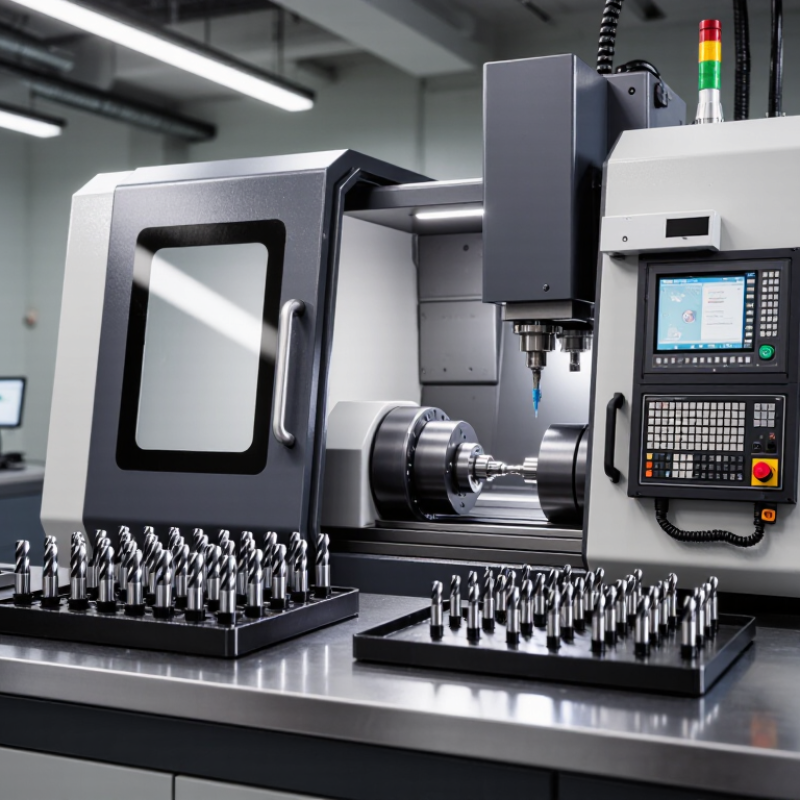
Top 10 Micro Drill Hard Coating Machines for Global Buyers

What Micro Drill Hard Coating Machines Are and How They Work

Micro drill hard-coating machines apply a thin, wear-resistant film to tiny cutting tools, often made from cemented carbide. The coating can reduce friction and slow edge wear, but it cannot correct poor drill geometry or runout. Small details matter. A few micrometres of coating may noticeably change a micro drill’s diameter and cutting behavior.

Most systems use physical vapor deposition. They hold drills in a vacuum chamber, clean their surfaces with ion bombardment, then use plasma to transfer coating material onto the rotating tools. Operators control temperature, chamber pressure, bias voltage, and deposition time. These settings affect adhesion and coating uniformity, especially near a narrow flute. The U.S. Geological Survey’s 2024 Mineral Commodity Summaries reported about 78,000 metric tons of global tungsten mine production in 2023; tungsten carbide is widely used as a micro-drill substrate. Buyers should assess chamber capacity, fixture design, and process monitoring—not just maximum throughput. A recipe that works on larger drills may fail on a tool only fractions of a millimetre wide. Honestly, coating windows can be less forgiving than supplier brochures suggest.

Key Coating Technologies and Machine Components

For micro drills, coating quality depends on more than the coating recipe. PVD systems commonly use cathodic arc or magnetron sputtering to deposit hard films such as TiAlN and AlCrN. High-ionization processes can improve film density, but excessive heat may affect small, delicate tools. Keep the thermal budget in view. A typical machine needs a vacuum chamber, pumping system, gas-flow controls, power supplies, temperature monitoring, and rotating fixtures. Fixture design matters: a crowded rack can leave flute surfaces unevenly coated. That detail is easy to miss.

Grand View Research estimated the global physical vapor deposition market at USD 27.6 billion in 2023 and forecast a 7.3% compound annual growth rate from 2024 to 2030. This broad market figure is not specific to micro-drill equipment, but it signals investment in coating capacity. When comparing machines, buyers should ask for coating-thickness maps across representative drill sizes, not just a single average. Check repeatability between runs, chamber cleaning time, and how the system handles narrow flutes. A polished specification sheet may still hide awkward loading or maintenance. That deserves a closer look. Short test runs with actual tools can expose these gaps before purchase.

Top 10 Micro Drill Hard Coating Machines for Global Buyers - Key Coating Technologies and Machine Components
No. Machine Configuration Key Coating Technology Typical Coatings and Micro-Drill Use Main Machine Components Indicative Process Range and Buyer Considerations
1 Multi-cathodic-arc PVD batch system Reactive cathodic arc evaporation TiAlN, AlCrN, and related nitride coatings for carbide drills used in metal cutting. Arc cathodes, reactive-gas inlets, substrate-bias power supply, vacuum chamber, planetary fixture, heating and cooling system. Typical coating thickness: about 1–4 μm; common tool-coating temperatures are approximately 400–500°C, depending on the recipe. Assess droplet control and fixture coverage for small diameters.
2 Filtered cathodic-arc PVD system Filtered arc deposition Dense carbon-based hard coatings, including ta-C, where a smoother surface and reduced macroparticle defects are priorities. Arc source, magnetic or duct filter, vacuum chamber, substrate-bias supply, gas controls, and rotating tool holder. Coating thickness and substrate heating are highly process-dependent. Filtering can reduce arc droplets, but may lower deposition rate and usable coating area.
3 HiPIMS magnetron sputtering system High-power impulse magnetron sputtering Dense nitride coatings such as CrN- or Al-containing nitrides for wear-resistant cutting tools. HiPIMS pulsed-power supply, magnetron targets, reactive-gas control, bias supply, vacuum pumps, and rotating fixtures. Typical tool-coating thickness is around 1–4 μm; substrate temperature varies by coating design and can be several hundred degrees Celsius. Compare deposition rate and edge coverage with the required production volume.
4 Reactive magnetron sputtering system DC or pulsed-DC reactive sputtering TiN, CrN, and other nitride coatings for drills where controlled composition and a relatively smooth film are useful. Magnetron cathodes and targets, pulsed-DC supply, mass-flow controllers, vacuum chamber, substrate bias, and multi-axis tool fixtures. Coating thickness is commonly in the 1–4 μm range for cutting-tool applications. Stable gas-flow control and uniform rotation are important for repeatable results.
5 Hybrid arc-and-magnetron PVD system Combined cathodic arc and magnetron sputtering Multilayer or compositionally varied nitride coatings, combining different source characteristics within one process. Arc cathodes, magnetron targets, independent power supplies, gas controls, substrate-bias unit, and planetary fixture system. Many tool coatings fall around 1–4 μm and use temperatures in the several-hundred-degree range. Confirm that the control system can coordinate sources and repeat multilayer sequences.
6 PACVD coating system for carbon films Plasma-assisted chemical vapor deposition a-C:H DLC coatings that can provide low friction in suitable materials and cutting conditions. RF or pulsed plasma power supply, precursor-gas delivery, vacuum chamber, substrate-bias unit, temperature control, and rotating fixtures. Carbon-film thickness is often approximately 0.5–3 μm. Some processes operate at comparatively low substrate temperatures, but the actual temperature and adhesion depend on the chemistry and pretreatment.
7 High-temperature CVD coating system Thermal chemical vapor deposition TiC, TiCN, and oxide-containing coating systems, mainly for cemented-carbide tools designed for CVD processing. High-temperature reactor, gas-distribution system, exhaust treatment, temperature-control assembly, reaction-gas safety controls, and loading fixtures. Industrial CVD coatings can be several micrometres thick, often about 5–15 μm; process temperatures are typically much higher than PVD, commonly around 800–1,050°C. Check carbide grade and edge-strength requirements carefully.
8 Integrated plasma-nitriding and PVD duplex system Plasma nitriding followed by PVD coating A nitrided diffusion zone beneath a hard PVD topcoat; may be considered for compatible tool substrates and applications. Plasma-nitriding power supply, gas system, vacuum chamber, PVD sources, substrate-bias unit, temperature controls, and separate process recipes. The nitrided zone is a diffusion layer, not a deposited film; the PVD topcoat is commonly around 1–4 μm. Nitriding and coating temperatures are recipe-dependent; check substrate tempering limits and micro-drill edge integrity.
9 Planetary-fixture PVD batch machine Arc or sputter PVD with multi-axis substrate rotation Common hard nitride coatings for batches of drills, with fixture rotation intended to improve exposure across tool surfaces. Planetary rotation stages, tool-specific holders, vacuum chamber, PVD sources, bias supply, gas controls, and temperature monitoring. Typical cutting-tool films are approximately 1–4 μm, with process temperature set by coating chemistry and substrate. Review shadowing, loading density, runout protection, and batch-to-batch uniformity.
10 Load-lock, multi-chamber PVD production cell Batch or semi-continuous PVD with isolated loading and coating zones Production coating of carbide micro drills using suitable arc or magnetron recipes; the coating itself depends on the installed source technology. Load-lock chamber, transfer mechanism, process chamber, vacuum pumps, PVD sources, gas and power controls, and automated handling system. Coating thickness and temperature follow the selected PVD process, commonly around 1–4 μm for tool coatings. Load-locks can reduce process-chamber venting time; compare throughput, maintenance access, and fixture capacity.

Note: These are representative, non-brand-specific machine configurations rather than a ranked product list. Process temperatures, coating thicknesses, deposition rates, and suitability vary with coating chemistry, substrate material, tool geometry, and equipment design. Confirm specifications with the equipment supplier and coating-process provider.

How the Top 10 Machines Compare in Capacity and Performance

For global buyers, the top ten micro-drill hard-coating machines should be compared by usable chamber capacity, batch size, cycle time, and coating consistency—not chamber volume alone. A larger chamber may handle more fixtures, but poor loading geometry can leave tiny drill flutes unevenly coated. Check whether suppliers report usable volume and actual tool count under a defined fixture layout. Small is not slow.

ASM Handbook, Volume 5: Surface Engineering, describes many hard PVD coatings in the 1–5 μm thickness range. At this scale, a small process shift matters: excess coating can blunt a micro-drill’s cutting edge, while uneven coverage may shorten tool life. Ask for thickness-uniformity data across loaded fixtures, not just a best-case sample. ISO 14955-1:2017 also provides a framework for assessing machine-tool energy use, useful when comparing long coating cycles and high-throughput systems.

A practical comparison should separate batch capacity from daily output. Record loading time, deposition time, cooling time, and changeover time; these often differ from headline cycle figures. High-capacity systems can suit large, repeatable batches, while smaller chambers may offer easier setup for frequent tool changes. A neat ranking can mislead. Published performance figures rarely reflect every drill geometry, and buyers should request test results using their own representative tools.

Top 10 Micro Drill Hard-Coating Machine Benchmarks

Reference spindle speeds for ten micro-drill diameters at a fixed cutting speed of 60 m/min.

The chart compares drill diameter capacity with the corresponding calculated spindle speed, using RPM = (1,000 × cutting speed) ÷ (π × drill diameter). These are process benchmarks, not specifications or rankings of particular machines. Actual settings depend on tool material and coating, workpiece, coolant, and machine capability.

Which Industries and Micro Drill Types Use These Machines

Micro drill hard-coating machines serve industries where tiny cutting edges face heat, friction, and strict dimensional limits. Electronics is a major user: printed circuit boards require small-diameter carbide drills to create dense, clean holes. The Semiconductor Industry Association reported global semiconductor sales of $627.6 billion in 2024, up 19.1% from 2023. That figure signals a growing electronics ecosystem, though it does not measure micro-drill demand directly.

Small tools, high stakes.

Medical-device manufacturers use coated micro drills for precision work on surgical instruments and components. Grand View Research estimated the global medical-device market at $536.1 billion in 2023 and forecast $799.7 billion by 2030. Dental and orthopedic applications may use short micro twist drills or specialized solid-carbide drills, depending on material and geometry. Aerospace suppliers also use small drills for precision holes in hard-to-machine alloys and components.

Coating machines commonly process solid-carbide twist drills, PCB drills, and other small-diameter rotary tools. Physical vapor deposition coatings such as titanium aluminum nitride can help resist wear and heat, but results depend on substrate, edge geometry, and cutting conditions. A coating that works well on one tool may perform poorly on another. That is easy to overlook. Buyers should check chamber capacity, fixture design, coating uniformity, and whether the system accommodates their actual drill diameters—not just its advertised maximum load.

How Global Buyers Can Evaluate Cost, Compliance, and Support

When comparing micro drill hard coating machines, avoid judging them by purchase price alone. A lower quote may exclude installation, operator training, spare parts, or coating-process validation. Request an itemized offer and compare energy use, consumables, maintenance intervals, and expected output. Check whether the quoted capacity matches your actual drill sizes and production volume. Small details matter.

Compliance depends on the destination market and the machine’s intended use. Ask for current electrical and safety documentation, coating specifications, and clear operating instructions. Confirm that the documents identify the exact machine configuration being offered. Requirements can differ between regions, so verify them with qualified local advisers rather than relying on a supplier’s general claim. Ask for evidence.

Support can affect production just as much as machine performance. Clarify response times, available service languages, remote troubleshooting options, and the delivery time for wear parts. Ask who handles commissioning and what training includes, such as coating checks or troubleshooting uneven coverage. A live demonstration with your sample drills can reveal useful gaps. I would still leave room for uncertainty: test results may not reflect every shift, material, or operator. Get service commitments and acceptance criteria in writing before ordering.

Skip to content