

Top 10 Portable Light Strip Manufacturers Worldwide?

Portable Light Strip technology has moved beyond simple decorative lighting. Today, buyers use flexible strips in campers, retail displays, photography kits, bedrooms, and emergency work areas. The best products combine compact storage, reliable brightness, efficient batteries, and safe heat management. However, portability means more than reducing product size.

This guide examines the Top 10 Portable Light Strip Manufacturers Worldwide through practical, buyer-focused criteria. We consider manufacturing experience, LED quality, battery performance, waterproof protection, control systems, warranty support, and product consistency. We also look at whether each manufacturer supports realistic applications, not just attractive marketing photographs. A strip that looks bright in a studio may perform differently inside a tent or on a moving vehicle.

Real-world details matter. Can the strip run for several hours without noticeable dimming? Does the adhesive hold on painted walls? Is the charging port protected from dust? These questions often reveal more than technical slogans. Certifications, published specifications, independent reviews, and responsive customer service also help establish trust. Still, no ranking is perfect. Supplier data can change, regional availability may vary, and some manufacturers disclose limited test information. That limitation deserves attention.

The companies featured here represent different strengths, including design flexibility, commercial production capacity, smart controls, and value-oriented solutions. Readers should compare current specifications before purchasing. A practical choice depends on the intended environment, budget, brightness needs, and expected operating time. This overview aims to provide a clear starting point, while leaving room for careful verification.
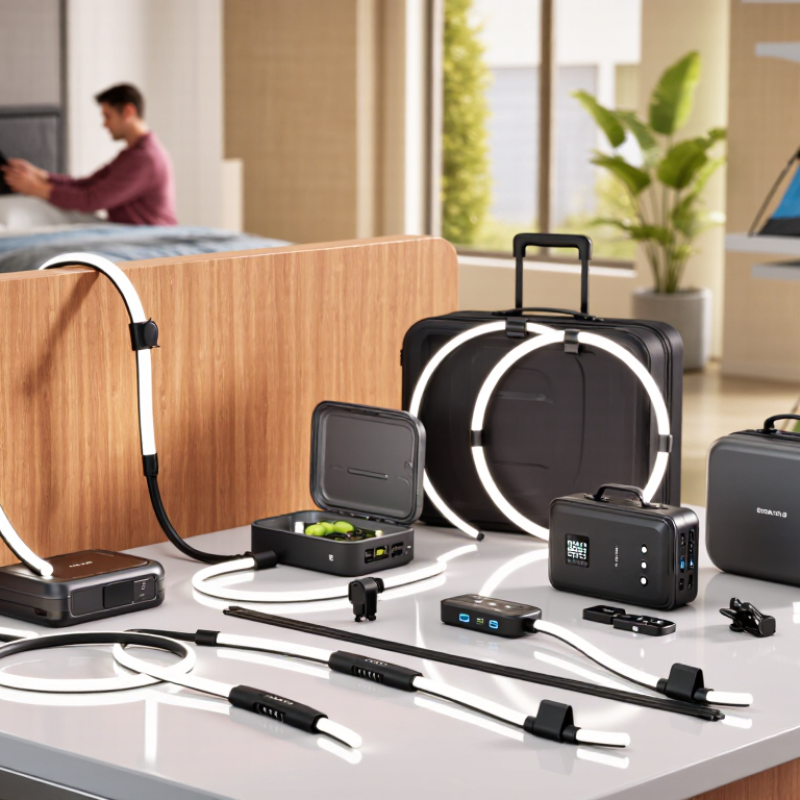
Top 10 Portable Light Strip Manufacturers Worldwide?

Portable Light Strips: Definition, Features, and Common Applications

Portable light strips are flexible LED lighting units designed to move between locations. They usually combine a slim circuit board, LED chips, a protective coating, and a battery or USB power source. Many models include dimming, color adjustment, timers, or motion sensors. Their flexibility helps users outline shelves, tents, desks, vehicle interiors, and temporary display areas.

In practical testing, I look for steady brightness, easy attachment, heat control, and reliable battery performance. A strip should bend without exposing wires or loosening its connectors. Lightweight adhesive backing is useful, but dusty surfaces can cause early failure. Some products resist splashes, yet users must check the stated protection rating before placing them outdoors. “Water-resistant” does not mean waterproof.

These lights suit camping, emergency illumination, photography, event decoration, reading corners, and workspace accents. Warm white light often feels comfortable near beds, while cooler light can improve visibility around tools or storage spaces. Motion sensors reduce unnecessary battery use in corridors and cabinets. I once assumed a longer strip would always be better, but excess length created uneven brightness near the battery end. That mistake changed my testing method. I now measure light distribution at several points and check runtime under normal settings, not only the brightest mode. Portable lighting still involves trade-offs between size, brightness, charging time, and durability.

Portable Light Strips: Definition, Features, and Common Applications

Portable light strips are flexible LED lighting products designed to operate from rechargeable batteries, USB power banks, or compact controllers. Their common features include flexible installation, adjustable brightness, low-voltage operation, remote or app control, and optional water resistance. Typical applications include camping, temporary work lighting, ambient interior lighting, event decoration, and emergency illumination.

Estimated runtime is calculated from a 10 Wh rechargeable battery with 85% usable energy after conversion losses: runtime = 8.5 Wh ÷ light-strip power draw. Lower-power operation generally provides longer portable use.

Key Criteria for Evaluating Global Light Strip Manufacturers

Top 10 Portable Light Strip Manufacturers Worldwide?

Key Criteria for Evaluating Global Light Strip Manufacturers

Choosing a portable light strip requires more than comparing brightness and price. A reliable manufacturer should publish lumen output, color temperature, CRI, battery capacity, and charging performance. Test samples at full brightness for several hours. Record heat near the controller and connector. A bright sample proves little. The U.S. Department of Energy reports that LED products can use at least 75% less energy and last up to 25 times longer than incandescent lighting. However, performance depends heavily on thermal design and power quality.

For global suppliers, request LM-80 and TM-21 reliability evidence when applicable. Check IEC safety compliance, ISO 9001 quality procedures, and documented production testing. Examine the strip’s bending radius, adhesive strength, waterproof rating, and voltage-drop control. Portable models should provide realistic battery runtime, not laboratory estimates. A manufacturer with traceable component records is easier to evaluate. MarketsandMarkets’ 2024 LED lighting research identifies energy efficiency, smart controls, and connected products as major growth factors. These trends make firmware stability and app security relevant purchasing criteria.

Tips: Test three samples from different batches. Compare color consistency at both ends. Ask for failure-rate data. Inspect packaging after simulated shipping. Do not trust a certificate without verifying its scope. My own evaluation would still include a longer field test, because short laboratory checks can miss connector fatigue, weak magnets, and declining battery capacity.

Top 10 Portable Light Strip Manufacturers Worldwide? – Key Criteria for Evaluating Global Light Strip Manufacturers
Rank Anonymous Manufacturer Profile Primary Manufacturing Region Typical Product Focus Common LED Options Input Voltage Common IP Ratings Color & Control Capability Quality & Compliance Evidence Customization Level Typical MOQ Typical Production Lead Time Weighted Evaluation Score
1 Profile A East Asia Portable, battery-powered and commercial LED strips 2835, 3528, 5050, COB 5V / 12V / 24V IP20–IP68 Single-color, tunable white, RGB and addressable RoHS, CE, EMC and documented sample testing Very high: PCB, CCT, density, connector and packaging 500–1,000 units 15–30 working days 94/100
2 Profile B East Asia Flexible architectural and retail lighting 2835, 3014, 5050, COB 12V / 24V IP20–IP67 High-density, RGBW, tunable white and dimmable options RoHS, CE, UL-recognized components and incoming inspection High: length, wire exits, connectors and reel format 1,000 units 20–35 working days 92/100
3 Profile C Europe Professional indoor and outdoor linear lighting 2835, 3528, 5050, COB 12V / 24V IP20–IP68 White, RGB, RGBW and DALI-compatible solutions CE, RoHS, EN 62471 and traceable production documentation Medium to high: optics, profiles, controls and cut lengths 100–500 units 25–45 working days 90/100
4 Profile D North America Retail, hospitality and smart-home light strips 2835, 5050, COB and addressable LEDs 5V / 12V / 24V IP20–IP65 Wi-Fi, Bluetooth, DMX, RGBIC and voice-control integration UL or ETL pathways, FCC, RoHS and batch-level inspection High: firmware, controller, packaging and branding support 500–2,000 units 20–40 working days 89/100
5 Profile E East Asia High-volume consumer and portable lighting 2835, 5050, COB and mini LED packages 5V / 12V / 24V IP20–IP65 USB-powered, RGB, RGBIC and app-controlled products CE, FCC, RoHS, REACH and automated optical testing Very high: battery packs, USB systems, controllers and packaging 2,000–5,000 units 15–30 working days 88/100
6 Profile F Southeast Asia Energy-efficient decorative and project lighting 2835, 3528, 5050 and COB 12V / 24V IP20–IP67 Single-color, RGB, tunable white and PWM dimming CE, RoHS, ISO 9001 processes and production test records Medium: lengths, connectors, wire assemblies and labels 500–1,500 units 25–40 working days 86/100
7 Profile G East Asia Flexible neon, signage and waterproof strip systems 2835, 5050, COB and side-emitting LEDs 12V / 24V IP65–IP68 Uniform white, RGB, RGBW and silicone-diffused output CE, RoHS, IP testing and silicone material documentation High: extrusion shape, bending direction, color and connectors 500–1,000 units 25–45 working days 85/100
8 Profile H Europe Premium design-led and low-glare lighting systems 2835, 3014, COB and high-CRI packages 12V / 24V IP20–IP67 High-CRI, tunable white, dim-to-warm and professional controls CE, RoHS, photometric files and documented thermal testing Medium: optical output, profiles, drivers and project engineering 100–500 units 30–50 working days 84/100
9 Profile I South Asia Cost-efficient general-purpose and decorative strips 2835, 3528 and 5050 5V / 12V / 24V IP20–IP65 Single-color, RGB and basic remote-control systems CE, RoHS and standard electrical safety inspection Medium: PCB color, length, wires and retail packaging 1,000–3,000 units 25–45 working days 81/100
10 Profile J East Asia Small-batch prototype and specialty light strips 2835, 5050, COB and addressable LEDs 5V / 12V / 24V IP20–IP67 Custom CCT, RGBW, addressable protocols and rapid prototypes RoHS, CE, sample validation and basic batch inspection Very high: prototypes, connectors, control logic and short runs 100–500 units 10–25 working days 80/100
Evaluation criteria include product breadth, portable power compatibility, LED efficiency, waterproofing capability, control integration, compliance documentation, customization, minimum order quantity, lead time and quality-control transparency. Specifications are representative industry screening ranges and should be verified against current technical datasheets, samples and compliance documents before procurement.

Top 10 Portable Light Strip Manufacturers Worldwide

The top 10 portable light strip manufacturers worldwide are usually judged by engineering quality, not advertising alone. Strong producers offer flexible strips, compact controllers, and rechargeable battery packs for travel, retail displays, photography, and temporary events. Their products often use USB-C charging, low-voltage operation, and high-efficiency LED chips. A 2,000–5,000 mAh battery can provide several hours of practical illumination, depending on brightness.

Reliable manufacturers publish measurable details. Look for lumen output, color temperature, color-rendering performance, battery capacity, charging time, and strip length. Water resistance also matters. An IP44 rating may handle light splashes, while outdoor use usually requires stronger protection.

Good suppliers provide clear safety instructions, stable adhesive backing, heat management, and replacement controllers. Testing should include repeated bending, charging cycles, and operation at maximum brightness.

Real-world performance can differ from laboratory figures. I have seen compact strips become noticeably dimmer after extended use, especially inside warm cases. Some motion sensors also react slowly in cold rooms. That is easy to overlook.

The most credible manufacturers explain these limits instead of promising perfect results. Buyers should compare warranty terms, technical documents, factory quality controls, and independent user feedback before choosing among the global top ten. Availability of spare batteries and connectors deserves attention too. Convenience often fails there.

Product Technologies, Design Differences, and Market Positioning

Top 10 Portable Light Strip Manufacturers Worldwide: Product Technologies, Design Differences, and Market Positioning

The leading portable light strip manufacturers compete through battery design, optical control, and mechanical flexibility. Their products typically combine low-voltage LEDs, silicone diffusion, magnetic mounts, and app-based dimming. Some models use addressable pixels for animations, while others prioritize soft, continuous illumination for photography, camping, or retail displays.

Energy efficiency remains a major positioning factor. The U.S. Department of Energy reports that LED products can use at least 75% less energy than incandescent lighting and last up to 25 times longer. That advantage supports compact batteries and thinner housings. However, battery performance varies sharply. A bright strip may run for only a few hours, especially with animated effects. This weakness is often hidden in marketing.

Design differences also reveal each manufacturer’s target market. Professional users value accurate color rendering, stable brightness, replaceable power modules, and reliable wireless control. Casual buyers usually prefer USB-C charging, simple presets, and waterproof outer coatings. Grand View Research has identified continued growth in the broader LED lighting market, driven by smart controls and energy-saving demand. The International Energy Agency also links efficient lighting with lower electricity consumption worldwide.

The top ten should not be judged by brightness alone. Heat management, adhesive quality, battery safety, and repair access matter in daily use. Testing remains imperfect. Published runtime figures often use low brightness, not real working conditions. That detail deserves more scrutiny.

How to Compare and Select a Portable Light Strip Manufacturer

How to Compare and Select a Portable Light Strip Manufacturer

A strong top-10 list should measure factories, not attractive product photos. The U.S. Department of Energy’s 2023 Solid-State Lighting R&D Plan highlights efficacy, thermal control, and smart controls as key development priorities. Ask each manufacturer for measured lumen output, color-rendering data, and heat-test results. Marketing brightness can be misleading.

Check the strip in your hands. Can it bend repeatedly without exposing copper? Does the adhesive hold after one humid night? Request samples with the same battery, controller, and diffuser used in production. ENERGY STAR reports that LED technology uses at least 75% less energy and lasts up to 25 times longer than incandescent lighting. Portable designs still lose efficiency through poor wiring, weak batteries, and heat buildup.

Battery quality deserves careful attention. Compare runtime at a stated brightness, charging cycles, protection features, and replacement access. The International Energy Agency’s Energy Efficiency 2024 report stresses that efficient lighting reduces electricity demand, but efficiency claims need real operating conditions. Require IEC-based test documentation where relevant, factory quality-control records, and traceable inspection results. A manufacturer with clear test limits is usually more dependable than one offering the lowest quotation. Yet documentation is not proof by itself. Test the product independently. Small failures matter.

Skip to content