

China Top 10 Throttle Pedal Sensor Manufacturers

A Throttle Pedal Sensor converts pedal movement into an electrical signal used by a vehicle’s control system. Its response can affect acceleration feel, diagnostic accuracy, and driver confidence. Small component. Large responsibility.

This guide to China’s top 10 throttle pedal sensor manufacturers is intended to help buyers compare suppliers, not treat a ranking as a guarantee. Manufacturers may differ in product range, engineering support, customization, and production capacity. Check whether a supplier can provide clear specifications, sample units, calibration details, and relevant quality records. Ask how sensors are tested for signal consistency, connector fit, and performance across expected operating conditions. Practical details matter. A catalog photograph cannot confirm them.

For a sound evaluation, compare documented performance with your vehicle or application requirements, and confirm communication timelines before placing an order. Request traceable test data where available, and clarify how design changes or quality concerns are handled. Pricing deserves attention, but the lowest quotation may not represent the best long-term value. Honestly, supplier information can be uneven. Some claims need independent verification. Use the profiles in this article as a starting point for due diligence, then validate capabilities directly with each manufacturer. That extra step may take time, but it can reveal whether a supplier’s stated strengths match your project’s actual needs.
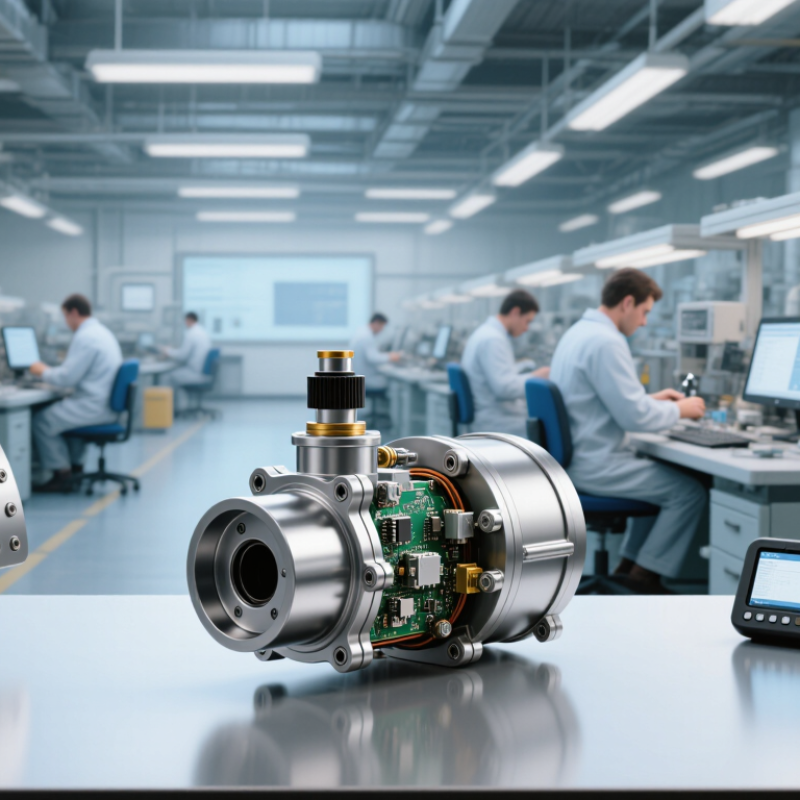
China Top 10 Throttle Pedal Sensor Manufacturers

Throttle Pedal Sensor Technology: Hall-Effect Signals, 0.5–4.5 V Output

Hall-effect throttle pedal sensors convert pedal movement into an electrical signal without relying on sliding contacts. A small magnet moves with the pedal, while the sensing element tracks changes in its magnetic field. The result is a changing voltage that an engine control unit can interpret.

Many designs use a nominal 0.5–4.5 V output range from released pedal to full travel. These values are common, not universal; always check the sensor specification. Some pedals contain two signal tracks for plausibility checks. Their voltages may rise together at different rates, or follow different patterns. Small changes matter. A technician can monitor the signal while slowly pressing the pedal and look for smooth, steady movement rather than sudden drops or spikes.

A stable 5 V reference and clean ground are important during testing. Loose connectors, damaged wiring, or poor grounds can distort the reading even when the sensor itself is sound. Not every design matches. In practice, a neat voltage sweep does not prove every fault is absent, so compare both tracks and verify readings against the vehicle’s service data. A basic multimeter can help, but a graphing tool often reveals brief interruptions more clearly.

How China’s Top 10 Manufacturers Are Selected by Quality and Scale

Selecting China’s top ten throttle pedal sensor manufacturers requires more than comparing factory size or product catalogs. A credible assessment looks at measurable quality and the ability to deliver consistently. Reviewers can examine inspection procedures, production records, component traceability, and documented corrective actions. They can also check whether samples maintain stable output across repeated pedal movements and temperature changes. Small details matter. A clean test report is useful, but repeatable results across production batches matter more.

Scale needs evidence, too. Relevant indicators include monthly capacity, equipment uptime, workforce experience, and the ability to manage sudden order changes without weakening inspection. Facility visits and sample checks can help confirm what company profiles claim. Numbers can mislead. A large workshop does not automatically mean dependable supply, and a smaller factory may have strong process control. Selection should therefore balance audit findings, product testing, delivery history, and technical support. Records may be incomplete, and test conditions are not always comparable; that uncertainty deserves attention rather than a convenient score. A transparent shortlist explains its criteria and notes where evidence remains limited.

China’s Top 10 Throttle Pedal Sensor Manufacturers and Core Product Data

China’s top ten throttle pedal sensor manufacturers should be compared by product data, not catalogue claims alone. Useful specifications include sensor type, pedal travel, supply voltage, output range, connector pinout, operating temperature, sealing level, and rated service life. Many dual-channel designs use a 5-volt reference and two related output signals. Exact voltage curves and diagnostic behavior vary, so buyers should request test curves and drawings for each part number.

Small details matter. A connector that fits may still have a different pinout. Confirm mounting dimensions, return-spring feel, and signal response across the full pedal stroke. Ask whether samples have passed vibration, humidity, and temperature-cycle testing, and check whether production parts match the approved sample. A clean datasheet helps, but it cannot replace validation on the target vehicle. Rankings alone can mislead.

The International Energy Agency’s Global EV Outlook 2024 reports nearly 14 million electric cars sold worldwide in 2023, around 18% of total car sales. This is useful context for the shift toward electronic powertrain controls, but it is not a throttle-sensor market-size estimate. For a supplier comparison, record each manufacturer’s available output types, measurement tolerances, traceability, and change-control process. Some catalogues omit these details. That gap deserves follow-up.

Comparing Sensor Accuracy, Response Time, Durability, and IP Ratings

China’s top ten throttle pedal sensor manufacturers should be compared through measured performance, not catalogue claims. A practical benchmark records position accuracy across temperature, voltage, and vibration changes. Many automotive designs target errors below ±1% of full scale, although published figures are not always tested under identical conditions. That gap matters.

Response time is equally important. A sensor reacting within 5–10 milliseconds can support smooth torque requests and stable electronic control. Test engineers should examine signal delay, noise, and recovery after sudden pedal movement. The 2024 Automotive Sensors Market report by MarketsandMarkets identifies faster, more reliable sensing as a major development direction. Still, speed alone is not enough. A noisy fast signal may create worse control behavior.

Durability testing should follow ISO 16750 environmental methods, including temperature cycling, mechanical shock, vibration, humidity, and supply-voltage variation. IP67 means dust-tight protection and temporary immersion up to one metre for 30 minutes under IEC 60529. IP69K, referenced in ISO 20653 practices, adds resistance to high-pressure, high-temperature cleaning. Useful evidence includes cycle counts, drift data, and failure rates. Datasheets often omit these details. That is a weakness. Buyers should request traceable test reports, calibration records, and samples from multiple production batches before ranking suppliers.

China Top 10 Throttle Pedal Sensor Manufacturers

Comparing Sensor Accuracy, Response Time, Durability, and IP Ratings

This chart presents commonly published automotive throttle pedal sensor benchmark ranges rather than company-specific claims. Accuracy and response time are better at lower values, while durability and ingress protection are better at higher values. IP67 means dust-tight protection and protection against temporary immersion in water.

OEM Applications, IATF 16949 Certification, and Global Supply Capabilities

For a China-focused top-ten comparison of throttle pedal sensor manufacturers, evaluate OEM fit, quality controls, and delivery resilience—not catalog breadth alone. OICA’s 2023 production statistics recorded about 93.5 million motor vehicles manufactured worldwide, underscoring the scale and variation of vehicle programs suppliers must serve. OEM readiness means matching the pedal’s travel curve, redundant signal channels, connector keying, and mounting geometry to the vehicle’s specifications. A small mismatch can trigger costly validation delays. Fit is unforgiving.

IATF 16949 certification is an important screening criterion, but buyers should verify the certificate’s validity, manufacturing site, and scope. Certification supports disciplined quality management; it does not, by itself, prove that a sensor meets a particular vehicle program’s performance requirements. Ask for documented test results covering temperature cycling, vibration, signal consistency, and end-of-line inspection. PPAP and traceability records also help connect each shipped part to its production history. One sourcing weakness is treating paperwork as a substitute for engineering review.

Global supply capability should be measured in practical terms: tooling readiness, forecast response, component traceability, regional inventory, and clearly stated lead times. Request evidence of backup capacity and change-control procedures, then check whether those arrangements cover the actual production site. A polished presentation is not a contingency plan. Buyers should compare these details across manufacturers and leave room for on-site or independent verification.

China Top 10 Throttle Pedal Sensor Manufacturers - OEM Applications, IATF 16949 Certification, and Global Supply Capabilities

This table is an anonymized, non-ranked OEM sourcing guide, not a verified list of ten individual manufacturers. The application and technology descriptions reflect common industry practices; confirm each supplier’s actual products, plant-specific certifications, and export capabilities during qualification.

Sourcing Profile Representative OEM Application Common Sensor and Output Options IATF 16949 and Qualification Checks Global Supply Capability to Verify
01 — Passenger vehicle programs Electronic accelerator pedal assemblies for passenger cars and light vehicles. Contactless Hall-effect or inductive sensing; redundant output channels are commonly used in automotive pedal designs. Request a valid IATF 16949 certificate for the relevant manufacturing site. Review customer-specific requirements, process controls, and PPAP documentation. Confirm production-site location, approved shipping routes, packaging specifications, and capacity for the vehicle program’s production life.
02 — Light commercial vehicles Throttle pedal sensing for vans, pickups, and light-duty fleet vehicles. Contactless position sensing with analog or digital signal interfaces, selected to match the vehicle electronic control system. Check the site’s certification scope, traceability system, change-control process, and validation evidence for the intended operating environment. Assess forecast flexibility, regional warehousing options, delivery lead times, and the supplier’s process for managing service-part demand.
03 — Heavy-duty trucks and buses Accelerator pedal position measurement for commercial vehicle powertrain controls. Redundant sensing channels and defined signal diagnostics are common design considerations; interface details are vehicle-specific. Verify applicable customer approvals, durability test results, production traceability, and any required automotive quality-system certification. Confirm the ability to support long production cycles, low-volume service orders, and cross-border logistics for vehicle assembly locations.
04 — Off-highway and agricultural equipment Pedal-based engine control for agricultural, construction, and other off-highway machinery. Contactless sensing may be selected to avoid mechanical wiper wear; connector, sealing, and mounting options depend on the machine design. Review environmental validation for dust, moisture, vibration, temperature, and the customer’s quality requirements. Certification must be checked by site and scope. Evaluate regional service support, spare-parts availability, and delivery planning for equipment assembled in multiple markets.
05 — Electric and hybrid vehicles Accelerator pedal position sensing for electric and hybrid vehicle control systems. Redundant position signals are common; electrical interfaces and diagnostics must be compatible with the vehicle’s control architecture. Request product validation records, failure-analysis procedures, and evidence that the relevant manufacturing site meets the OEM’s quality requirements. Check engineering-change communication, ramp-up capacity, and continuity planning for multi-region vehicle production.
06 — Specialty and low-volume vehicles Pedal sensing for specialty vehicles, low-volume commercial platforms, and application-specific builds. Output type, connector, pedal travel range, and mounting geometry are typically defined by the customer’s application. Confirm design-change control, inspection plans, and whether the supplier’s certification and quality systems cover the specific production location. Ask about minimum order quantities, prototype-to-production transition, and support for less frequent replenishment orders.
07 — Harsh-environment applications Vehicles or equipment operating in environments with elevated exposure to vibration, dust, or moisture. Contactless sensing and protected housings may be considered; required ingress protection and environmental limits must be specified by the OEM. Review test methods and results against the OEM’s stated environmental requirements rather than assuming a universal performance level. Verify packaging protection, transport conditions, and the supplier’s ability to maintain consistent production across shipping routes.
08 — Platform-standardized programs Vehicle platforms sharing a common pedal sensor design across multiple models or assembly sites. A common sensor architecture may be adapted to different mechanical interfaces or harness requirements, subject to engineering validation. Check configuration control, revision traceability, PPAP status by part and site, and the approval process for product or process changes. Confirm whether the supplier can support coordinated shipments and consistent part identification across multiple assembly locations.
09 — Regionalized production programs OEM programs seeking supply close to regional vehicle assembly or distribution operations. Sensor technology and electrical output remain application-specific; regionalization does not replace vehicle-level validation. Verify certification separately for each proposed manufacturing site and review any site-transfer or dual-source approval requirements. Assess local production or distribution arrangements, customs documentation capability, lead-time commitments, and business-continuity plans.
10 — Aftermarket and service support Replacement and service supply for compatible vehicle or equipment applications. Replacement parts must match the required mechanical fit, electrical interface, and approved application specification. Request part-level identification and traceability information; do not treat a supplier certificate as proof that every part is OEM-approved. Check service-part availability, order quantities, export documentation, and controls preventing incompatible parts from being substituted.
Skip to content