

Choosing a supplier for Plastic Candy Stand Up Pouches takes more than comparing glossy samples. Candy can be sensitive to moisture, oxygen, handling, and changing temperatures. A pouch that looks bright under showroom lights may still disappoint if its seals fail or its barrier is poorly matched to the product. Small details matter: zipper alignment, film thickness, print clarity, and how the pouch stands when filled.
Packaging researcher Dr. Jay Singh’s work reflects a useful principle: packaging should be judged by performance in real use, not appearance alone. That is a guiding idea for this supplier review. The ten companies are considered for product range, customization, quality controls, communication, and their ability to support international buyers. Buyers should also ask for material specifications, food-contact documentation, sample testing, production timelines, and clear minimum-order quantities. Details vary by supplier and market, so verify claims directly.
No supplier fits every brief. Some buyers need short runs and flexible artwork; others need consistent large-volume production, strong resealable closures, or tailored barrier structures. And a neat sample is not proof of reliable bulk output. This guide helps readers compare options and prepare sharper questions before requesting quotes. The shortlist is a starting point, not a guarantee; the right choice depends on the candy, distribution conditions, budget, and evidence each supplier can provide.
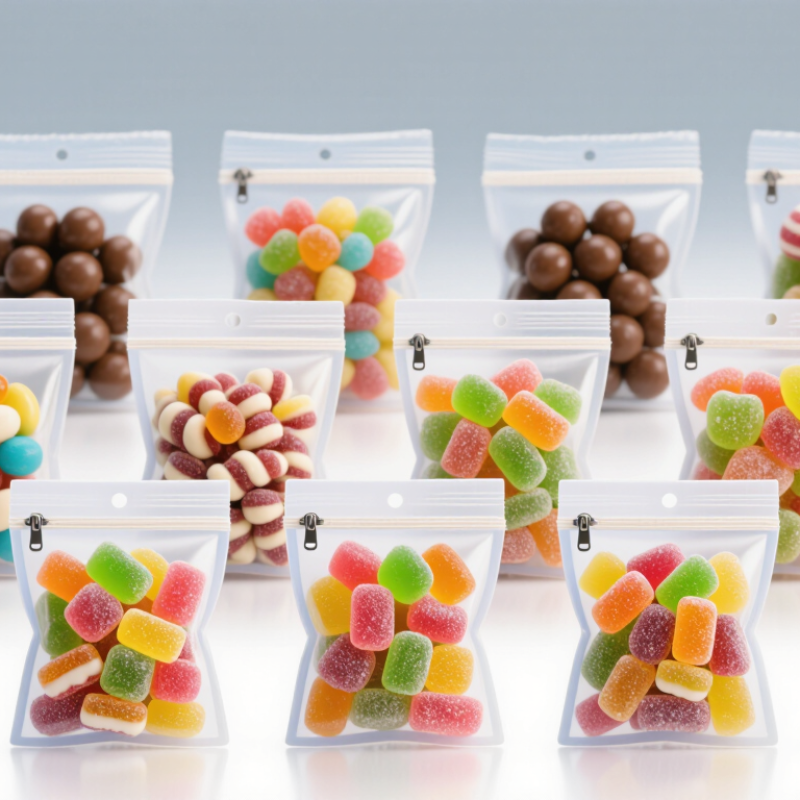
Plastic candy stand-up pouches combine a flat base with flexible walls, helping small sweets stay visible and easy to pour. Common structures include PET/PE laminates, which balance print clarity and heat-sealable inner layers. BOPP-based films can provide a crisp surface, while metallized or foil layers help limit light, oxygen, and moisture. The right barrier depends on the candy: chewy pieces may need stronger moisture protection, while chocolate can be sensitive to heat and odor transfer. Details matter.
The Flexible Packaging Association’s 2023 State of the U.S. Flexible Packaging Industry report recorded $42.9 billion in U.S. industry sales for 2022. That figure covers flexible packaging broadly, not candy pouches alone, but it shows the scale of the format’s use. Buyers should compare pouch thickness, seal strength, zipper performance, and filling-line compatibility using samples and real product trials. A pouch that looks sturdy can still split at a corner when overfilled.
These packs suit gummies, hard candy, mints, and mixed assortments, especially when resealing helps protect freshness between servings. Clear windows can show colors and shapes, though they may reduce light protection. Multi-layer films often deliver useful barriers, but their mixed materials can complicate recycling. There is no perfect structure. Ask suppliers for material specifications, barrier-test results, and evidence behind recyclability claims; then check whether the pouch performs under actual storage conditions.
For candy, compare pouch performance against the product, not just a glossy sample. Ask for oxygen and water-vapor transmission rates, with test conditions stated. Gummies may need stronger moisture protection; chocolate can need aroma and grease resistance. Request seal-strength results, production tolerances, and evidence from transport or drop testing. A neat sample can still hide a weak seal. Ask how the supplier controls batch-to-batch consistency, and check that printed colors and zipper placement remain stable across repeat orders.
Documentation matters as much as machinery. Request food-contact declarations relevant to your destination market, material specifications, and recent quality records. Confirm minimum order quantities, lead times, and how defects are handled. For sustainability claims, ask for the exact pouch structure and evidence supporting recyclability; do not rely on broad labels. The OECD’s 2022 Global Plastics Outlook estimates that packaging generated 40% of global plastic waste in 2019. That figure makes clear why material claims deserve scrutiny. Still, recyclability depends on local collection and processing, not the pouch alone.
Before committing, test samples using your actual candy, filling line, and storage conditions. Check seals after filling, then inspect the pouch after stacking and shipping. Ask suppliers to document corrective actions when tests fail. A supplier’s answers should be specific, traceable, and repeatable. One limitation: a short trial may not reveal seasonal humidity effects, so leave room for further checks.
When comparing the top 10 plastic candy stand-up pouch suppliers, buyers should look beyond unit price. Ask for pouch dimensions, film structure, seal strength, and filling-line compatibility. A sample filled with actual candies can reveal weak seals or awkward pouring. Small details matter. Request food-contact documentation and recent quality-test results, then confirm that specifications apply to the quoted product. Grand View Research estimated the global flexible packaging market at USD 263.01 billion in 2023, showing the scale of this packaging sector. Market growth, however, does not guarantee consistent supplier performance.
Compare print clarity, zipper function, lead times, minimum order quantities, and tolerance for color variation. Ask how suppliers handle production defects and whether they can provide batch traceability. The OECD’s 2022 Global Plastics Outlook reports that only 9% of plastic waste was recycled worldwide in 2019. That figure makes material choices worth discussing, but recyclability depends on the pouch structure and local collection systems. A recyclable claim alone is not enough. Request clear material specifications and evidence supporting environmental claims. One imperfect point: supplier questionnaires can look reassuring while leaving real production conditions unclear. Where possible, review a physical sample and agree on measurable acceptance criteria before placing a large order.
Suggested criteria for evaluating suppliers
These percentages are an illustrative buyer-planning model, not measured supplier performance or a market survey. Assess each supplier’s product specifications, food-contact documentation, quality controls, and delivery terms before making a decision.
For plastic candy stand-up pouches, compare suppliers on more than print quality. The Flexible Packaging Association’s 2023 State of the U.S. Flexible Packaging Industry report puts 2022 sales at $42.9 billion. That scale makes supplier screening important, but it does not guarantee consistent pouch performance. Ask for the proposed film structure, seal-strength results, and evidence that food-contact materials suit your destination market. Where relevant, review quality-system and packaging-material certifications, then verify their scope and validity directly.
Order terms can reveal practical differences. Request the minimum order quantity, sampling cost, production lead time, and re-order terms in writing. Confirm whether pricing includes cylinders or plates, and ask how color approval works before a full run. For candy, check that the pouch stands securely when filled and that its zipper or tear notch works with the intended pack size. A polished sample can mislead; appearance is only one test. Small details matter. If a supplier cannot share current test records or gives vague answers about material layers, pause and ask for clarification. That extra step may feel slow, but it is cheaper than discovering a sealing problem after delivery.
When comparing plastic candy stand up pouch suppliers, verify the product before weighing the price. Request a written specification for pouch dimensions, film structure, thickness, zipper type, and seal width. Ask whether the proposed material suits your candy’s weight, oil content, and storage conditions. Small details matter. A zipper that feels firm in a sample may behave differently on a fast filling line.
Check evidence, not promises. Request recent test reports for seal strength, leakage, and barrier performance, plus documents showing material traceability. Confirm that the reports match the exact pouch construction you plan to order. Requirements vary by destination market, so ask what documentation the supplier can provide for your intended use. A polished certificate alone is not enough.
Order production samples and test them with your own candy and filling process. Check seals after handling, and leave filled pouches standing for several days. Request references for comparable pouch formats, then verify lead times, minimum order quantities, and procedures for correcting defects. A factory visit or live production review can reveal how materials are checked and stored. Still, one inspection cannot guarantee every batch. That is an uncomfortable limitation, but a clear sampling plan and written acceptance criteria make supplier comparisons more reliable.
A practical, brand-neutral screening table for comparing suppliers. The checks below help buyers verify capabilities and request comparable evidence; they are not claims about any specific supplier.
| No. | Evaluation area | What to request or verify | How to assess it | Potential red flag |
|---|---|---|---|---|
| 1 | Food-contact compliance | Material specifications, supplier declarations, and applicable migration-test reports for the intended pouch structure and destination market. | Confirm that documents identify the tested material or structure, test conditions, report date, and relevant market requirements. For the EU, check applicability of Regulation (EU) No 10/2011; for the United States, assess applicable FDA food-contact requirements. | A generic “food grade” statement with no supporting documents or traceable material details. |
| 2 | Material structure and barrier | A layer-by-layer material specification, including polymer types, thickness or grammage, and any barrier layer or coating. | Match the proposed structure to the candy’s sensitivity to moisture, oxygen, aroma loss, light, and grease. Ask for relevant barrier data, such as WVTR or OTR, with test conditions stated. | Barrier figures are provided without units, test conditions, or identification of the tested structure. |
| 3 | Pouch and zipper performance | Samples and test information for stand-up stability, zipper function, seal strength, and leak resistance. | Test the filled pouch using the planned product weight and handling conditions. Confirm that zipper and seal performance remain acceptable after filling and distribution simulation. | Only empty display samples are offered, or the zipper and pouch are not tested together. |
| 4 | Quality management and traceability | Current quality-system certificates, audit scope, batch records, inspection procedures, and a sample certificate of analysis where relevant. | Verify certificates with the issuing body where possible and check that the certified site and activities cover the manufacturing operation being quoted. Ask how raw materials and production lots are traced. | A certificate is expired, belongs to a different site, or does not cover the relevant production scope. |
| 5 | Print quality and artwork control | Printed samples, color-management process, proofing procedure, and controls for artwork version approval. | Approve a production-representative proof and document colors, dimensions, text, barcode requirements, and revision number before mass production. | Production is scheduled before final artwork approval or the approved file version is unclear. |
| 6 | Capacity and production control | Production-site details, relevant equipment capabilities, available capacity, and the proposed manufacturing plan for the order. | Ask how the supplier manages scheduling, in-process checks, nonconforming product, and contingency planning during peak demand. | Capacity or production location cannot be clearly confirmed, or subcontracting is undisclosed. |
| 7 | MOQ, sampling, and commercial terms | A written quotation showing MOQ by size and artwork, sample charges, tooling or plate costs if applicable, payment terms, and quote validity. | Compare like-for-like specifications and ask whether setup quantities, repeat orders, and mixed designs affect the MOQ or unit price. | Key charges or MOQ conditions are omitted until after sampling or order confirmation. |
| 8 | Lead time and delivery terms | A schedule separating artwork approval, sampling, production, inspection, and shipping, plus the proposed Incoterm and named delivery point. | Request a realistic schedule for the specific order and confirm who is responsible for freight, export documentation, insurance, and import clearance under the agreed Incoterm. | A single delivery estimate is given without defining when the lead time starts or what shipping responsibilities are included. |
| 9 | Sustainability and end-of-life claims | Material composition, supporting evidence for environmental claims, and any design-for-recycling assessment relevant to the destination market. | Check whether the pouch is a mono-material or a multi-material structure and whether local collection and recycling systems accept it. Treat recyclability as market- and infrastructure-dependent. | Unqualified “recyclable” or “eco-friendly” claims without material details or destination-market context. |
| 10 | Samples, inspection, and corrective action | Production-representative samples, agreed acceptance criteria, inspection options, and a written process for handling defects or complaints. | Document measurable specifications before ordering, including dimensions, tolerances, print requirements, seal performance, and packaging condition. Agree how nonconformities will be investigated and resolved. | No written product specification, inspection plan, or clear process for resolving quality issues. |
Selection tip: Shortlist suppliers only after reviewing document evidence and production-representative samples. Regulatory obligations, test methods, recycling options, and import requirements vary by product and destination market; confirm the requirements that apply to your specific shipment.
TERMS OF USE - LEDOLUX
This site uses cookies in order to deliver services in accordance with Privacy Policy. You can use settings within your browser to control the cookies that are set on your computer – conditions of access or storage of cookies.
Your data controller will be LEDOLUX POLAND SP. ul. Innowacyjna 1; 36-060 Głogów Małopolski, which adapts the content of its website to your needs and analyses and examines them to improve it. More information.