
Sconces Lights can change the feel of a room with a modest fixture and a carefully placed beam. A warm glow beside a bed, a shaded pair along a hallway, or a weather-resistant fitting near an entry each serves a different purpose. Lighting designer Sally Storey has described lighting as “the jewelry of the home.” The comparison fits: finish and proportion matter, but so does the light itself.
China’s Sconces Lights manufacturers serve buyers seeking varied styles, production options, and price points. This guide introduces manufacturers and the details worth checking before a shortlist is made. Look closely at product dimensions, materials, finish samples, light-source compatibility, and available technical documentation. A brass-colored finish may look different under showroom lighting. Small details matter. Ask how samples are approved, how changes are recorded, and what inspection steps apply to a production order.
The comparison also needs care. Factory capabilities and product ranges can change, while online listings may leave important specifications unclear. This guide does not treat a broad catalog as proof of quality. Instead, it considers product consistency, communication, customization, and evidence supplied by each manufacturer. Buyers should confirm current specifications directly and assess samples against their own project needs. Some points may still need a closer review; that is a limitation, not a reason to guess. The aim is a practical starting point for evaluating Sconces Lights suppliers in China, with useful questions rather than unsupported promises.
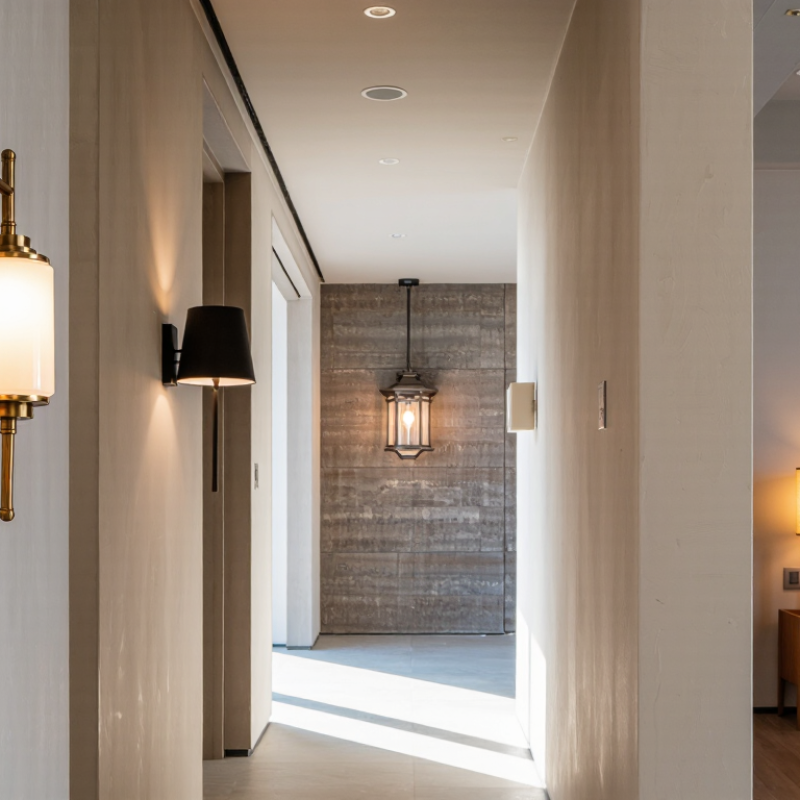
Sconce lights are wall-mounted fixtures that add illumination without taking up floor or table space. They can light a hallway, frame a mirror, or soften a bedroom wall. Some cast light upward and downward; others direct it through a shade or across the wall. That difference matters. A narrow beam creates a bright patch, while a diffuser spreads gentler light.
Most sconces use a replaceable lamp or integrated LED connected to a wall circuit. A switch may sit on the fixture or control several lights from the room entrance. Hardwired models need a suitable electrical box and careful installation; plug-in versions use a visible cord and standard outlet. Many LED models include a driver to regulate power. Heat still needs to escape, so fixture materials and ventilation can affect long-term performance. Small details matter.
Placement changes how a sconce feels. Beside a mirror, two fixtures near face height can reduce harsh shadows better than one overhead light. In a corridor, spacing and beam direction help avoid alternating bright and dim patches. There is no universal mounting height; ceiling height, furniture, and light output all matter. I have seen attractive fittings feel glaring when installed too high, so testing the beam on the actual wall is worthwhile. Manufacturer specifications should list wattage, light output, color temperature, and dimmer compatibility, but numbers do not tell the whole story.
Main Types and Uses of Sconce Lighting
Wall sconces provide ambient, task, or accent lighting, depending on their beam direction and placement. Upward-facing fixtures wash ceilings with soft light, while downward-facing models highlight doorways, artwork, or textured walls. Swing-arm sconces suit reading corners because their light can be aimed at a page. Compact bedside models also free space on small nightstands.
The U.S. Department of Energy reports that LED lighting uses at least 75% less energy and can last up to 25 times longer than incandescent lighting. These figures describe LED lighting generally, not sconces alone, but they help when comparing light sources for frequently used fixtures. Look beyond wattage: check lumen output, color temperature, and whether the fixture is dimmable. Warm light can feel comfortable in a bedroom. Cooler light may reveal details more clearly in a work area.
Placement matters. A pair beside a mirror can reduce facial shadows when mounted near eye level; fixtures placed too high may create glare. Outdoor sconces should be rated for their exposure to rain or moisture. Still, choosing the right height is easy to misjudge. Test the position before drilling, especially on narrow walls.
This chart compares common wall-sconce types by the number of typical applications listed. Counts are illustrative, not sales or market-share data.
Up/down and downlight sconces are commonly used for ambient or accent lighting in corridors and living spaces. Picture lights highlight artwork, swing-arm sconces suit bedside or reading areas, and outdoor wall lanterns are often used near entrances and patios.
China’s sconce lighting industry combines metal fabrication, glasswork, surface finishing, and electrical assembly. Many production areas can source these processes within a short supply chain. That can make custom sizes and finish changes easier to coordinate. A brushed brass arm, a frosted glass shade, and a compact wall plate may pass through several specialist workshops before final assembly.
The product range spans simple reading lights, decorative pairs, and moisture-resistant fixtures for bathrooms. Common materials include steel, aluminum, brass, and molded glass. LED options are widely available, though light quality varies. Ask for color-temperature data, dimming details, and photos of the fixture switched on. Details matter. A warm finish in a catalog image may look quite different under a cool showroom lamp.
Manufacturers differ in how carefully they manage drawings, sample approval, and final inspection. Request a dimensioned drawing and check the mounting plate, wiring access, and shade clearance. For larger orders, review a production sample before confirming the finish across the batch. Not always easy. Supplier information can be incomplete, and a polished sample does not guarantee identical output at scale. Clear specifications and documented checks help buyers compare factories on more than price.
China’s notable sconce light manufacturers serve projects ranging from hotel corridors to compact residential entries. Strong suppliers do more than assemble attractive fixtures. They can explain how a backplate, shade, and light source work together, and provide clear drawings before production. Ask for details such as body material, finish options, mounting dimensions, and rated electrical components. Small checks matter.
A useful sample should feel solid in the hand, sit flush against a test wall, and cast light without harsh glare. Compare the finish under warm and cool lighting; brushed metal can look different in a showroom than in a finished room. Manufacturers with reliable quality processes can document sample approval, inspection points, and packaging methods. Request product data and test records relevant to the intended market, then confirm that specifications match the quotation.
Catalogs can make every design look effortless. Real production is less tidy. Custom colors or dimensions may affect lead times, minimum quantities, and consistency between batches. A responsive manufacturer will state those limits plainly and flag design issues early. Not every supplier will be equally strong in engineering, customization, and communication, so evaluate each capability separately. A short factory call and a carefully reviewed sample can reveal more than polished product photos.
| Sconce Category | Common Construction | Typical Light Source | Typical Light Direction | Common Applications | Key Specification to Confirm |
|---|---|---|---|---|---|
| Indoor LED wall sconce | Aluminum, steel, or other metal body; diffuser may be glass or polymer | Integrated LED module or replaceable lamp, depending on design | Upward, downward, or diffused in multiple directions | Bedrooms, hallways, living areas, and hospitality interiors | Lumen output, color temperature, dimming method, and mounting dimensions |
| Bathroom wall sconce | Metal housing with glass or sealed diffuser; construction varies by model | Integrated LED or a replaceable bulb | Often front-facing or diffused for mirror-area illumination | Bathrooms and vanity areas, subject to installation-zone requirements | Ingress protection rating and suitability for the intended bathroom location |
| Outdoor wall sconce | Weather-suitable metal or polymer housing with a covered light source | Integrated LED or replaceable lamp, depending on product design | Downlight, uplight, or general outward illumination | Building entrances, exterior walls, patios, and covered walkways | IP rating, corrosion resistance, operating temperature, and local electrical compliance |
| Reading wall light | Metal or polymer body; some designs include an adjustable arm or head | Integrated LED or replaceable directional lamp | Focused, adjustable light directed toward a reading surface | Bedside areas, hotel rooms, and reading corners | Beam direction, switch location, glare control, and available dimming options |
| Decorative glass sconce | Metal mounting plate paired with clear, frosted, or textured glass | Integrated LED or replaceable lamp, depending on the fixture | Diffused or partially exposed light, depending on glass design | Residential interiors, restaurants, hotels, and feature walls | Glass dimensions, finish consistency, lamp access, and replacement-part availability |
| Up-and-down wall light | Compact metal or polymer housing with one or more light openings | Usually integrated LED; some designs use replaceable lamps | Light projected both upward and downward | Interior feature walls and exterior façades when appropriately rated | Beam angle, wall spacing, light distribution, and indoor or outdoor rating |
Note: These are general product categories and commonly available construction options, not specifications for any particular manufacturer. Confirm exact materials, electrical ratings, certifications, dimensions, and performance with the supplier for each model.
When comparing Chinese sconce manufacturers, look beyond catalogue photos and compare the same specifications. Request drawings showing dimensions, backplate size, mounting points, and clearance from the wall. Check the stated metal, glass, finish, socket, and light-source details. A brushed finish can look different under warm showroom lighting than beside a white wall at home. Ask for evidence. Clear answers about tolerances and available customization are more useful than broad claims about quality.
Order a sample and inspect its weight, edges, finish consistency, and installation hardware. Then ask how production units are checked against that sample. Small details matter. Confirm minimum order quantities, lead times, packaging protection, replacement-part availability, and warranty terms in writing. Request safety and performance documents relevant to your destination market, and verify that they match the exact product configuration. A polished sample is not proof of consistent production; that assumption deserves scrutiny. Communication also matters: send a practical question about a drawing revision and note how clearly the team responds. No single checklist guarantees a smooth order, but specific records and repeatable checks make comparisons more reliable.
TERMS OF USE - LEDOLUX
This site uses cookies in order to deliver services in accordance with Privacy Policy. You can use settings within your browser to control the cookies that are set on your computer – conditions of access or storage of cookies.
Your data controller will be LEDOLUX POLAND SP. ul. Innowacyjna 1; 36-060 Głogów Małopolski, which adapts the content of its website to your needs and analyses and examines them to improve it. More information.