Top 10 Sport Lighting Types for Buyers
Choosing the right Sport Lighting system is not simply a matter of buying the brightest fixtures. A basketball court, a tennis club, and a community football field each place different demands on visibility, uniformity, glare control, and operating cost. James Benya, a lighting designer and engineer, has written about designing light around visual needs. A practical paraphrase of that approach is: “Choose lighting for the game, the people, and the place—not just the fixture.” That is a useful starting point, not a substitute for project-specific design.
This guide compares ten Sport Lighting types, from LED floodlights and high-mast systems to portable and indoor solutions. It looks at where each option fits, what buyers should check, and which trade-offs deserve attention. For example, a high-mast installation may cover a broad field, yet poor aiming can send glare toward players or nearby homes. A compact court may need fewer fixtures, but spacing and mounting height still matter. Small details count.
Buyers should also consider controls, maintenance access, weather exposure, and the venue’s expected use. Ask for photometric plans, not just wattage claims. Confirm that the proposed layout suits both play and viewing conditions, including any broadcast needs. Specifications can look convincing on paper. Reality may differ.
No single lighting type wins every project. Budgets, existing poles, and local conditions can change the answer. The comparisons ahead offer a practical shortlist, while leaving room for a necessary second look before purchase.
How Sports Lighting Types Are Classified
Sports lighting is commonly classified by venue, light distribution, and installation method.
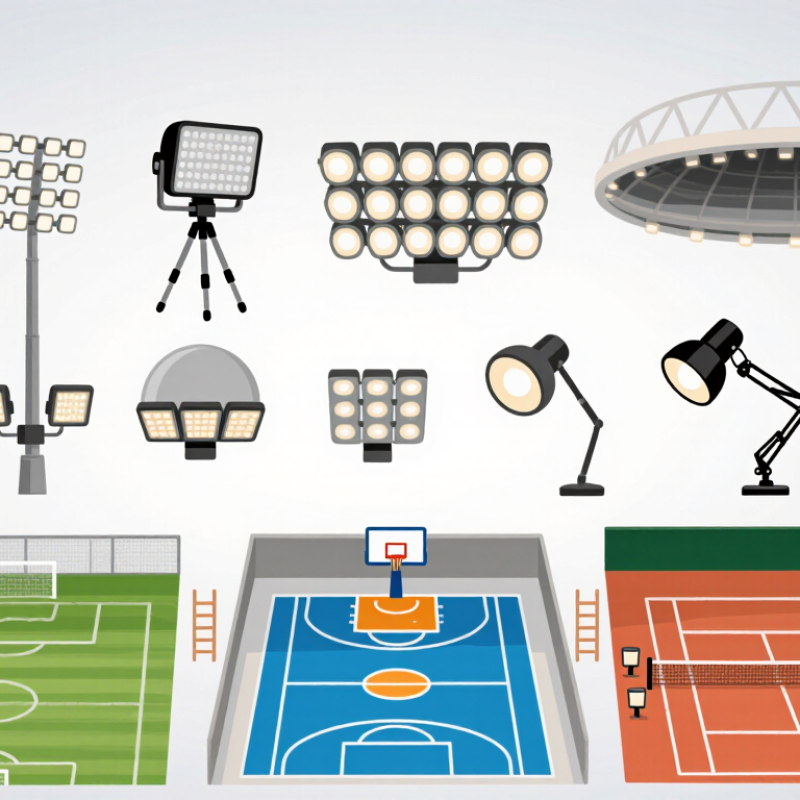
A football field, tennis court, and indoor gym each need different coverage. Outdoor area systems illuminate broad playing surfaces, while arena systems are designed for enclosed venues. High-mast floodlights can cover large fields from perimeter poles. Linear high-bays are common in indoor halls. The labels overlap, and that can confuse buyers.
Buyers can compare narrow, medium, and wide beam patterns. Narrow beams reach distant zones, but poor aiming may create glare or bright patches. Wide beams spread light nearby, although more fixtures may be needed for even coverage. Wall-mounted luminaires can suit smaller spaces, but surrounding structures may cast shadows.
A fixture name alone does not prove performance. Check maintained illuminance, uniformity, glare control, and photometric files for the actual layout. A tidy category chart can still hide a weak design.
Tips
Match the beam to pole height and field dimensions. Ask for a site-specific lighting plan, then review dark corners and player sightlines. If possible, inspect a comparable installation at night. On paper, everything can look even.
Ten Common Sports Lighting Types and Their Typical Applications
Sports venues use several lighting types, and the right choice depends on play area, ceiling height, and viewing needs. LED floodlights suit outdoor football and rugby fields, where careful aiming helps limit glare beyond the boundary. Metal-halide lamps still appear in older stadiums; they produce strong light but take time to warm up. High-mast systems serve large arenas and open event grounds, spreading light from tall structures.
Pole-mounted lights are common on community fields and smaller courts. Indoor high-bay fixtures work well in sports halls with high ceilings, such as basketball or badminton venues.
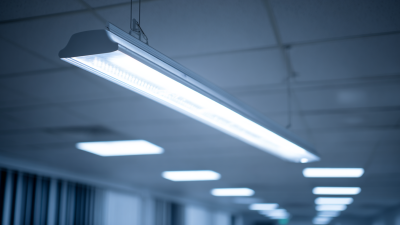
Linear court lights can provide even illumination in gyms, though poor placement may create distracting bright strips. Uniformity matters.
Tennis-court lighting uses controlled beams to illuminate the playing surface while reducing spill toward nearby homes. Stadium bowl lighting is designed for large football venues and televised events, where vertical light helps cameras capture players clearly.
Pool lighting uses sealed, moisture-resistant fixtures around aquatic facilities; glare on water still needs attention. Track lighting covers running lanes and field-event zones, supporting clear visibility during evening training.
These categories overlap in real projects. I would not treat this as a perfect ranking: roof shape, mounting height, and maintenance access can change the practical choice.
Key Performance Differences Among Sports Lighting Options
Sports-lighting choices differ most in beam control, warm-up time, colour rendering, and maintenance.
LED floodlights switch on instantly and allow precise aiming; linear LEDs suit indoor courts, while portable LED towers serve temporary fields. The U.S. Department of Energy’s 2022 SSL R&D Opportunities report discusses LED package efficacy above 200 lumens per watt, but complete fixtures deliver less after driver and optical losses. Metal-halide lamps can provide strong colour quality, yet need warm-up time and gradual restriking. High-pressure sodium is efficient, but its amber cast can distort ball and uniform colours. Fluorescent and induction systems fit some indoor or low-bay applications, though their output and control options vary. Ceramic metal-halide, halogen, plasma, and hybrid systems remain niche choices with distinct costs and operating trade-offs. Uniformity matters.
IES RP-6-22 treats sports-lighting performance by activity and viewing conditions, rather than relying on wattage alone. Buyers should compare maintained illuminance, uniformity, glare, colour rendering, and spill light using project-specific calculations. A bright centre circle can still leave dark corners. That mismatch affects player tracking and broadcast images. LED optics often reduce wasted light, but poor aiming can still send glare toward spectators or nearby homes. Legacy metal-halide systems may require lamp replacement and more frequent checks; LEDs still need driver and thermal inspections. Field experience also complicates neat comparisons: a low-cost fixture can perform poorly when mounted too high or aimed badly. Measure the actual site. Include controls, mounting height, cleaning intervals, and replacement access in the bid comparison.
Installation, Controls, and Maintenance Considerations
For buyers comparing floodlights, high-mast, linear, or portable sports lights, installation details can change the result. Check pole height, mounting capacity, wind exposure, and access for maintenance before choosing fixtures. Aiming matters: a small tilt can send light beyond the court, create glare, or leave dark patches near the sidelines. The U.S. Department of Energy’s 2020 U.S. Lighting Market Characterization estimated that LEDs made up 48% of installed U.S. lighting stock. That shift makes dimming and scheduled controls practical options, but compatibility still needs verification.
Tips: Ask for a lighting layout and aiming plan before installation. Confirm that drivers, photocells, timers, and control systems work together. Label circuits clearly. Keep a record of aiming angles and control settings; crews will thank you later. Test at full output and at each programmed level. Small checks matter.
For maintenance, inspect lenses, seals, brackets, and wiring during scheduled site visits. Dust, moisture, and vibration can gradually reduce performance or loosen hardware. Clean fixtures only as the manufacturer recommends, and isolate power before service. Keep spare drivers or surge protection components where replacement delays are costly. A tidy commissioning sheet can still miss real-use problems, so review glare and uniformity with players or facility staff after the first evening sessions.