

7 Best Threaded Linear Shaft Suppliers Worldwide?

Choosing among the 7 Best Threaded Linear Shaft Suppliers Worldwide requires more than comparing catalog prices. A Threaded Linear Shaft must tolerate load, rotation, contamination, and repeated positioning without excessive backlash. In real workshops, a poorly matched shaft can create vibration, uneven travel, and premature nut wear. Small dimensional errors become visible when a carriage moves only a few millimeters.

Industry reports support this demand. MarketsandMarkets’ Linear Motion Market analysis identifies factory automation, robotics, and material-handling equipment as major growth drivers. Grand View Research also links industrial automation expansion with rising demand for precision motion components. These reports indicate a healthy market, but they do not prove that every supplier offers equal quality. That distinction matters.

Alexander Slocum, an MIT authority in precision engineering, states, “The machine tool is a system.” His principle applies directly here. Shaft material, thread profile, straightness, surface finish, lubrication, and nut design must work together. A supplier with impressive tolerances may still disappoint if packaging or technical support is weak. That is often overlooked.

This guide examines global suppliers through practical criteria: manufacturing consistency, material traceability, custom sizing, delivery capability, and application support. It considers stainless steel and hardened steel options, including shafts used in dusty production lines and compact laboratory equipment. No ranking is perfect. Buyer requirements differ. Still, a careful comparison can reduce costly trial and error.
7 Best Threaded Linear Shaft Suppliers Worldwide?

What Are Threaded Linear Shafts and How Do They Work?

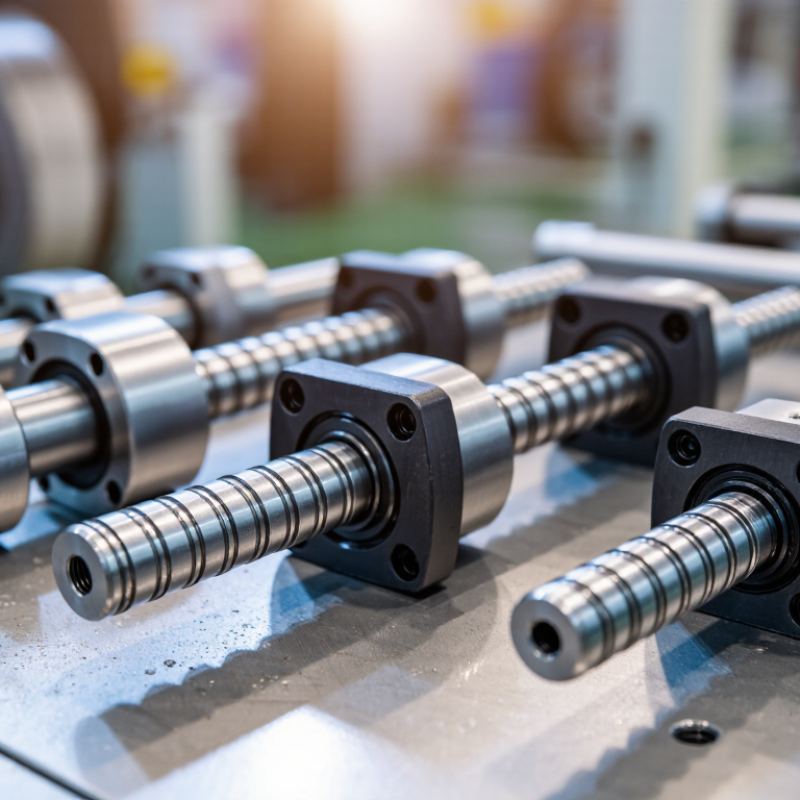
Threaded linear shafts combine a precision shaft with external threads, allowing controlled linear movement. Unlike smooth shafts, they can transmit motion while guiding a load. A matching nut travels along the threaded surface when the shaft rotates. The connected platform then moves forward or backward.

The mechanism is simple. Alignment is not.

For example, a motor turns the shaft through a coupling. The nut cannot rotate freely, so it advances along the thread. Thread pitch determines travel distance per revolution. A fine pitch improves positioning, while a coarse pitch can move loads faster. Lubrication, preload, and surface hardness also affect service life.

In practical equipment, I check shaft straightness before installation. Even a slight bend can create vibration, noise, and uneven wear. I also inspect thread form, diameter tolerance, and end machining. These details matter when comparing worldwide suppliers. A polished surface alone does not prove accuracy.

One overlooked issue is contamination. Dust can enter the nut and damage the contact surfaces. Protective covers and suitable seals often prevent premature failure. Heat can matter too. Continuous rotation may expand the shaft and change positioning accuracy. I once treated thermal growth as negligible; that assumption needed correction.

Reliable suppliers should provide material certificates, dimensional reports, load data, and clear inspection standards. Sample testing remains wise, especially for custom lengths or unusual thread profiles. A drawing may look correct, yet the assembled shaft can reveal stiffness or alignment problems. That is why engineering review should include the actual operating speed, load direction, duty cycle, and installation environment.

Key Factors for Evaluating Global Threaded Linear Shaft Suppliers

7 Best Threaded Linear Shaft Suppliers Worldwide?

Key Factors for Evaluating Global Threaded Linear Shaft Suppliers

Global automation demand is rising. The International Federation of Robotics reported 541,302 industrial robot installations in 2023. This growth increases demand for accurate threaded linear shafts in guided motion systems. However, supplier selection should examine evidence, not attractive catalogs.

Start with dimensional control. Ask for shaft diameter tolerance, straightness, thread accuracy, runout, hardness, and surface roughness data. ISO 286-1 provides a useful framework for tolerance grades. A supplier should also provide material certificates and batch traceability. ISO 9001 certification supports process consistency, but it does not prove every shaft meets your drawing. That distinction matters.

Check production experience with your actual application. A shaft for a clean packaging line differs from one exposed to dust, moisture, or repeated shock. Request sample inspection reports, thread-gauge results, coating thickness, and fatigue-test details when relevant. Review packaging methods too. A precision shaft can arrive bent after poor export protection. Delivery performance deserves measurable records, such as on-time rates and replacement response times. A weighted scorecard can compare seven suppliers fairly: quality evidence, engineering support, lead time, capacity, documentation, total cost, and risk. No scorecard is perfect. I would still verify one production batch before approving a long-term contract.

Seven Leading Threaded Linear Shaft Suppliers Worldwide

Seven leading threaded linear shaft suppliers worldwide are distinguished by engineering depth, production consistency, and practical support. A German precision manufacturer often serves robotics and laboratory equipment, with tight thread tolerances and detailed inspection reports. A Japanese motion specialist may excel in quiet operation, hardened steel, and repeatable travel. A United States custom machining supplier is valuable when drawings change frequently or unusual shaft lengths are required.

A Swiss producer typically focuses on clean manufacturing and demanding medical or measurement applications. A high-volume Chinese exporter can offer competitive pricing, broad diameters, and flexible batch sizes, but inspection records deserve close attention. An Italian automation supplier may combine shafts with nuts, guides, and coordinated motion assemblies. An Indian industrial manufacturer can provide strong customization for heavy equipment, especially when corrosion-resistant materials are specified.

Material selection remains practical, not decorative. Stainless steel suits humid workshops, while alloy steel supports higher loads after suitable heat treatment. Ask each supplier about lead accuracy, straightness, surface finish, thread profile, and packaging protection. Samples should be checked with gauges before production approval. Small details matter.

No supplier is perfect. A low quoted price may hide slower communication or inconsistent finishing. Even experienced buyers can overlook lubrication compatibility. That mistake can create noise, wear, and unplanned maintenance. Reliable suppliers explain limitations clearly and provide traceable inspection data. Their advice should match the shaft’s actual load, speed, environment, and duty cycle.

Comparing Product Quality, Customization, Pricing, and Delivery

Selecting the seven best threaded linear shaft suppliers requires more than comparing catalog prices. Quality starts with material traceability, thread accuracy, surface hardness, straightness, and measured runout. ISO 286-2 tolerance principles offer a useful benchmark for fit and dimensional control. MarketsandMarkets reports that the global linear motion market may reach about USD 17 billion by 2028. That growth increases supplier choice, but not necessarily supplier reliability.

Customization separates capable manufacturers from resellers. Ask whether they can adjust shaft diameter, thread pitch, length, coating, end machining, and inspection documents. A practical specification should include drawings, load conditions, operating speed, and corrosion exposure. Custom work usually costs more. It can reduce assembly changes and field failures. However, vague drawings create expensive revisions. I have seen “standard” parts become custom orders after inspection.

Pricing should include tooling, packaging, freight, taxes, and replacement risk. Grand View Research identifies automation and industrial equipment as major linear motion demand drivers, supporting continued price pressure and capacity competition. Delivery deserves equal attention. Request production lead time, sample approval time, shipping method, and backup capacity in writing. A supplier promising seven days may actually need three weeks. That difference matters. Compare defect rates, response time, and warranty handling beside the quoted price. The cheapest offer is often only the cheapest spreadsheet number.

7 Best Threaded Linear Shaft Suppliers Worldwide: Key Comparison Priorities

This neutral sourcing framework assigns a 100-point evaluation model to the factors most relevant when comparing threaded linear shaft suppliers: product quality, customization capability, delivery reliability, and total pricing. Quality receives the highest weighting because dimensional accuracy, material consistency, surface finish, and repeatability directly affect system performance.

How to Select the Right Supplier for Your Application

Selecting among the best threaded linear shaft suppliers worldwide requires more than comparing prices. Your application defines the right choice. Check shaft diameter, thread profile, usable length, surface finish, and material grade. A shaft for a clean packaging machine may need corrosion resistance, while a workshop fixture may prioritize strength and easy machining.

Ask suppliers for measurable evidence. Request dimensional tolerances, hardness data, coating details, and inspection records. Reliable suppliers should explain how they control straightness and thread accuracy during production. Sample parts can reveal problems that catalogs hide, such as rough thread edges or inconsistent plating. Measure them with a thread gauge and micrometer before approving a larger order.

Do not ignore technical support. A knowledgeable supplier can review load direction, travel speed, vibration, and operating temperature. They should also clarify lead times, packaging methods, replacement policies, and export documentation.

I have found that fast replies do not always mean strong engineering. That assumption deserves scrutiny. A cheaper shaft can create costly alignment work later. Still, premium specifications may be unnecessary for a lightly loaded manual assembly. Match evidence to actual risk, and record every requirement before requesting quotations.

Skip to content