

Best Touch Power Switch Manufacturers in China

Touch controls are now common in lighting, appliances, and smart-home panels. A Touch Power Switch can offer a smooth surface, clear status lighting, and simple operation. One light tap. Yet a polished sample does not reveal everything. Buyers also need to consider response consistency, electrical ratings, installation conditions, and performance after repeated use.

China has a broad base of manufacturers, from specialist switch makers to larger electronics suppliers. Their products can differ in sensing methods, materials, available finishes, and customization options. A useful comparison looks beyond catalog photos. Ask for current technical specifications, sample units, quality-control details, and clear explanations of supported loads. Then test the switch in a realistic setup, including the intended panel material and operating environment. Small differences matter.

This guide introduces manufacturers and practical checks for evaluating them. It focuses on product capability, production experience, communication, and evidence that buyers can verify. No supplier is ideal for every project. Some may offer strong customization but limited documentation; others may provide detailed records with fewer design choices. That trade-off deserves a closer look. Readers should confirm claims directly and review samples before making decisions. A careful selection process can help reduce avoidable surprises, though it cannot replace project-specific testing.
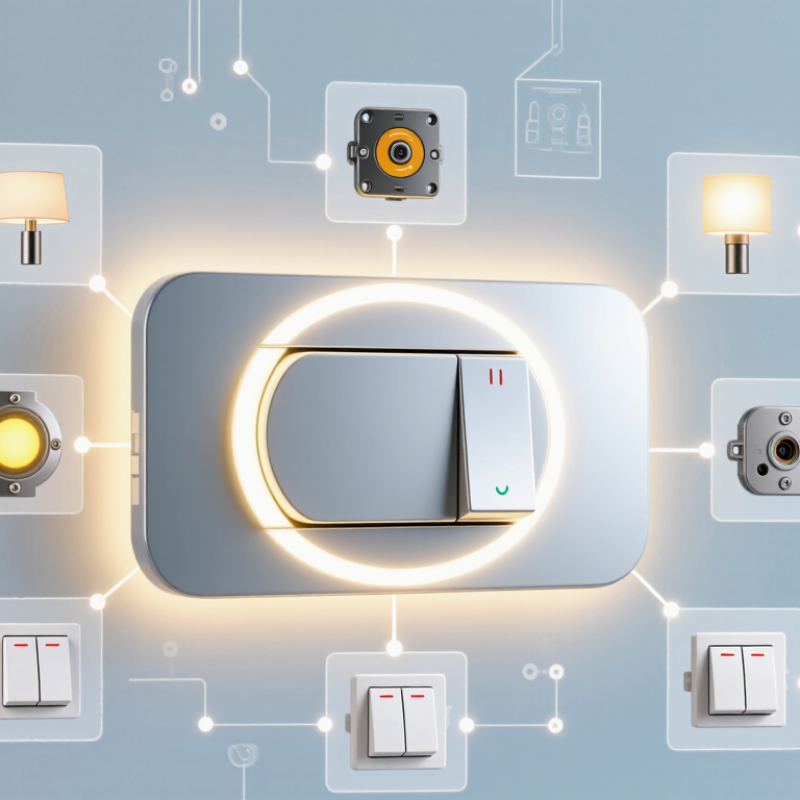
Best Touch Power Switch Manufacturers in China

What Touch Power Switches Are and How They Work

A touch power switch detects a finger rather than relying on a moving mechanical button. Most wall-mounted models use capacitive sensing: a fingertip changes the electrical field beneath a glass or plastic panel. The circuit measures that change and sends a signal to a controller. The controller then operates a relay or semiconductor switch to turn the connected load on or off. The signal is tiny. Filters help separate a real touch from electrical noise, moisture, or nearby wiring. In production, sensor sensitivity and panel thickness need careful calibration; even small differences can affect response.

The IEA’s 2023 Tracking Clean Energy Progress report estimates that buildings account for about 30% of global final energy consumption and 26% of energy-related emissions. That figure describes buildings overall, not savings from touch switches. A touch control alone does not reduce power use; efficient lighting and deliberate switching habits matter too. Installers should check the switch’s rated load and wiring requirements, especially with low-wattage LED lamps, which may flicker if a circuit is poorly matched. There is a trade-off: smooth glass surfaces are easy to clean, but wet fingers or incorrect installation can make touch response less predictable.

Main Types and Applications of Touch Power Switches

Best Touch Power Switch Manufacturers in China

Main Types and Applications of Touch Power Switches

Touch power switches generally use capacitive sensing, resistive sensing, or integrated dimming controls. Capacitive models detect a finger’s change in electrical charge and suit smooth glass panels in homes, hotels, and offices. Resistive designs respond to pressure, which can be useful on control panels where users wear gloves. Multi-function touch switches combine on/off control with dimming or scene selection. Small detail: panel feel matters.

Applications range from bedside lighting to meeting-room controls and corridor lights. The International Energy Agency’s Tracking Buildings 2023 report estimates that buildings use about 30% of global final energy and account for 26% of energy-related emissions. Controls can help manage lighting, but a touch switch alone does not guarantee energy savings. For commercial projects, check compatibility with LED drivers, standby power, and the installation environment. One limitation deserves attention: wet fingers or gloves may reduce touch responsiveness. That can be inconvenient in kitchens or care settings, so the right switch depends on how people actually use the space.

How Chinese Manufacturers Design and Produce Touch Switches

Chinese manufacturers typically begin touch-switch development by matching the design to its installation environment. A kitchen panel may need a wipe-clean surface, while a bedroom control may prioritize a dim status light. Engineers choose glass or plastic panels, then test how thickness affects touch sensitivity. Small differences matter.

The sensing circuit and control board are developed around the selected panel. Engineers adjust electrode layout, threshold settings, and indicator brightness to reduce missed touches and accidental activation. Prototype units are tested with dry and slightly damp fingers. If performance varies, the team may revise the circuit or panel spacing. That can mean another prototype, not just a software tweak.

Production usually combines automated board assembly with hands-on inspection. Technicians check solder joints, button response, and light consistency before switches move to aging tests. Samples may also be tested for heat, humidity, and repeated operation, according to the product’s intended use. A practical detail is the final fit: a panel that sits unevenly can feel less responsive. Even experienced teams sometimes discover that late. Clear test records and traceable component batches help buyers evaluate quality beyond a polished sample.

Best Touch Power Switch Manufacturers in China - How Chinese Manufacturers Design and Produce Touch Switches

Design or Production Area Common Approach What Buyers Should Check
Touch sensing Many touch switches use capacitive sensing: a controller detects a change in capacitance when a finger approaches or touches the sensor area. Ask about sensing distance, sensitivity adjustment, false-trigger resistance, and performance with the intended cover material and thickness.
Switching element Depending on the circuit and load, a design may use a relay or a semiconductor switching device such as a triac or MOSFET. Confirm compatibility with the load type, including LED drivers, motors, and other loads with inrush current; check rated voltage and current for the exact model.
Power supply and isolation The control circuit may be powered by an isolated or non-isolated supply. The appropriate architecture depends on the product design and safety requirements. Request the circuit’s safety design information, insulation ratings, and test documentation applicable to the intended market and installation.
PCB design The printed circuit board combines the touch-sensing area, control electronics, power circuitry, and switching components. Layout choices affect sensing and electrical performance. Check creepage and clearance, grounding, component quality, thermal design, and whether the production version has been tested in its final enclosure.
Cover and enclosure materials Glass, plastic, and other insulating panels can be used as touch surfaces when the sensor is designed for the selected material and thickness. Confirm material specifications, surface finish, panel thickness, cut-out dimensions, and sensor operation across production tolerances.
Firmware and user feedback Controller settings can define touch thresholds, debounce behavior, and functions such as toggle or momentary operation. Indicators may use LEDs or other display elements. Specify the desired operating logic, indicator behavior, startup state, and response to power interruption before approving a sample.
Electrical and EMC testing Product verification can include functional, dielectric-strength, temperature-rise, and electromagnetic-compatibility tests, as applicable to the design and market. Request test reports for the relevant model and configuration. A certificate or report should be checked against its scope, standard, and issuing body.
Assembly and inspection Typical production steps include PCB assembly, enclosure assembly, programming where required, and functional inspection of finished units. Ask how incoming components, solder joints, touch response, switching operation, and final appearance are inspected and recorded.
Customization and production readiness Customization may involve the panel, dimensions, wiring, indicator layout, control logic, or packaging. Changes can require engineering review and additional validation. Agree on drawings, bill of materials, sample approval, change control, minimum order quantity, lead time, and acceptance criteria before mass production.

Note: These are common design and manufacturing considerations, not specifications for every touch switch. Ratings, certifications, and test requirements depend on the specific model and target market.

Criteria for Evaluating Touch Power Switch Manufacturers in China

When evaluating touch power switch manufacturers in China, ask for test records, not just a polished sample. The Ministry of Industry and Information Technology reported that China’s electronic information manufacturing sector grew 3.4% in value added in 2023, while operating revenue fell 1.5%. This describes a large, changing supply base; it does not prove any individual factory’s quality. Ask for the production site, component traceability, and inspection records for the exact model you plan to buy. Small details matter.

Test the switch with your actual panel material and thickness. A glass sample can respond differently from coated acrylic, especially with damp fingers or gloves. Request response-time and false-trigger results, plus endurance data under the rated electrical load. Ask whether electrostatic-discharge testing follows IEC 61000-4-2, and request the test level and pass criteria. Ask for raw logs. A certificate alone rarely shows how the product behaves after repeated use.

Then review process control: incoming-part checks, calibration records, batch identification, and a clear method for handling failures. Run a pilot batch before approving volume orders, and test units at both low and high supply voltage. I would still inspect the first shipment myself; paperwork can miss a loose connector or uneven touch response. No single score captures every installation, so compare evidence against your panel, wiring, and operating conditions.

Criteria for Evaluating Touch Power Switch Manufacturers in China

Suggested evaluation weights (%) for comparing manufacturers of touch power switches.

Use these criteria as a screening framework. The percentages are suggested priorities, not measured market data or ratings of specific manufacturers.

Leading Chinese Manufacturers and Their Product Specialties

China’s touch power switch manufacturers often focus on distinct product needs rather than one universal design. Some specialize in capacitive wall switches, with glass panels, low-profile housings, and touch zones sized for common room layouts. Others develop switches for lamps and small appliances, where compact boards and clear status indicators matter more than a large faceplate. The details show.

Manufacturers serving connected-home projects may offer switches that support remote control, scheduling, or integration with selected control systems. Buyers should verify compatibility in writing; similar-looking products can use different communication standards. For commercial spaces, suppliers may prioritize durable touch surfaces, stable operation, and consistent behavior across multiple switch points. Ask for test data, wiring diagrams, and samples before approving a large order. A sample can still mislead if it comes from a different production batch. That happens.

Product specialties also differ in customization. Some factories can adjust panel dimensions, icons, finish, or packaging, while others are stronger in standardized models and repeatable production. Request details about component sourcing, quality checks, operating temperature, and after-sales support. A polished showroom panel is useful, but it does not prove long-term reliability. I would compare actual installation conditions, especially wall-box depth and load type, before choosing a supplier.

Skip to content