

Top 10 Tube End Forming Machine Manufacturers in China

China’s manufacturing scale makes it an important sourcing base for tube-processing equipment. The World Steel Association’s World Steel in Figures 2025 reports that China produced about 1,005 million tonnes of crude steel in 2024. That figure does not measure demand for tube end forming directly. It does, however, show the industrial context behind a large supplier ecosystem. Tube End Forming Machines serve automotive, furniture, HVAC, and general engineering production, where consistent flares, reductions, beads, and expansions matter. Small defects can disrupt assembly. A clean-looking sample is not enough.

This guide to the Top 10 Tube End Forming Machine Manufacturers in China focuses on practical comparison, not an unsupported claim that one factory suits every buyer. It considers forming methods, material range, tooling options, automation, service, and the clarity of technical documentation. Buyers should ask for sample trials using their actual tube diameter, wall thickness, and material. Watch how the machine handles setup changes, not only its best demonstration run. Ask about repeatability and spare-part lead times, too. Some suppliers publish detailed specifications; others require direct confirmation. That gap deserves attention. Factory visits, reference checks, and written acceptance criteria can reduce uncertainty, though they cannot remove it completely. A machine is only as dependable as its process, tooling, and support.
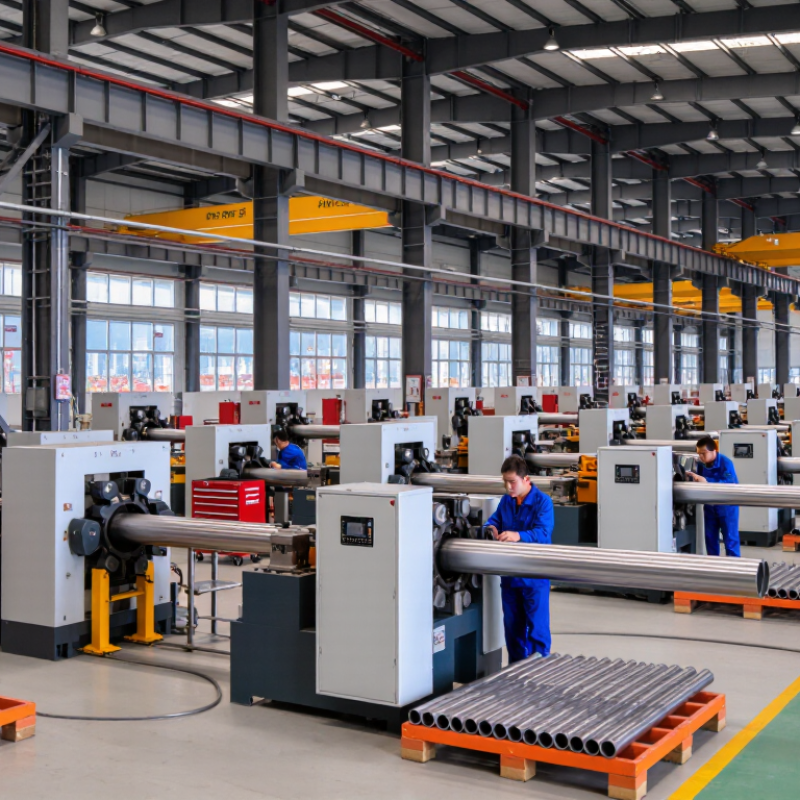
Top 10 Tube End Forming Machine Manufacturers in China

Tube End Forming Machines: Processes, Tube Sizes, and End Profiles

Tube end forming machines reshape an open tube end through pressure, rotation, or axial movement. Common processes include flaring, reducing, expanding, beading, and flanging. Each creates a different connection or edge profile. A flared copper tube, for example, can seat against a fitting, while a reduced steel end may ease insertion. When comparing manufacturers in China, ask about tooling changes, sample testing, and repeatability across production runs.

Tube diameter and wall thickness both affect machine selection. A model’s stated capacity may depend on material, tooling, and the forming process. Confirm the actual tube range with your own specifications. End profiles also need clear drawings, including dimensions and tolerances. A smooth bead and a sharp flange are not interchangeable. Catalog ranges can look impressive, but they do not prove a machine will handle your exact tube reliably.

Tips: Share tube material, diameter, wall thickness, and target profile before requesting a quote. Ask for a formed sample. Small setup details can change the result. Check for wrinkles, cracks, and uneven edges under good lighting. One overlooked tolerance can mean rework.

How Hydraulic, Pneumatic, and CNC Systems Form Tube Ends

Hydraulic, pneumatic, and CNC systems shape tube ends in different ways. Hydraulic machines deliver high force for flaring, beading, and thick-wall tubes. Their steady pressure helps control deformation, but poorly set tooling can still wrinkle a thin edge. Pneumatic systems cycle quickly and suit lighter, repeatable operations. They are less suited to heavy forming, where force stability matters.

The uneasy part: speed is not quality.

CNC systems coordinate feed, rotation, and tool movement, making complex profiles easier to repeat across batches. They also need accurate tube data and careful setup; a precise program cannot correct a badly measured blank. The U.S. Department of Energy’s compressed-air sourcebook estimates that compressed air uses about 10% of U.S. industrial electricity, though plant figures vary. That makes air leaks and idle cycles worth checking on pneumatic lines. The International Federation of Robotics reported 541,302 industrial robot installations worldwide in 2023, including 276,288 in China. This is a broad automation indicator, not a tube-forming-machine count.

For buyers comparing Chinese manufacturers, ask for sample parts, changeover time, and measured end dimensions under production conditions. A polished cycle display tells only part of the story.

Key Technical Data: Tube OD, Wall Thickness, Force, Tolerance, and Cycle Time

Top 10 Tube End Forming Machine Manufacturers in China

A useful comparison starts with the tube’s actual dimensions, not a machine’s headline capacity. Check the supported outside-diameter range and wall thickness for each forming process. A machine that handles a 50 mm tube may not form a thin-walled part cleanly. Ask suppliers to state material, tooling, and end-form type alongside their limits.

Force matters, but a larger rating alone does not guarantee better parts. Request the available forming force in kN and confirm it suits the tube material and operation. For tolerance, clarify whether the figure applies to end diameter, length, or concentricity. Measure sample parts with suitable gauges. Small differences count. A quoted tolerance without test conditions is hard to compare.

Cycle time should describe a complete, repeatable production step, including clamping and tool return. Ask whether loading and unloading are included. For example, request a timed trial using your tube size, wall thickness, and forming profile. Record the output and inspect for wrinkles, cracks, or uneven edges. Specifications can look neat on paper; actual results may vary with tooling setup and operator handling. That gap deserves attention.

Top 10 Chinese Manufacturers: Product Ranges, Capacity, and Applications

Chinese tube end forming machine manufacturers generally offer hydraulic, pneumatic, and servo-driven models. Common operations include expanding, reducing, flaring, beading, and shaping tube ends. Some suppliers focus on compact single-station machines, while others build multi-station lines with automatic feeding and tooling changes. Options vary widely.

Capacity depends on tube diameter, wall thickness, material, and forming method—not just the machine’s advertised tonnage. A buyer should ask for sample tests using the actual tube specification. For example, thin stainless-steel tubing may wrinkle if the tooling or feed rate is poorly matched. Published capacity figures can be incomplete, so request operating ranges and cycle-time details.

These machines serve automotive exhaust and fluid lines, HVAC components, bicycle frames, furniture, and construction equipment. A small workshop may need a manual loader and quick-change dies; a high-volume plant may value robotic handling and repeatable controls. Check tooling availability, maintenance support, and safety features alongside purchase price. One limitation: product catalogs rarely show every material’s real forming behavior. Practical trials still matter.

Industry Standards and Selection Criteria for Comparing Machine Suppliers

Comparing tube end forming machine suppliers requires more than checking maximum tube diameter. Buyers should examine forming range, wall-thickness limits, tool-change time, and repeatability across production batches. Ask for test parts made from your actual tube material. Inspect the flare or bead with calipers, and check for cracks, wrinkles, or uneven edges. Small defects matter.

Supplier documentation should state machine capacity, operating conditions, maintenance intervals, and applicable electrical and machine-safety standards for the intended market. Confirm that quoted performance matches the configuration being offered, including tooling and control options. A machine may meet a published cycle-time figure under ideal conditions, yet perform differently with frequent changeovers or thicker tubing. That gap is worth discussing.

Evaluate service response, spare-part availability, operator training, and warranty terms alongside purchase price. Request references from users with similar tube sizes and production volumes, then ask what required adjustment after installation. A polished demonstration is useful, but it cannot reveal every shop-floor issue. Even a detailed checklist has limits; supplier claims still need practical verification. A supervised acceptance run, using agreed sample parts and measurable tolerances, gives both sides clearer evidence before delivery.

Top 10 Tube End Forming Machine Manufacturers in China - Industry Standards and Selection Criteria for Comparing Machine Suppliers

Supplier comparison framework: the entries below describe verifiable selection criteria, not ranked companies or supplier-specific performance claims. Confirm the applicable standards, machine configuration, and acceptance limits for your project.

No. Comparison Dimension What to Request and Compare Useful Standard or Verification Reference
1 Tube and material range Obtain the machine’s documented minimum and maximum tube outside diameter, wall thickness, material range, and end-forming operations. Check these against the actual workpiece drawings and material grades. Review the technical specification and run a forming trial using the buyer’s tube material. Capacity depends on machine design, tooling, material, and operation.
2 Supported forming processes Confirm whether the proposed configuration supports the required processes, such as tube end expansion, reduction, flaring, beading, or swaging, and whether operations can be combined in one cycle. Verify with process-specific samples, tooling drawings, and a written description of the forming sequence.
3 Forming quality and repeatability Agree measurable acceptance limits for finished geometry, cracks, wrinkles, wall thinning, and repeatability. Ask for inspection results from repeated parts made with the specified material and tooling. Use the buyer’s part drawings and inspection plan. Set tolerances for the application; do not assume one universal tolerance for all tube end-forming machines.
4 Cycle time and production rate Request cycle-time results for the complete agreed sequence, including loading, clamping, forming, unloading, and any required part handling. State whether the quoted time is measured or estimated. Witness a production-representative acceptance test and record the test conditions, operator involvement, and number of consecutive parts.
5 Tooling and changeover Compare tooling scope, material, interchangeability, setup method, changeover time, and availability of replacement or custom tooling. Clarify which tooling is included in the machine quotation. Check tooling drawings and perform a witnessed changeover between representative tube sizes or part numbers.
6 Controls and operating functions Review the control architecture, operating modes, recipe or parameter storage, fault messages, language options, and access controls. Confirm which functions are standard and which are optional. Request electrical and control documentation, a demonstration of operating modes, and confirmation of the applicable safety-related control requirements.
7 Machine safety and risk reduction Check guarding, interlocks, emergency stops, safe operating procedures, residual-risk information, and the documented risk assessment for the delivered configuration. ISO 12100 (risk assessment and risk reduction) and ISO 13849-1 (safety-related parts of control systems); confirm the editions and requirements applicable to the destination market.
8 Electrical and fluid-power documentation Request electrical schematics, component lists, maintenance instructions, and hydraulic or pneumatic diagrams where applicable. Confirm supply voltage, connection requirements, and included components. IEC 60204-1 for electrical equipment of machinery; ISO 4413 for hydraulic fluid power; ISO 4414 for pneumatic fluid power. Applicability depends on machine design and market.
9 Quality management and acceptance testing Ask for the supplier’s quality-management documentation, inspection records, and a written factory acceptance test covering safety functions, machine operation, and agreed part-quality criteria. ISO 9001 is a quality-management-system standard, not a guarantee of a particular machine’s performance. Verify certificate scope and validity independently.
10 Service, spare parts, and total cost Compare warranty terms, remote and on-site support, response arrangements, training, recommended spare parts, delivery scope, installation costs, and expected maintenance requirements. Request a written service and spare-parts plan with clearly defined exclusions, lead times, and responsibilities for installation and commissioning.

Standards and conformity requirements can vary by machine configuration and destination market. Confirm the current applicable editions and legal requirements with the relevant competent bodies before purchase.

Skip to content