

A Tubular Heater is an electric heating element built around a resistance wire inside a metal sheath. Electrical insulation, often compacted magnesium oxide, separates the wire from the sheath and helps transfer heat outward. The finished element may be straight, bent, or shaped to fit specific equipment. That shape is practical. Yet performance depends on more than appearance. Sheath material, watt density, operating temperature, and contact with the heated surface all affect how well an element works. A heater chosen without these details may warm unevenly, consume energy inefficiently, or fail sooner than expected.
Available types include straight and formed elements, finned heaters for air movement, and immersion heaters designed to heat liquids. Circulation heaters warm fluids as they pass through a heated chamber. Finned models are commonly used in ducts and equipment where air needs to move across the element. Immersion styles sit in tanks or other suitable vessels. Different jobs. Different designs. This guide explains how tubular heaters generate and transfer heat, compares common configurations, and outlines the factors to check before selecting one. Dimensions, voltage, fluid compatibility, and temperature controls deserve attention. They can be easy to overlook. No single heater suits every installation, and product specifications should be checked against the actual operating conditions. A careful comparison makes the available options clearer.
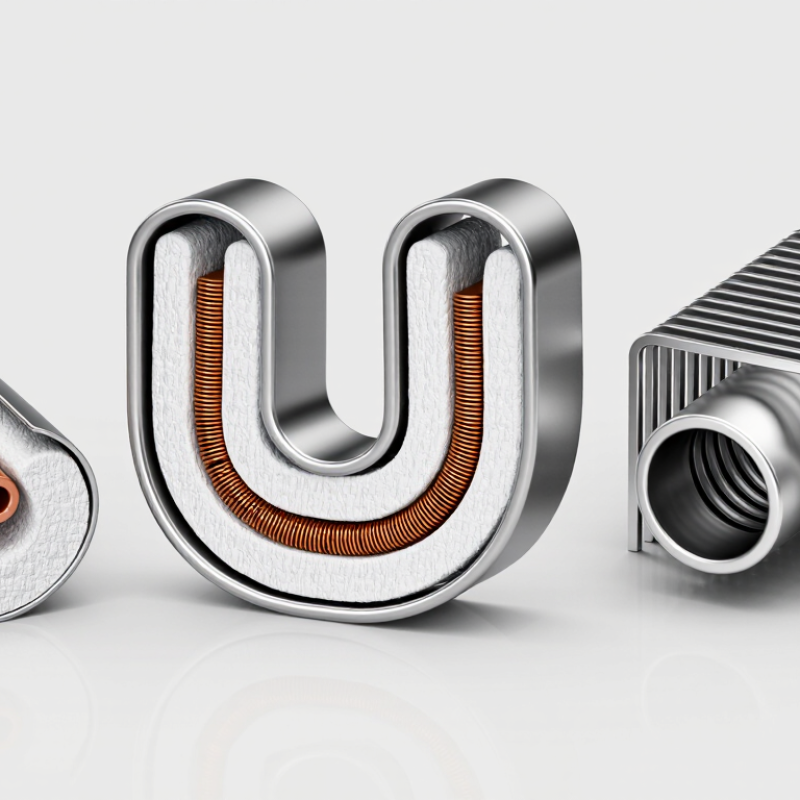
A tubular heater is an electrical resistance element housed inside a sealed metal tube. Its core is a coiled resistance wire, commonly nickel-chromium, surrounded by compacted magnesium oxide insulation. The insulation electrically separates the coil from the sheath while conducting heat outward. End seals, terminals, and mounting fittings complete the assembly. Small details matter. Sheath material depends on the operating environment, while coil spacing and heater length influence heat distribution. A heater fitted tightly into a metal block transfers heat differently from one warming moving air.
The U.S. Department of Energy’s 2008 Improving Process Heating System Performance: A Sourcebook for Industry estimates that process heating accounts for about 36% of energy use in U.S. manufacturing. That figure describes process heating broadly, not tubular heaters alone. It helps explain why correct sizing and installation matter. IEC 60519-1:2020 sets general safety requirements for industrial electroheating installations, including considerations relevant to system design. In practice, watt density, airflow, fluid movement, and contact with the heated surface all affect performance. A hot spot may come from poor fit, not a faulty element. There is no single ideal construction for every job, and specifications deserve careful review.
A tubular heater turns electrical energy into heat through resistance. Inside its metal sheath, a coiled resistance wire carries current and warms as electrons encounter resistance. This is Joule heating. The wire does not usually touch the sheath directly. Compressed magnesium oxide surrounds it, helping conduct heat outward while keeping the electrical parts insulated.
Heat then travels through the sheath to the material being warmed. In a water tank, moving water carries heat away from the tube. In an oven, the surrounding air and nearby surfaces absorb it. You can feel the difference. A heater pressed firmly against a metal plate transfers heat more effectively than one with poor contact. Small gaps matter.
The sheath material, wattage, shape, and operating conditions all affect performance. A heater running in liquid may behave differently from one exposed to still air. Deposits or inadequate fluid coverage can slow heat transfer and create hot spots, so correct sizing and installation are important. A thermostat may control temperature, but it is not part of every tubular heater. Simple in principle. Not foolproof. Actual surface temperatures can also differ from the setpoint, a detail worth checking during design and testing.
Common tubular heaters use a resistance wire inside a metal sheath, with insulation filling the space between them. Straight elements suit ovens, platens, and compact equipment. Finned versions expose more surface area to moving air, making them useful in ducts and air-handling systems. Immersion types transfer heat directly to liquids in tanks. Circulation heaters use tubular elements inside a vessel or flow chamber to warm moving fluids.
These forms are not interchangeable. A U-shaped element may fit a tank, while a finned heater needs airflow to prevent overheating. The U.S. Department of Energy’s 2008 report, Improving Process Heating System Performance: A Sourcebook for Industry, estimates that process heating accounts for about 36% of manufacturing energy use. That figure covers process heating broadly, not tubular heaters alone. It is useful context, but heater efficiency depends on the equipment and operating conditions.
Tips: Match the heater style to the material, temperature, and available space. Check sheath compatibility, watt density, and airflow or liquid circulation before choosing. Measure twice. Even a sound design can disappoint when real operating conditions differ from the drawing.
Tubular heaters use a resistance element enclosed in a metal sheath to transfer heat. Common configurations include straight, U-shaped, finned, and coiled heaters.
These are commonly offered nominal sheath diameters, not a complete size range or a specification for every heater type. Availability varies by design and application; the required diameter depends on the installation and heating requirements.
Tubular heaters combine a resistance wire, compacted magnesium oxide insulation, and a protective metal sheath. The sheath material should match the job. Stainless steel suits many general-purpose applications, while copper transfers heat quickly in compatible fluids. Nickel-chromium alloys can tolerate higher temperatures, but the surrounding process still sets the safe limit.
A material name alone is not a specification.
Shape changes heat distribution and installation. Straight elements fit ducts and molds; U-shaped or hairpin elements provide more heated length in a short space. Finned versions increase surface area for moving air, while immersion designs place the sheath directly in a liquid. Coil configurations can wrap around pipes or fit narrow spaces.
There is no perfect shape.
Tight bends may create uneven spacing, and a neat layout can still leave cold spots. The U.S. Department of Energy’s process-heating sourcebook estimated that process heating accounted for about 17% of manufacturing energy use in its cited baseline.
Small details matter.
That figure explains why fit, insulation, and control matter beyond the heater itself. In practice, confirm operating temperature, fluid compatibility, watt density, and clearance with qualified design data before selecting an element.
Tubular heaters are used wherever heat must reach a surface, liquid, or moving air. In ovens and drying cabinets, they warm air around racks or parts. In tanks, an immersed element can heat water or process fluids, provided its materials suit the liquid. They also appear in duct systems, packaging equipment, and compact appliances. Fit matters. A heater that is too long may be difficult to install, while a poorly positioned element can leave cold spots.
Selection starts with the job: target temperature, heating time, available space, and the material being heated. Check voltage, wattage, element length, sheath material, and mounting method against the equipment design.
Watt density matters too; excessive heat concentrated on a small surface may damage a fluid or shorten element life. For airflow applications, confirm that air moves across the heater as intended. Controls and temperature sensors should match the process, not just the heater rating.
In practice, early estimates can be off, especially when insulation or heat loss is overlooked. Measure operating conditions where possible, and consult a qualified heating professional for unusual loads or high temperatures.
TERMS OF USE - LEDOLUX
This site uses cookies in order to deliver services in accordance with Privacy Policy. You can use settings within your browser to control the cookies that are set on your computer – conditions of access or storage of cookies.
Your data controller will be LEDOLUX POLAND SP. ul. Innowacyjna 1; 36-060 Głogów Małopolski, which adapts the content of its website to your needs and analyses and examines them to improve it. More information.