

What Are the Top 10 Carton Sealers?
Choosing the right carton sealer can shape an entire packing line. A reliable machine closes boxes evenly, reduces tape waste, and keeps products moving without unnecessary pauses. In a busy warehouse, those small gains become visible within hours. Operators notice fewer jams. Managers notice steadier output.
This guide examines the top 10 Carton Sealers for different packaging environments. It considers sealing quality, carton size range, conveyor performance, setup time, maintenance access, and operator safety. The comparison also looks at practical details, such as tape changes, belt pressure, noise, and performance with dusty corrugated boxes. These details often matter more than impressive brochure specifications.
Experience from packaging operations suggests that no single sealer suits every facility. A compact machine may fit a small shipping room, while an automatic model may support high-volume distribution. Some systems handle inconsistent carton heights well. Others require careful adjustment. That difference can affect labor costs and daily reliability.
The rankings are based on published specifications, industry guidance, and realistic operating needs. However, availability, pricing, and service support can change by region. Testing conditions also vary between manufacturers. Keep that limitation in mind.
A good sealer should match your cartons, tape, throughput, and available floor space. It should also remain understandable to the people maintaining it. The best choice is not always the most expensive one. Sometimes, a simpler machine performs better because fewer parts can fail. This guide helps readers compare those trade-offs with clearer expectations.
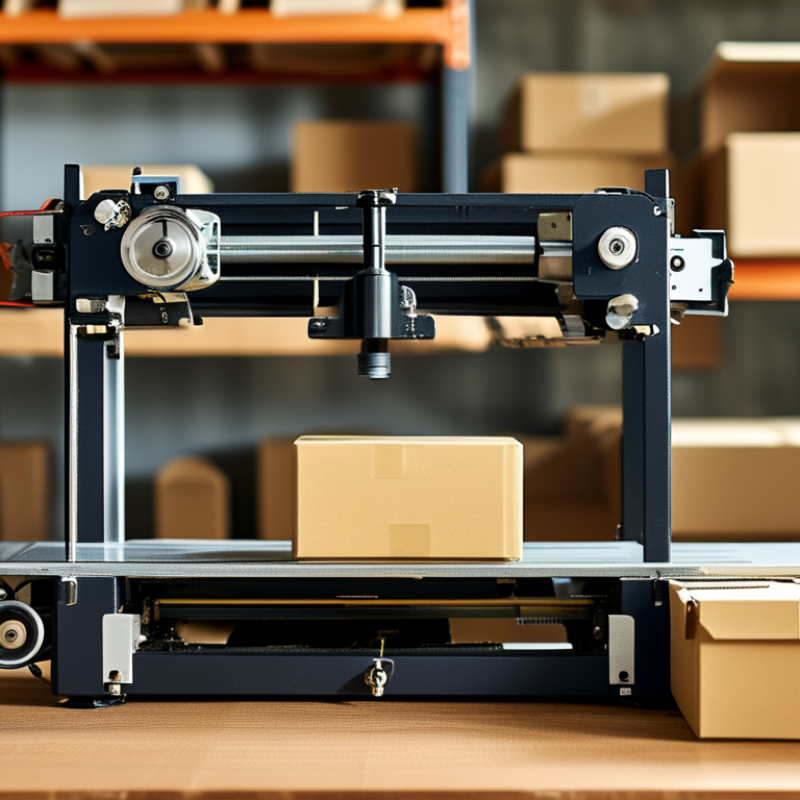
Understanding Carton Sealers and Their Main Applications
Carton sealers close corrugated boxes with tape, adhesive, or integrated folding systems. Their design affects speed, labor, package consistency, and product protection. The ten most useful configurations include uniform case sealers, random case sealers, semi-automatic units, fully automatic units, side-belt machines, top-and-bottom belt machines, hot-melt sealers, pressure-sensitive Tape Sealers, flap-folding sealers, and robotic inline systems. Each type solves a different packaging problem.
Uniform case sealers suit operations using one box size for long production runs. Random case sealers adjust automatically when box dimensions change. Semi-automatic equipment needs an operator to position or fold the carton. Fully automatic systems connect with conveyors and upstream filling equipment. Tape sealers work well in warehouses, e-commerce, and general manufacturing. Adhesive systems often support faster lines and cleaner carton surfaces. Food, beverage, pharmaceutical, and household-goods facilities may require stainless steel frames, guarded moving parts, or easy-clean designs. Dust matters too.
In practical installations, carton height, box strength, tape width, and line speed decide more than advertised capacity. I have seen fast equipment underperform when cartons arrive crushed or poorly squared. That detail is easy to miss. Operators also need safe access, simple adjustments, and clear maintenance points. No sealer fits every plant perfectly. A random case machine may waste energy on a stable production line, while a basic uniform sealer may struggle with frequent size changes. Testing real cartons remains the most reliable selection method.
What Are the Top 10 Carton Sealers? – Understanding Carton Sealers and Their Main Applications
| Rank | Carton Sealer Type | Primary Sealing Method | Typical Throughput | Common Carton Range | Typical Tape or Adhesive | Main Applications | Key Advantages | Important Limitations | Recommended Automation Level |
|---|---|---|---|---|---|---|---|---|---|
| 1 | Uniform-Case Automatic Carton Sealer | Pressure-sensitive adhesive tape applied to the top and bottom flaps | Up to approximately 30–40 cartons per minute | One consistent carton size, commonly medium-size shipping cases | 48–75 mm carton-sealing tape | High-volume packaging lines with standardized boxes | High speed Excellent repeatability and simple operation | Not suitable for frequent carton-size changes; requires accurately formed cartons | Fully automatic |
| 2 | Random-Case Automatic Carton Sealer | Automatic flap folding followed by top and bottom tape sealing | Up to approximately 20–30 cartons per minute, depending on size variation | Multiple carton sizes within the machine’s adjustment range | 48–75 mm pressure-sensitive tape | E-commerce fulfillment, distribution centers, and mixed-SKU operations | Flexible Handles changing carton dimensions with limited operator input | Higher purchase cost and more sensors, controls, and maintenance points | Fully automatic |
| 3 | Uniform-Case Semi-Automatic Carton Sealer | Powered side belts convey the carton while the operator closes the flaps | Approximately 12–20 cartons per minute | One main carton size or a narrow size range | 48–75 mm carton-sealing tape | Small and medium production lines with regular carton dimensions | Cost-effective Improves consistency without full-line automation | Requires an operator to fold or prepare the top flaps | Semi-automatic |
| 4 | Random-Case Semi-Automatic Carton Sealer | Manual carton preparation with powered conveying and automatic tape application | Approximately 8–15 cartons per minute | Several carton sizes with manual adjustment or guided adjustment | 48–75 mm pressure-sensitive tape | Contract packaging, workshops, and moderate-volume shipping departments | Adaptable Lower investment than a random-case automatic system | Production rate depends on operator speed and carton presentation | Semi-automatic |
| 5 | Hot-Melt Adhesive Carton Sealer | Thermoplastic hot-melt adhesive applied to carton flaps | Approximately 15–35 cartons per minute, depending on configuration | Standard corrugated shipping cartons with compatible flap geometry | Hot-melt adhesive | Food and beverage, household goods, and applications requiring strong seals | Strong bond Good resistance to vibration and many storage conditions | Requires heated adhesive equipment, warm-up time, and safety controls | Semi-automatic or fully automatic |
| 6 | Water-Activated Tape Carton Sealer | Moistened reinforced or non-reinforced paper tape adheres to the carton surface | Approximately 10–25 cartons per minute | Common corrugated cartons with relatively clean, absorbent surfaces | Water-activated paper tape, typically 50–75 mm wide | Parcel shipping, export packaging, and tamper-evident distribution packaging | Secure seal Strong fiber-to-paper bond and easy tamper visibility | Needs a water supply or tape-moistening system; performance can vary with humidity | Manual, semi-automatic, or automatic |
| 7 | Side-Belt Carton Sealer | Parallel powered belts stabilize and transport cartons through tape heads | Approximately 10–25 cartons per minute | Regular cartons with enough sidewall area for belt contact | Pressure-sensitive carton-sealing tape | General manufacturing, warehousing, and shipping operations | Reliable conveying Provides stable carton movement and consistent tape placement | May struggle with very light, unstable, damaged, or highly irregular cartons | Semi-automatic or fully automatic |
| 8 | Top-and-Bottom Belt Carton Sealer | Upper and lower drive belts support the carton while sealing both flap surfaces | Approximately 12–30 cartons per minute | Medium and large corrugated cartons with stable bases | Pressure-sensitive tape or hot-melt adhesive, depending on the sealing head | Heavy products, industrial components, and palletizing lines | Stable handling Helps maintain alignment for heavier cartons | Requires suitable carton rigidity and adequate clearance around the box | Semi-automatic or fully automatic |
| 9 | Case Former and Sealer Combination | Automatically erects flat blanks, folds the bottom flaps, and seals the bottom | Approximately 8–20 cartons per minute | Carton sizes compatible with the selected forming tooling | Pressure-sensitive tape, hot-melt adhesive, or water-activated tape | Packaging lines receiving flat corrugated blanks before filling | Labor saving Integrates carton erection and bottom sealing in one process | More complex than a standalone sealer and generally less flexible for many carton styles | Fully automatic |
| 10 | Case Former, Filler, and Sealer Line | Forms the carton, loads the product, closes the flaps, and applies the final seal | Approximately 5–25 cartons per minute, depending on the filling process | Carton dimensions matched to the product and line design | Tape, hot-melt adhesive, or water-activated tape | Integrated food, consumer-goods, pharmaceutical, and industrial packaging lines | End-to-end automation Reduces manual handling and supports coordinated production | Highest integration cost; changes to products or carton sizes may require line adjustments | Fully automatic |
Performance figures are typical operating ranges rather than universal specifications. Actual speed and carton compatibility depend on carton quality, dimensions, product weight, sealing material, conveyor configuration, and operator or line setup.