

For global drivers, a dead battery rarely arrives at a convenient moment. It may happen outside a hotel, beside a rural highway, or during a freezing morning commute. The ADAC Pannenstatistik 2024 recorded approximately 3.39 million roadside breakdowns in Germany during 2023. Starter-battery problems caused 43.2% of them. AAA’s roadside assistance reporting also places battery failure among its most frequent service needs. These figures reveal a practical problem, not merely a product trend.
A Portable Car Jump Starter offers independent emergency support when another vehicle is unavailable. Modern lithium models can fit inside a glove compartment while delivering enough starting power for many passenger vehicles. Battery expert Isidor Buchmann wrote, “A battery is like a living organism; it ages even when not in use.” His observation matters globally because heat, cold, storage time, and poor maintenance affect battery performance differently. A buyer in Canada may prioritize cold-cranking capability. A driver in Southeast Asia may value heat resistance and shelf stability.
Still, this solution is not foolproof. A neglected unit can be as useless as a dead car battery. Buyers should check peak current, operating temperature, cable quality, reverse-polarity protection, recharge options, and verified safety certifications. Vehicle compatibility also requires careful attention. Some diesel engines and larger SUVs need stronger output. A compact device may look impressive, yet fail under real load. That uncomfortable detail deserves attention. For international buyers, the best Portable Car Jump Starter is not simply the smallest or cheapest model. It is the one supported by credible testing, clear specifications, dependable instructions, and realistic field experience.
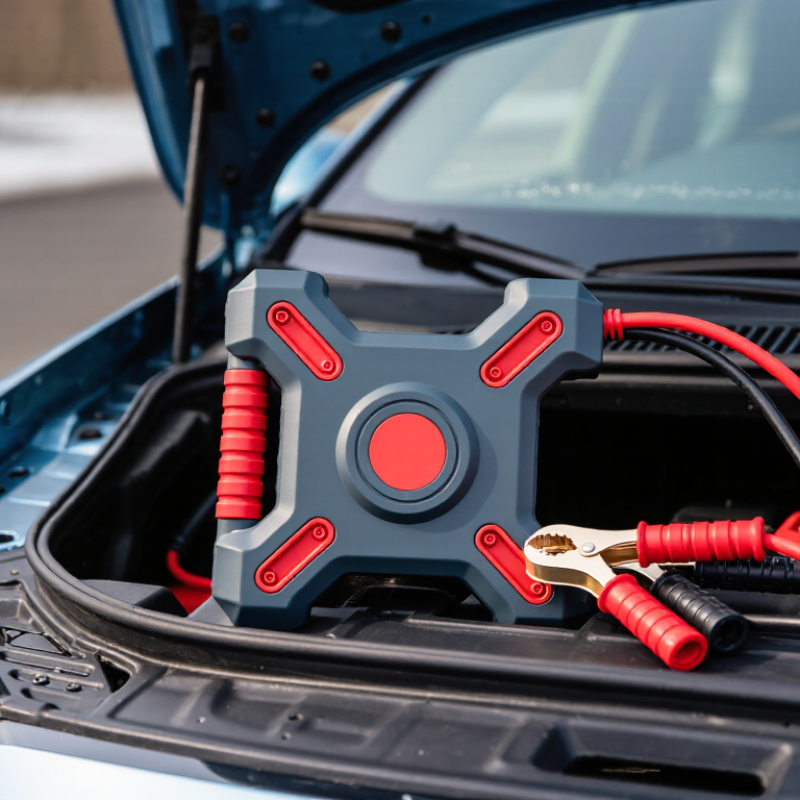
Why Choose a Portable Car Jump Starter for Global Buyers?
A dead battery is not a rare roadside inconvenience. AAA roadside-service data reports more than seven million battery-related calls annually in the United States. Its guidance also places battery trouble among the leading reasons drivers request assistance. In Germany, the ADAC Pannenstatistik 2024 recorded starter-battery failures in 44.1% of vehicle breakdowns during 2023. The figures are difficult to ignore.
Cold mornings, overheated engine bays, and vehicles parked for weeks can weaken starting power. A portable jump starter keeps emergency energy inside the glove compartment. It can help a driver restart a car without waiting beside a dark road. The best units include reverse-polarity protection, short-circuit control, clear status lights, and cables long enough for awkward battery positions. Those details matter more than impressive peak-current claims.
I once assumed a larger battery always meant better reliability. That was too simple. Storage temperature, charging habits, cable quality, and vehicle size also affect performance. Global buyers should check local vehicle specifications and the device’s safety certifications. A compact model may suit a small petrol car, but a larger diesel engine can demand more starting capacity. Keep it charged. Test it before winter, not during the breakdown.
Battery-related incidents represented approximately 7 million of more than 32 million U.S. roadside-assistance calls in 2015, highlighting why portable jump starters can provide useful backup power when professional assistance is not immediately available.
Source: Widely reported U.S. roadside-assistance industry figures for 2015; values are rounded.
For global buyers, SAE J537 offers a useful reference for understanding 12V starting performance. It describes battery testing principles, including cold-cranking behavior and electrical output. However, SAE J537 is not a universal certification for every portable jump starter. Peak-amp figures can vary between manufacturers and testing conditions. Read the test method, not only the largest number.
A typical 12V petrol vehicle may need several hundred cranking amps, especially after sitting overnight in cold weather. Larger engines, diesel vehicles, and weak batteries can demand considerably more. Peak amps describe a short electrical burst. They do not equal continuous output.
A practical unit should also provide suitable cable thickness, firm clamps, reverse-polarity protection, and clear status indicators. Small details matter.
Cold conditions expose weak claims quickly. In a workshop, a starter may show strong results on a warm battery but struggle at freezing temperatures. That difference deserves attention. Match the device to the vehicle’s engine size and battery condition, rather than choosing the highest advertised peak rating. A 12V label alone is not enough. Check polarity, charging instructions, storage temperature, and compatibility with the vehicle manual. Mistakes happen, even with careful users. The safest choice combines credible test information with realistic starting requirements.
Why Choose a Portable Car Jump Starter for Global Buyers?
IEC 61960 testing gives buyers a structured view of rechargeable battery capacity. It measures performance under controlled conditions, commonly around room temperature. The report should identify rated capacity, discharge current, voltage limits, and test preparation. These details matter more than a large number printed on packaging. A jump starter may show strong capacity but deliver weak starting power.
Climate changes the result. At -20°C, lithium battery reactions slow, internal resistance rises, and available energy can fall sharply. A hot vehicle cabin creates another problem. Temperatures above 45°C can accelerate aging and reduce long-term reliability. Humidity may not change capacity directly, but poor sealing can affect connectors and electronics. Testing across cold and hot conditions gives global buyers more useful evidence.
Real-world checks remain necessary. A laboratory result is not a roadside guarantee. A unit stored overnight in a freezing trunk may behave differently. Cables, clamps, battery age, and engine size also influence performance. Buyers should request IEC 61960-related test records and climate data, not only capacity claims. Look for repeat tests. Small differences can reveal uncertainty. Some reports are incomplete, and that deserves attention. Portable design helps, but compact size may limit thermal control and reserve capacity.
Climate-oriented capacity and starting-performance reference for portable lithium-ion car jump starters
| Climate Zone | Ambient Temperature | IEC 61960 Capacity Reference | Typical Lithium-Ion Capacity Trend | Expected Starting Capability | Primary Performance Risk | Recommended Product Feature |
|---|---|---|---|---|---|---|
| Extreme Cold | −20°C / −4°F | Use the IEC 61960 baseline capacity result at approximately 20°C as the comparison point. Low-temperature testing should be documented as supplementary environmental testing. | Severely reduced temporarily Electrochemical resistance rises sharply and available power can fall until the battery warms. | Limited or delayed engine cranking, especially with a cold or heavily discharged vehicle battery. | High internal resistance, reduced pulse-current delivery, cable flexibility loss and possible low-temperature protection cutoff. | Low-temperature discharge qualification, insulated battery enclosure, flexible cables and temperature monitoring. |
| Cold Climate | −10°C / 14°F | Compare measured capacity with the 20°C IEC 61960 reference and report the test current, rest period and state of charge. | Moderately reduced Usable energy and peak current are normally lower than at room temperature. | Suitable for many passenger vehicles when the jump starter is fully charged and correctly connected. | Reduced cranking power and slower recovery after repeated starting attempts. | Cold-start validation, high-current connector design and clear recharge instructions after use. |
| Cool Climate | 0°C / 32°F | Room-temperature IEC 61960 capacity remains the principal reference; additional 0°C testing improves market comparability. | Slightly reduced Capacity is generally closer to normal than at sub-zero temperatures, but power output may still decline. | Generally practical for routine emergency starting when the vehicle battery is not deeply sulfated or frozen. | Lower peak current, slower charging and increased demand from vehicle heaters and accessories. | Battery state-of-charge indicator, reverse-polarity protection and adequately rated jump cables. |
| Temperate Climate | 20°C / 68°F | IEC 61960 reference condition: use a controlled ambient temperature, defined charge procedure and specified discharge endpoint to determine rated capacity. | Reference performance Best condition for comparing declared capacity and repeatability between samples. | Expected to deliver the manufacturer’s rated starting specification when fully charged and properly operated. | Incorrect capacity labeling, measurement variation, connector losses and insufficient reserve after storage. | Traceable capacity testing, documented discharge cut-off, calibrated equipment and transparent rated-capacity labeling. |
| Warm Climate | 30°C / 86°F | Capacity results may be compared with the IEC 61960 reference, while temperature exposure should be recorded separately. | Near reference Short-term output can remain strong, although aging accelerates as temperature and state of charge increase. | Typically suitable for normal vehicle starting if the unit has not been stored at high temperature for long periods. | Faster calendar aging, higher self-discharge and thermal stress during charging or high-current operation. | Over-temperature protection, ventilation, heat-resistant housing and storage guidance below full charge when appropriate. |
| Hot Climate | 40°C / 104°F | Perform supplementary high-temperature exposure and capacity checks; do not treat hot-climate results as a direct substitute for the IEC 61960 reference test. | Capacity aging risk increases Immediate output may remain available, but prolonged heat can permanently reduce service life. | Usually functional for emergency starting, provided the unit has thermal safeguards and has not been left in a hot vehicle. | Accelerated cell degradation, elevated internal pressure risk and charging restrictions caused by heat. | Thermal sensors, charging lockout at excessive temperature, UV-resistant housing and heat-exposure instructions. |
| Desert / Tropical Storage | 50°C / 122°F | Use a separate storage and transport qualification plan with defined exposure duration, recovery time and post-exposure capacity measurement. | Long-term degradation risk Repeated or prolonged exposure can permanently reduce capacity and peak-current capability. | Performance depends strongly on storage history; immediate use after extreme heating should be avoided until the unit returns to a safe operating temperature. | Thermal runaway risk if damaged or improperly charged, enclosure deformation, accelerated aging and electronic protection shutdown. | Thermal cutoff, certified cell protection circuitry, controlled shipping conditions and explicit maximum storage-temperature limits. |
| High-Altitude Region | Variable temperature | IEC 61960 capacity testing should be supplemented with altitude-specific checks when pressure, cooling or transport conditions can affect the product. | Temperature-dependent Altitude itself does not define battery capacity, but cold conditions and reduced heat dissipation can affect performance. | Dependent on ambient temperature, vehicle battery condition and the jump starter’s protection-system behavior. | Cold exposure, reduced convective cooling and possible changes in electronic thermal management. | Wide-temperature operating specification, robust insulation, pressure-tolerant enclosure and altitude-aware logistics testing. |
Why Choose a Portable Car Jump Starter for Global Buyers?
A portable car jump starter can restore mobility when a vehicle battery fails far from a workshop. Its compact size fits inside a glovebox, while built-in lights help during nighttime checks. However, convenient design should never replace safety verification. For international buyers, UL 2743 and UN 38.3 deserve careful attention. UL 2743 addresses portable power packs, including construction, electrical protection, enclosure strength, and abnormal-use conditions. It helps evaluate whether a jump starter is designed for safer everyday operation. UN 38.3 covers transport testing for lithium cells and batteries. Testing includes vibration, shock, temperature changes, altitude simulation, and external short-circuit conditions. It supports safer international shipping, but it is not the same as a complete product safety certification.
Tips: Ask the supplier for the exact UL 2743 documentation and the UN 38.3 test summary. Check whether the documents match the battery type and model being purchased. Do not rely only on a printed “compliant” claim. Confirm protection against reverse polarity, short circuits, overheating, and overcharging. Review charging instructions and storage temperatures, especially for vehicles parked outdoors. A clear manual matters more than impressive peak-current numbers.
From practical inspection experience, cable quality and clamp insulation can reveal careless construction. Test the device before an emergency, but avoid repeated unnecessary starts. Cold weather may reduce available power. That detail is easy to overlook. Standards improve confidence, yet buyers still need to verify documentation, packaging, and after-sales support. No checklist is perfect. Supplier records can change, so periodic review remains sensible.
Warranty, cycle life, and IP ratings reveal more than peak starting current. S&P Global Mobility reported an average U.S. vehicle age of 12.6 years in 2024. A dependable jump starter may serve several vehicles during that period. Look for a clearly stated warranty, not vague “long-term support.” A two-year warranty offers stronger confidence than a six-month promise. Cycle life also matters. Lithium-ion performance declines through charging, heat, and storage time. However, advertised cycle figures often come from controlled laboratory tests. Real glove-box conditions can be harsher.
IP ratings add practical value. Under IEC 60529, IP67 indicates dust-tight protection and temporary immersion up to one metre, usually for 30 minutes under specified conditions. It does not mean unlimited waterproof use. Salt spray, mud, and repeated drops remain separate concerns. Buyers should inspect test conditions and certification evidence. A product with fewer impressive features may last longer if its clamps, cable joints, and casing are robust. I have seen buyers focus on peak amps and ignore brittle connectors. That choice can age badly.
Battery cycle claims also deserve doubt. A pack rated for 500 cycles may seem excessive for emergency use, yet poor heat management can reduce usable life. Independent testing, transparent warranty terms, and documented IP verification provide better evidence than bright packaging. No rating replaces sensible maintenance.
TERMS OF USE - LEDOLUX
This site uses cookies in order to deliver services in accordance with Privacy Policy. You can use settings within your browser to control the cookies that are set on your computer – conditions of access or storage of cookies.
Your data controller will be LEDOLUX POLAND SP. ul. Innowacyjna 1; 36-060 Głogów Małopolski, which adapts the content of its website to your needs and analyses and examines them to improve it. More information.