

A Hose Combination is more than a hose paired with a fitting. It is a working system. The hose, connectors, pressure rating, temperature range, and conveyed medium must suit one another. A mismatch may cause leaks, early wear, or an assembly that is difficult to install. Small details matter. A fitting that looks correct can still have the wrong thread or sealing method.
Choosing well starts with the equipment’s actual operating conditions. Check the manufacturer’s specifications, including working pressure, temperature limits, bend radius, and compatibility with the fluid. Then confirm that the hose and fittings are designed to work together. As no source was provided for a verifiable named expert quotation, I won’t invent one. A useful engineering principle is: “Match every component to the conditions it must handle.” It is simple, perhaps too simple, but it keeps attention on the whole assembly rather than one impressive specification.
Real installations can be less tidy than a catalog diagram. Hoses may bend around a pump, rub against a bracket, or face repeated movement. Those details deserve inspection before selection. Even careful checks cannot replace product documentation or qualified technical advice for demanding applications. The right combination supports reliable performance; the wrong one can create avoidable downtime. It is worth checking twice.
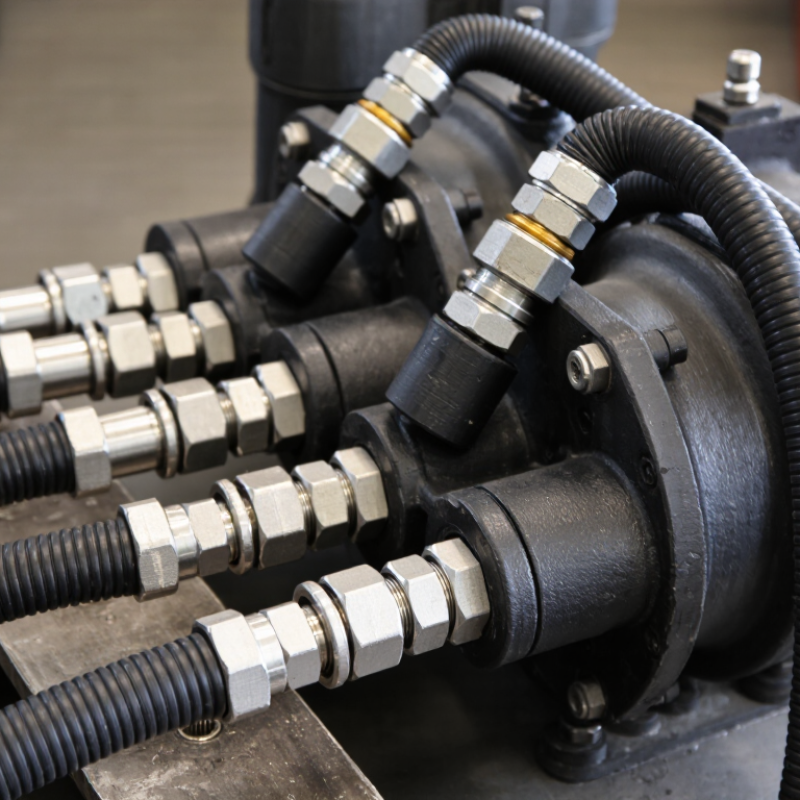
A hose combination is a working system, not just a tube with fittings. The inner tube contacts the fluid, so its material must suit the fluid and operating temperature. Reinforcement carries pressure; the outer cover resists abrasion, weather, and nearby heat. End fittings, seals, and the crimp complete the assembly. Each part matters. A compatible-looking fitting can still be the wrong size or connection type.
Check working pressure, temperature range, fluid compatibility, and minimum bend radius together. Tight bends near a fitting can strain the reinforcement. So can twisting the hose during installation. ISO 7751:2016 specifies proof- and burst-pressure ratios by hose category; hydraulic hose requirements commonly use a 4:1 burst-to-working-pressure ratio. That figure is not a target for everyday operation. SAE J517 also sets requirements for hydraulic hose types and performance. A practical check is to compare the hose and fitting specifications as a matched assembly, then inspect the finished crimp and routing. Details get missed. Even a clean installation can conceal an incompatible seal or a hose bent too sharply.
Assessing Application, Pressure, Temperature, and Flow Requirements
Start with the media: water, oil, air, or chemicals can affect the hose lining and reinforcement differently. Then check working pressure, including pressure spikes during startup or valve closure. ISO 7751:2016 sets proof- and burst-pressure ratios by hose category; a printed working-pressure rating should never be treated as a guess. Temperature matters too. Heat can shorten service life, while cold can make some hose materials stiff and harder to route.
Flow depends on the hose’s inside diameter, length, and bends. A narrow hose may increase pressure loss; a sharp bend can restrict flow or stress the assembly. The U.S. Department of Energy’s Improving Compressed Air System Performance: A Sourcebook for Industry reports that leaks can waste 20–30% of compressor output in many plants. That figure is a useful reminder: connection quality and inspection matter alongside sizing. Small details matter. A selection that looks adequate on paper may still need review against actual operating conditions.
Tips: Record the fluid, peak pressure, temperature range, flow rate, and minimum bend radius before choosing. Recheck these figures at the equipment, not from memory. Allow for wear and movement, too.
Why Choose the Right Hose Combination?
Matching Hose Materials with Fluids and Operating Conditions
A hose must suit both the fluid inside it and the conditions around it. Oils, coolants, cleaning solutions, and water can affect hose materials differently. A compatible inner layer helps reduce swelling, softening, cracking, or fluid permeation. Check a current compatibility chart for the exact fluid and concentration; similar-sounding mixtures may behave differently.
Temperature and pressure matter, too. A hose rated for a fluid may still fail if heat, pressure surges, or repeated flexing exceed its limits. Consider the full operating range, not just the normal reading. Also check the cover material, reinforcement, fittings, and minimum bend radius. A hose can look sound and still be wrong for the job. Appearance is not proof of compatibility.
Tips: Confirm the fluid, concentration, temperature, and working pressure before selecting a hose. Verify that the fittings match the hose assembly. If conditions change, review the selection again. That extra check can feel tedious, but skipping it leaves room for avoidable wear.
| Fluid or Service | Commonly Suitable Hose Material | Key Operating Factors | Selection Guidance |
|---|---|---|---|
| Water and water-based fluids | EPDM; a specifically approved potable-water liner where drinking water is conveyed | Temperature, pressure, water quality, and any cleaning or disinfection chemicals | EPDM is commonly used for water service, but confirm the hose’s pressure and temperature ratings. Potable-water use requires suitable material approval for the intended application. |
| Mineral hydraulic oil | NBR (nitrile) inner tube is commonly used | Oil type, temperature, pressure surges, and external exposure to weather or ozone | Check compatibility with the specific hydraulic fluid and the complete hose assembly. EPDM is generally unsuitable for petroleum-based oils. |
| Gasoline and fuel blends | Fuel-rated NBR or a fluoropolymer-lined construction, depending on the fuel | Fuel formulation, ethanol content, temperature, permeation limits, and pressure | Use a hose explicitly rated for the exact fuel blend. Compatibility can vary with ethanol and other additives; do not infer suitability from the base polymer alone. |
| Water-glycol coolant | EPDM is commonly used for many water-glycol coolant services | Glycol type and concentration, operating temperature, pressure, and additives | Confirm compatibility with the coolant formulation and its inhibitors. Check the hose’s temperature and pressure ratings for the actual duty cycle. |
| Compressed air | Purpose-built air hose with an NBR, EPDM, or other specified liner | Working pressure, pulsation, temperature, compressor oil carryover, and end-use requirements | Select a hose rated for compressed air, not merely one that is chemically compatible with air. Follow pressure limits and applicable requirements for the application. |
| Steam | Dedicated steam-rated hose with a liner and reinforcement designed for steam service | Steam pressure and temperature, condensate, cycling, and connection design | Use only a hose specifically rated for steam at the intended conditions. A general-purpose EPDM hose is not automatically suitable for steam. |
| Dilute acids or cleaning chemicals | PTFE-lined hose or a chemically resistant elastomer such as EPDM, where verified | Chemical identity, concentration, temperature, exposure time, and cleaning procedure | Check a compatibility chart or obtain application-specific confirmation for every chemical and concentration. “Dilute” alone is not enough to establish compatibility. |
| Abrasive slurry | Abrasion-resistant rubber lining; other liners may be suitable for particular slurries | Particle size and hardness, flow velocity, pressure, bend radius, and wear rate | Consider abrasion resistance as well as chemical compatibility. Inspect regularly and select a construction intended for slurry service. |
| Important: These are general selection examples, not a substitute for a hose manufacturer’s compatibility data. Verify the complete hose assembly—including liner, reinforcement, cover, fittings, pressure rating, temperature range, and applicable standards—against the actual fluid and operating conditions. | |||
Compatible fittings do more than keep a hose in place. They must suit the hose’s inner diameter, working pressure, temperature range, and the fluid passing through it. Check the fitting material, too: a metal that works with water may corrode or react when exposed to another fluid. Fit matters.
Connection methods are not interchangeable. Threaded ends need matching thread types and an appropriate sealing method; similar-looking threads may not seal reliably together. A barbed fitting should match the hose diameter and use a clamp specified for that assembly. Crimped connections require the correct fitting and tooling, while quick-connect couplings must share the same profile and pressure rating. Do not guess.
A common mistake is treating a snug connection as proof of compatibility. It may still leak under pressure or loosen as the hose warms and flexes. Before assembly, compare the hose and fitting specifications rather than relying on appearance. After installation, inspect the joint and test it within the equipment maker’s stated limits. Keep the line depressurized before checking or adjusting a connection. Small details matter. One detail is easy to miss: routing can place side-load on a fitting, so leave enough room for a smooth bend without pulling the joint sideways.
A hose combination is only as dependable as its weakest connection. Check the fluid, operating pressure, temperature range, and routing before choosing hose, fittings, and clamps. A line carrying warm oil may need different materials from one moving cool water. Verify the pressure rating of the complete assembly, not just the hose. Allow room for movement, but avoid tight bends that flatten the inner wall. Check for abrasion near brackets and sharp edges. Small details matter.
Inspect the assembled line under realistic conditions. Confirm fittings seat fully, clamps sit behind the fitting bead, and vibration cannot twist the hose. Begin with a low-pressure leak check, then monitor normal operation according to equipment guidance. Keep hands clear of pressurized leaks; a fine jet can injure skin. Record the installation date and inspection findings. Watch for bulges, cracks, seepage, stiffness, or loose hardware. Replace worn parts before they fail. A tidy installation can still hide a low spot that traps fluid, so inspect from more than one angle. Even careful checks can miss something. Recheck after the first few operating cycles.
Verifying safety, performance, and maintenance needs
This illustrative pressure profile shows why the hose assembly’s rated working pressure must cover normal operation and pressure surges. Also verify fluid and temperature compatibility, minimum bend radius, fitting match, and inspection requirements against the actual application and manufacturer specifications.
TERMS OF USE - LEDOLUX
This site uses cookies in order to deliver services in accordance with Privacy Policy. You can use settings within your browser to control the cookies that are set on your computer – conditions of access or storage of cookies.
Your data controller will be LEDOLUX POLAND SP. ul. Innowacyjna 1; 36-060 Głogów Małopolski, which adapts the content of its website to your needs and analyses and examines them to improve it. More information.